



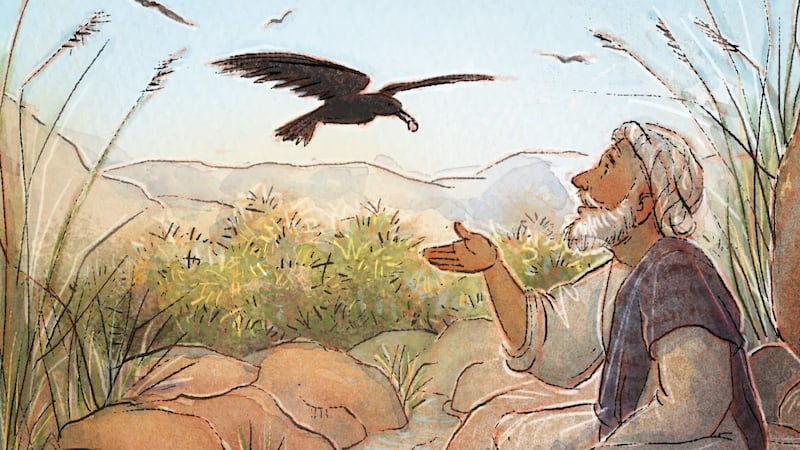

This week’s “Come, Follow Me” study guide covers 1 Kings 12-13 and 17-22, which includes stories about the prophet Elijah.
Following are a few quotes from past and present leaders of The Church of Jesus Christ of Latter-day Saints about these chapters of scripture.
‘A still small voice’
“The Savior will not shout commands to you and me. As He taught Elijah:
“‘And he said, Go forth, and stand upon the mount before the Lord. And, behold, the Lord passed by, and a great and strong wind rent the mountains, and brake in pieces the rocks before the Lord; but the Lord was not in the wind: and after the wind an earthquake; but the Lord was not in the earthquake:
“And after the earthquake a fire; but the Lord was not in the fire: and after the fire a still small voice’ (1 Kings 19:11-12).
“Hearing that voice will come from our faith in Him. With sufficient faith, we will ask for direction with the intent to go and do whatever He asks. We will have developed the faith to know that whatever He asks will bless others and that we can be purified in the process because of His love for us.”
— President Henry B. Eyring, then the second counselor in the First Presidency, October 2021 general conference, “The Faith to Ask and Then to Act”
‘How long halt ye between two opinions?’
“In Old Testament history, we read of successive periods when the children of Israel honored their covenant with Jehovah and worshipped Him and other times when they ignored that covenant and worshipped idols or Baalim.
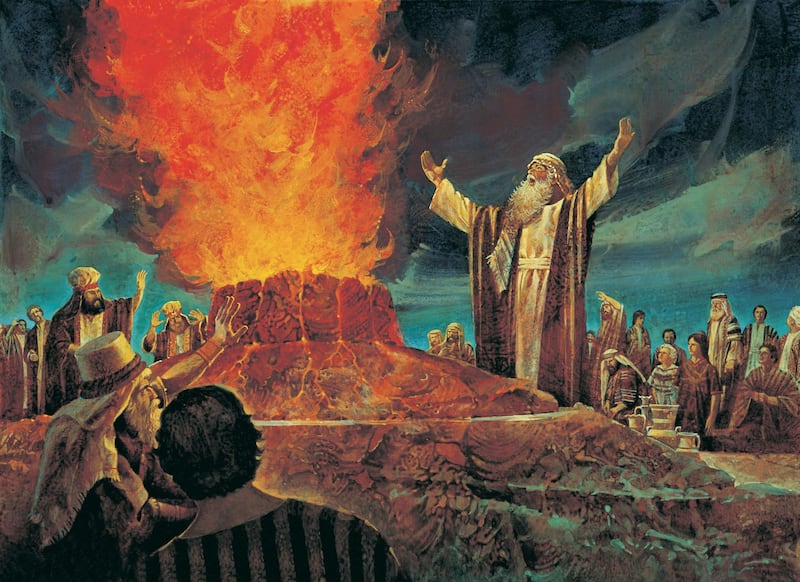
“The reign of Ahab was one of the periods of apostasy in the northern kingdom of Israel. The prophet Elijah on one occasion told King Ahab to gather the people of Israel as well as the prophets or priests of Baal at Mount Carmel. When the people had come together, Elijah said unto them, ‘How long halt ye between two opinions? [or in other words, ‘When will you decide once and for all?’] if the Lord be God, follow him: but if Baal, then follow him. And the people answered him not a word’ (1 Kings 18:21). So Elijah directed that both he and Baal’s prophets cut up a young bull and place it on a bed of wood on their respective altars but ‘put no fire under’ (1 Kings 18:23). Then, ‘Call ye on the name of your gods, and I will call on the name of the Lord: and the God that answereth by fire, let him be God. And all the people answered and said, It is well spoken’ (1 Kings 18:24).
“You will recall that the priests of Baal clamored to their nonexistent god for hours to send down fire, but ‘there was neither voice, nor any to answer, nor any that regarded’ (1 Kings 18:29). When it was Elijah’s turn, he repaired the broken-down altar of the Lord, laid the wood and the offering upon it, and then ordered that it all be doused with water, not once but three times. There was no doubt that neither he nor any other human power could light the fire.
“‘And it came to pass at the time of the offering of the evening sacrifice, that Elijah the prophet came near, and said, Lord God of Abraham, Isaac and of Israel, let it be known this day that thou art God in Israel, and that I am thy servant, and that I have done all these things at thy word. …
“‘Then the fire of the Lord fell, and consumed the burnt sacrifice, and the wood, and the stones, and the dust, and licked up the water that was in the trench.
“‘And when all the people saw it, they fell on their faces: and they said, The Lord, he is the God; the Lord, he is the God’ (1 Kings 18:36, 38-39).
“Today Elijah might say:
- “Either God, our Heavenly Father, exists, or He does not, but if He exists, worship Him.
- “Either Jesus Christ is the Son of God, the resurrected Redeemer of mankind, or He is not, but if He is, follow Him.
- “Either the Book of Mormon is the word of God, or it is not, but if it is, then ‘get nearer to God by [studying and] abiding by its precepts’ (Introduction to the Book of Mormon).
- “Either Joseph Smith saw and conversed with the Father and the Son that spring day of 1820, or he did not, but if he did, then follow the prophetic mantle, including the keys of sealing that I, Elijah, bestowed upon him.”
— President D. Todd Christofferson, then a member of the Quorum of the Twelve Apostles, October 2018 general conference, “Firm and Steadfast”
Solomon and Jeroboam
“During the closing years of King Solomon’s reign, the Lord informed him through His prophet, ‘I will … rend the kingdom from thee, and will give it to thy servant’ (1 Kings 11:11).
“Shortly thereafter, the prophet Ahijah identified that servant as Jeroboam, an ‘industrious’ man whom Solomon had made ‘ruler over all the charge of the house of Joseph’ (1 Kings 11:28). Jeroboam’s duties required him to travel from the mountains of Ephraim, where he lived, to the capital of Jerusalem. During one of those trips, Ahijah met him along the road. Through Ahijah, the Lord said, ‘I will … give ten tribes to thee’ (1 Kings 11:31). He also instructed Jeroboam, ‘If thou wilt … walk in my ways … to keep my statutes and my commandments, … I will be with thee … and will give Israel unto thee’ (1 Kings 11:38).
“After hearing of Ahijah’s prophecy, Solomon sought to kill Jeroboam, so Jeroboam fled to Egypt (see 1 Kings 11:40). Upon Solomon’s death, Jeroboam returned from exile to the northern part of Israel and began to lead the northern 10 tribes (see 1 Kings 12:2-3, 20).
“However, Jeroboam’s plan to rule the kingdom involved a mixture of good and evil. He established Shechem as the nation’s capital, a city of great religious significance to his people. But sadly he introduced satanic rituals into their worship (see 1 Kings 12:25-30).
“Jeroboam convinced himself that some of God’s commandments were not applicable to him. As a result of his actions, all of his descendants were slain, and because of the heathen practices he had introduced into their sacred ordinances, the 10 tribes of Israel were eventually driven from their inheritance (see 1 Kings 14:10, 15-16).
“Just as flying out of ground effect with more weight than an aircraft’s wings can sustain will lead to disastrous consequences, our partial or selective compliance with God’s laws will fail to bring the full blessings of obedience.”
— Elder Bruce A. Carlson, then a General Authority Seventy, April 2010 general conference, “When the Lord Commands”
The widow of Zarephath
“From a single mother struggling to survive a season of famine, we learn what it means to sustain a prophet. The Lord instructed the prophet Elijah to go to Zarephath, where he would find a widow woman whom God had commanded to sustain him. As Elijah approached the city, he saw her gathering sticks. He called to her, ‘Fetch me, I pray thee, a little water in a vessel, that I may drink’ (1 Kings 17:10).
“‘And as she was going to fetch it, he called to her [again], and said, Bring me, I pray thee, a morsel of bread in thine hand.
“‘And she said, As the Lord thy God liveth, I have not a cake, but an handful of meal in a barrel, and a little oil in a cruse: and, behold, I am gathering two sticks, that I may go in and dress it for me and my son, that we may eat it, and die.’
“Elijah responded, ‘Fear not; go and do as thou hast said: but make me thereof a little cake first, and bring it unto me, and after make for thee and for thy son’ (1 Kings 17:11-13).
“Imagine for a moment the difficulty of what the prophet was asking a starving mother to do. Certainly, God Himself could have provided food for His faithful servant. But, acting in the name of the Lord, Elijah did as directed, which was to ask a beloved daughter of God to sacrifice that which she had in order to sustain the prophet.
“But Elijah also promised a blessing for obedience: ‘For thus saith the Lord God of Israel, The barrel of meal shall not waste, neither shall the cruse of oil fail’ (1 Kings 17:14). The Lord gave the widow the opportunity to choose to believe and obey the words of the prophet.
“In a world threatened by a famine of righteousness and spiritual starvation, we have been commanded to sustain the prophet. As we give heed to, uphold and affirm prophetic word, we witness that we have the faith to humbly submit to the will, the wisdom and the timing of the Lord.
“We heed prophetic word even when it may seem unreasonable, inconvenient and uncomfortable. According to the world’s standards, following the prophet may be unpopular, politically incorrect or socially unacceptable. But following the prophet is always right. …
“The Lord honors and favors those who will heed prophetic direction. For the widow of Zarephath, obedience to Elijah saved her life and ultimately the life of her son. As the prophet had promised, ‘she, and he, and her house, did eat many days … according to the word of the Lord, which he spake by Elijah’ (1 Kings 17:15-16).”
— Sister Carol F. McConkie, then the first counselor in the Young Women general presidency, October 2014 general conference, “Live According to the Words of the Prophets”
“As the prophet prepared for a final confrontation with Ahab, God commanded Elijah to go to the village of Zarephath, where, he said, he had commanded a widow woman to sustain him.
“As he entered the city in his weary condition, he met his benefactress, who was undoubtedly as weak and wasted as he. Perhaps almost apologetically the thirsty traveler importuned, ‘Fetch me, I pray thee, a little water in a vessel, that I may drink.’ As she turned to meet his request, Elijah added even more strain to the supplication. ‘Bring me, I pray thee, a morsel of bread in thine hand [also].’
“Elijah’s pitiful circumstances were obvious. Furthermore, the widow had been prepared by the Lord for this request. But in her own weakened and dispirited condition, the prophet’s last entreaty was more than this faithful little woman could bear. In her hunger and fatigue and motherly anguish she cried out to the stranger, ‘As the Lord thy God liveth, I have not a cake, but an handful of meal in a barrel, and a little oil in a cruse: and, behold, I am gathering two sticks [which tells us how small her fire needed to be], that I may go in and dress it for me and my son, that we may eat it, and die.’
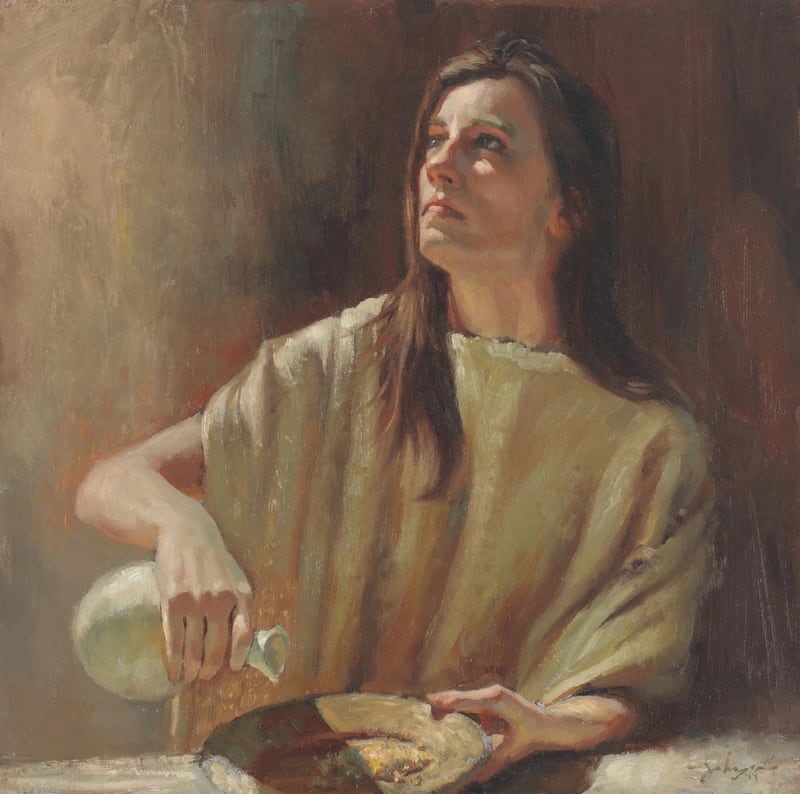
“But Elijah was on the Lord’s errand. Israel’s future — including the future of this very widow and her son — was at stake. His prophetic duty made him more bold than he might normally have wanted to be.
“‘Fear not,’ he said to her, ‘but make me thereof a little cake first, and bring it unto me, and after make for thee and for thy son.
“‘For thus saith the Lord God of Israel, The barrel of meal shall not waste, neither shall the cruse of oil fail, until the day that the Lord sendeth rain upon the earth.’
“Then this understated expression of faith — as great, under these circumstances, as any I know in the scriptures. The record says simply, ‘And she went and did according to the saying of Elijah.’ Perhaps uncertain what the cost of her faith would be not only to herself but to her son as well, she first took her small loaf to Elijah, obviously trusting that if there were not enough bread left over, at least she and her son would have died in an act of pure charity. The story goes on, of course, to a very happy ending for her and for her son (see 1 Kings 17:1-24).
“This woman is like another widow whom Christ admired so much — she who cast her farthing, her two mites, into the synagogue treasury and thereby gave more, Jesus said, than all others who had given that day (see Mark 12:41-44).
“Unfortunately, the names of these two women are not recorded in the scriptures, but if I am ever so privileged in the eternities to meet them, I would like to fall at their feet and say, Thank you. Thank you for the beauty of your lives, for the wonder of your example, for the godly spirit within you prompting such ‘charity out of a pure heart’ (1 Timothy 1:5).”
— The late President Jeffrey R. Holland, then a member of the Quorum of the Twelve Apostles, April 1996 general conference, “A Handful of Meal and a Little Oil”
