




During the April 2026 general conference, The Church of Jesus Christ of Latter-day Saints reported 385,490 individuals were baptized in 2025. That historic number increased the Church’s total membership to 17,887,212, according to the annual statistical report.
Elder Quentin L. Cook of the Quorum of the Twelve Apostles called the increase in baptisms “remarkable.” He also noted that those new members are attending sacrament meeting at higher rates than in the past as well.
A new report co-authored by Brigham Young University professor of religious education and BYU Studies editor-in-chief Justin Dyer and four colleagues highlights data showing that members of the Church demonstrate the highest religious activity in America.
“What we find in the research is that it’s that religiosity — it’s that connecting with the divine — that really makes the big differences in our lives,” Dyer said.
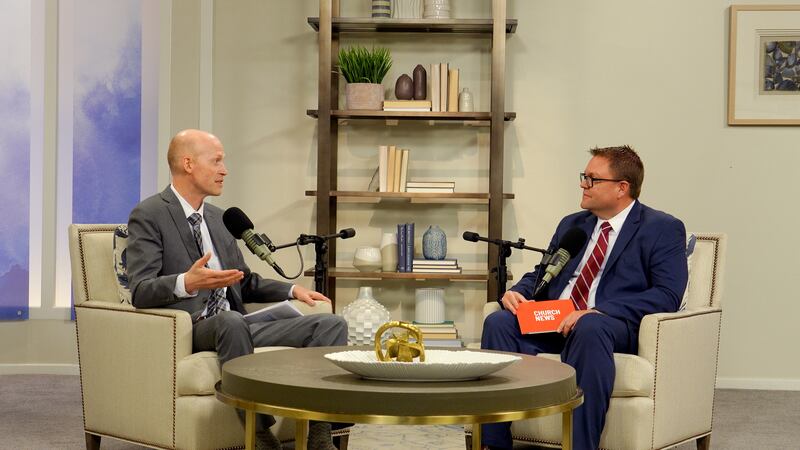
Dyer, who has been a guest on the Church News podcast before, joins Church News editor Jon Ryan Jensen on this episode to discuss what he sees in this data and what it means for Church members.
Listen to this episode of the Church News podcast on Apple Podcasts, Amazon, Spotify, bookshelf PLUS, YouTube or wherever you get podcasts.
Transcript:
Justin Dyer: Actually, Latter-day Saints hang on to their millennial and Gen Z members better than almost any other Christian tradition that’s out there. And where we really are different is that when we talk about retention and we look at retention in this report, what we’re looking at is people that said, “I was a Latter-day Saint growing up, and I’m still a Latter-day Saint today.” And so they identify as a Latter-day Saint, they continue to identify as an adult. Well, we also looked at not just, “Do I continue to identify as a particular religion” but: “Am I engaged in that religion?” “Am I attending worship services of that religion on a regular basis?” And that’s really where the Church stands out in terms of maintaining people as part of the religion, identifying as well as being active and attending worship services.
0:57
Jon Ryan Jensen: This is Jon Ryan Jensen, editor of the Church News. Welcome to the Church News podcast. Today, we are taking you on a journey of connection as we discuss news and events of The Church of Jesus Christ of Latter-day Saints.
On today’s episode of the Church News podcast, we are joined by Brigham Young University professor of religious education Justin Dyer. Justin is also the editor in chief of BYU Studies.
And for those of you who are longtime followers of the Church News podcast, you may recognize him as one of our previous guests who was on to talk with us about mental health and some of the religious behaviors that can help people have positive effects on their mental health.
Justin, thanks for being with us today.
Justin Dyer: Oh, it’s such a pleasure to be here. Thank you so much.
1:37
Jon Ryan Jensen: We’re here today to talk about a new paper that you have released through BYU Studies, and you’re pulling data from some different sources.
So, before we get into what you’ve discovered from the data, can you share with us a little bit about where that data comes from?
Justin Dyer: Yeah, absolutely. We were really interested to know what’s going on with Latter-day Saints today. And of course, you have all kinds of opinions, all kinds of narratives out there, and people are pulling information from here and there.
What we wanted to do for this report at BYU Studies is pull the very best data. And there’s wonderful datasets out there that are created by Harvard’s Cooperative Election Survey or created by the Pew Research Center. And so what we did is we identified those studies that were the gold standard in terms of how they collect the data. BYU didn’t collect any of these data. It’s all those other really fabulous institutions who specialize in these kinds of data collections.
And what’s important about that as well is that it’s representative. And so, again, we will often hear this or that or the other. Unfortunately, often it’s with data that’s not representative, but these particular organizations do a great job of collecting these national samples of all kinds of individuals across all kinds of different backgrounds, and Latter-day Saints are often captured in there. So, what we can do is we can take a look at “How are Latter-day Saints doing nationally, and how does that compare to those of other faiths or no faith?”
3:00
Jon Ryan Jensen: I love that because as I mentioned in the beginning, the Church announced the total number of new baptisms for last year being a really high number, comparatively, to the past few years. And it puts the Church closer and closer toward a benchmark of 18 million members that has not been hit before.
And so, when members of the Church hear somebody like Elder Quentin L. Cook of the Quorum of the Twelve Apostles call those numbers remarkable, but then they hear some of the narratives that you mentioned in social media or in other news outlets saying, “Well, maybe,” how do you feel about the chance to look at these numbers? And what do you come away feeling, before we dive into some of the specifics?
Justin Dyer: Well, so that’s really one of the reasons why we decided to dive into this, is because, all right, we had those narratives out there, and I love the concept that we’re going to learn by study and by faith. Information for me is wonderful. Information paired with inspiration. And so, in order to really understand what’s going on, we decided, “Well, let’s go into the very best data that can help to, if you will, clear away some of the misconceptions based on hearsay or based on even just personal experience.
Now, personal experience is really, really important. Part of the question is: “OK, how far does that go? How much does that generalize?” And with these big data, we can take a look at that. And I think it’s really important also to say that what we’re looking at is general trends. And none of what we’re going to talk about today in this particular report is going to invalidate somebody’s personal experience, but what it does is it helps us to situate our personal experiences within the broader experiences that people are having in the Church and people are having in other religions.
4:44
Jon Ryan Jensen: So, as you mentioned broadly, one of the findings of this is that the Church has some really high percentages of activity, especially across the United States of America.
How does the Church compare to other religions in the country?
Justin Dyer: You know, that was one of the things that was in some ways particularly surprising, where what we looked at and we found — and again, we could compare it to those of other faiths. For example, we could look at church attendance, worship service attendance. How often do people attend worship services?
The Pew data finds that Latter-day Saints attend worship services more than any other religion that they surveyed. In fact, 76% of Latter-day Saints from earlier generations and 76% of Latter-day Saints who are millennials and Gen Z attend church at least on a monthly basis, which is really quite remarkable. Especially when you compare it to many of the other religions. Now, obviously you’d say, “Well, that’s 24% that aren’t attending on a monthly basis, and whoa, we really need to work on that.”
5:52
Jon Ryan Jensen: Both of these things can be true.
Justin Dyer: That’s exactly right. Sometimes what happens is we see something that, “Oh, somebody’s not going to church,” and then we generalize that, or we just say, “Well, that must be unique to Latter-day Saints,” when if somebody’s not attending with us, boy, we really want them to attend with us. That would be a wonderful thing, and we want them there with us. And so, we absolutely can focus on this ministering aspect to reach out to these individuals who might not be with us.
At the same time, when we look at it within the broad spectrum, sometimes what we do is we flip from, “Oh my goodness, what’s going wrong?” in the Church to then we see it in context of others to, “What’s going right?” It looks like there’s something actually going really right here with how we’re able to encourage people. So, attendance is one thing. Regular scripture study is another thing that we’re very high on.
Jon Ryan Jensen: Yeah, this was one of the things that I was looking at in the numbers. We talked before we started — I’m a dad, a father of four — and this was an interesting part for me, where you have some notes in there about study, not just at a personal level but at a family level as well.
6:53
Justin Dyer: Yeah, that’s exactly right. The Church does emphasize family relationships, and we also have the wonderful “Come, Follow Me” family-centered, Church-supported curriculum. And so, what this is translating into, it appears, is the highest level of parents engaging religiously with their kids. And there’s all kinds of benefits to that. No. 1, you are engaging with your kids, but you’re engaging with them on things that are of deep meaning and deep value.
Now, of course, those scripture studies and those prayers don’t always go the way that we would want, the way that we would hope. It’s a lot of bedlam many times. At the same time, we’re doing it, again, more than others out there. And I think we see the Church’s emphasis really paying off in those instances. I mean, getting families together is what our society needs so desperately. And within the Church, we seem to be producing that at uniquely high levels.
7:54
Jon Ryan Jensen: I was talking with my wife about this recently, as our kids were getting ready for the end of a school year, and they were taking some end-of-level testing and some college placement testing. And there were times when I was looking at my children and saying, “I hope that turns out OK for you, because I am not going to be a whole lot of help.”
But I think to your point, the contrast of that is, as Church members, we’re studying these scriptures every year on a rotating basis, and we do it every week. And the expectation is there that we know that material and live that material. And so we can have those conversations maybe a little bit more fluently than we can about biology or astronomy, because I certainly was not helping my children this year.
8:34
Justin Dyer: Well, and those are the kinds of conversations. When we’re talking about religion, we’re talking about the things of deep meaning and deep importance in our lives. And so, hey, maybe I can’t help my kid with biology, but I’m there with them at that interface when they’re engaging with the deepest questions that we have as human beings. And the answers to those questions are really what drive our lives.
Now, please, kids out there, study your biology, study your statistics. I’m a stats nerd. I love statistics. It’s a wonderful thing. I teach graduate statistics, in fact, at BYU. Study those things. It’s so beneficial. At the same time, what we find in the research is that it’s that religiosity, it’s that connecting with the divine, that really makes the big differences in our lives.
9:28
Jon Ryan Jensen: So, I mentioned my own family, but I’m also part of a multigenerational family of Church members. And so, one of the other things that stood out to me as I looked at some of this data is the fact that you’re seeing younger members have a higher propensity for staying in the Church or for having some of those deep experiences. And I know that around the family dinner table, sometimes it might not feel that way. Are they really reading? Are they really praying?
So, did that surprise you at all when you started to read that? And what do you take away from those numbers?
9:59
Justin Dyer: Yeah, I think there are two things that happened there. We recognize that there are people who are disconnecting from religion in general. That’s happening across the board, across the United States and in Western societies. And we see that within our own families. We see that within our own friends.
And so for me, as I saw that just in my own experience, you know, you wonder, “Well, how prevalent is this?” Anybody that starts disconnecting from whatever religion it might be, they often lose the protection that comes from being a part of that religious organization. And we rightly feel that and desire for them to connect.
And so, sometimes when we see that and we feel those feelings of wanting them to be with us, we can get a little bit despairing about what’s happening today. So, at the same time, OK, well, let’s look at the very best data that’s out there. Let’s put what’s happening to Latter-day Saints in context of the rest. And you’re exactly right. Actually, Latter-day Saints hang on to their millennial and Gen Z members better than almost any other Christian tradition that’s out there.
And where we really are different is that when we talk about retention and we look at retention in this report, what we’re looking at is people that said, “I was a Latter-day Saint growing up, and I’m still a Latter-day Saint today.” And so they identify as a Latter-day Saint, they continue to identify as an adult. Well, we also looked at not just “Do I continue to identify as a particular religion” but: “Am I engaged in that religion? Am I attending worship services of that religion on a regular basis?”
And that’s really where the Church stands out in terms of maintaining people as part of the religion, identifying as well as being active and attending worship services. So, whatever we’re doing seems to be helping our most recent generations continue to connect better than other religions. Now, I don’t want to say this in terms of like, “Well, we’re better, we’re better, worse,” that it’s some kind of competition. But what it helps me to do is it helps me to think about my own experiences and what I hear in the narratives.
And then what the data do is help me to locate my experiences and what I hear from others within that, “Is that the general experience?” And when we look at that more broadly, there’s a lot of hope, and there’s a lot of good things that are coming out of that, even while we recognize that anybody who disconnects from religion, the Church, is something that we feel deeply and we are very rightly concerned about.
12:53
Jon Ryan Jensen: Yeah, it took me a second as I was looking at some of the data in here to understand the difference in two kinds of retention. Because in the Church, we talk about retention typically referring specifically to new members of the Church. And when you’re looking at this data, you’re looking at retention as lifelong retention of members in their faith traditions.
When the Church announced less than a year ago that the young women of the Church were going to be able to serve missions at age 18, I had a conversation with the Young Women General President Emily Belle Freeman, and she talked about just what you’re saying, where part of the reason for this change is because this upcoming generation, they are fully invested. They want these opportunities. They want to share their testimonies. And that retention, then, has long-term benefits because they are so involved at those younger ages.
13:43
Justin Dyer: Oh, absolutely. When they get involved at those younger ages, and that’s what we see in the data, that Latter-day Saint youth are really engaged in their religion. Again, on average — we all understand what that means, right? — that on average, they’re really quite engaged with their religion, and that just bears so much fruit down the road.
There is a mountain of research evidence that says that being religiously engaged is good for one’s mental health. Now, again, that’s on average. Of course there are some difficult things that happen to people within religion. And we need to acknowledge that, and we need to remove that from religious experience as much as we possibly can.
At the same time, again, while acknowledging that, we also need to put that in the broader context and see the great benefits that we see the majority of people deriving from their religious experience. My testimony isn’t based on the numbers. That helps me understand. But it also helps me to see, I think, a little bit better the work of the Lord in trying to bless His children. And one of those ways He does it is through religion, helping bring people to Him.
14:57
Jon Ryan Jensen: Yeah, that takes me back to the last podcast conversation that you had with Mary Richards, and you were talking about the importance of temple attendance as one of those behaviors. You don’t attend the temple or serve in the temple because you want to have good mental health. We attend the temple, we serve in the temple because it has a purpose to Heavenly Father and to His children. But the positive outcome is there because you are participating in that worship in the temple.
15:27
Justin Dyer: God is, I think we could say, the happiest person. And what does God do all day long? “For behold, this is my work and my glory — to bring to pass the immortality and eternal life of” every single one of us (Moses 1:39). And apparently, that’s something that makes Him really happy and where we also can find so much joy. And so, boy, that first and second commandment, where we’re to love God and love and serve our fellow man, that is a recipe for a much happier, much healthier life.
16:07
Jon Ryan Jensen: So, one of the challenges, then, is that there are things happening sometimes within those religious behaviors, like church attendance, that is causing some of those younger members and older members alike to step back from that level of participation in Church activity.
And I want to let you share what those things are that maybe we can get better at, and maybe some insight into what focus you would put there instead of those activities.
Justin Dyer: Sure. That’s a great question. So, what we were able to do with some data is we had 2,000 youth — about half Latter-day Saint, about half not — and we tracked them for, now, 10 years. And so we could look at them as they grow up. And so we could see: “All right, when is it that they might step away from the Church? And what are the factors that were going on earlier in their lives that then predict whether or not they might step away from the Church?”
One of the biggest factors for somebody maintaining their faith and maintaining their engagement in religion is experiencing God’s presence on a regular basis. Now, what does that mean? It was just a question within this large battery of things. But those that say, “Yes, I experience God’s presence in my life, and I experience God’s love in my life on a regular basis,” that was powerfully predictive.
17:32
Jon Ryan Jensen: I love that, because it’s open to the person’s interpretation. And as we know from many Church leaders, how you identify and feel the influence of the Holy Ghost is individual. It’s personal.
Justin Dyer: Yeah, absolutely. And so, when you’re talking about, well, the kinds of things that maybe are done at church, we want to make sure that those are leading to personal sorts of connections with the divine, that they feel the Holy Ghost, they feel the divine love, they feel the divine influence on their hearts.
And so, if we’re doing our scripture study, hopefully we’re also, as we’re doing that, we’re thinking: “How is it that I can be connecting with God? How can I be worshipping God through this?” If we’re just going through the motions — now, sometimes in my scripture study, it’s more or less I’m just going through the motions, and I’m not having these major epiphanies.
Jon Ryan Jensen: Every single time you open scriptures.
Justin Dyer: Right. But at least we’re putting ourselves in those places. And that’s the purpose. It’s not just to check off on the list, but I am going to engage with the scriptures today to try to experience God’s presence in my life. I’m going to go to church to try and experience God’s presence.
One of the major things that’s happened over the last few decades and why we see a drop-off in religion within the United States is this increase in a focus on the self. Now, in some ways, that’s actually a good thing to help us focus on ourselves and understand our emotions and those kinds of things. At the same time, too intense a focus on ourselves leaves us barren because we’re not serving others, like we said. That’s where we get fed.
19:15
Jon Ryan Jensen: That balance — selfishness, pride on one end, if you focus too much on yourself, and being able to serve others with that which you learn and have felt, and it becomes important to you.
Justin Dyer: Yeah, absolutely. And so, the more and more we can go to church — not with the focus of, “All right, what am I going to benefit from this?” but more with the focus of: “How can I bless somebody else today? How can I feel God’s presence in my life today?” — if we’re going there for the two great commandments to love God and love our neighbor, we are going to feel the joy that comes from that, and we’re going to stay much more connected.
So, that was one of the major things that we found predictive of somebody maintaining connections with the Church, is that they’re experiencing that divine presence in their life on a regular basis.
20:06
Jon Ryan Jensen: I love that too because, again, as I go back to the school experiences with my children recently, I found myself encouraging some high school age children to recognize that every time you go to a science class, you’re not going to discover the next law that Newton didn’t and left on the table for you. You have to do the baby steps to get to the place where you can have those bigger major discoveries in your life. And, in a way, what you’re saying is that’s the same for us spiritually.
Justin Dyer: That’s exactly right. The Lord, as President Nelson says, loves effort. And to be quite honest, we love effort too. Now, we kind of don’t think that in some moments. But if we think about our lives and the moments where we feel the proudest, the moments where we feel fulfilled, it’s when I did something really hard, and I stuck with it: I wrote that paper for that class, or I really worked to attain a particular physical goal, running or whatever it is.
It’s those moments after that effort that we receive the fruits. It’s what Alma talks about, Alma 32: It’s because of your diligence and your patience and your faith. You read those last three verses there in Alma 32, and the words “diligence,” “patience” and “faith” show up again and again, and then we receive that fruit. It’s just beautiful. And again, I think we see that borne out in the data very well.
21:32
Jon Ryan Jensen: I love that. On the flip side, fair to admit that there are some parents who feel like the fruit that they expected has not really borne out. And I’ve seen that in neighborhood and family as well. But there was some reason for those parents to have hope that you saw in the data as well.
21:53
Justin Dyer: Oh, absolutely. We do our very best to prepare an environment, to prepare the ground, and then we allow the God-given agency that we have, and that our children have, to take place.
There is, within our data, what we found is sometimes we can think that, well, if somebody disconnects from the Church, we sometimes can frame that as: “Well, they just dislike religion altogether. And they’re just disconnected from all the good that we tried to provide for them.”
What we were able to do with some national data is use some statistics to categorize individuals who have stepped away from the Church. And most of them still think religion is important. They still think spirituality is important in their lives. And they’re still hanging on to a lot of those things.
There is a portion, about 10%, that are really truly negative about religion and spirituality. But those seem to be, in many instances, the voices that we tend to hear, say, on social media. As we hear that minority, that’s important to understand those experiences that they’ve had and how they’re —
Jon Ryan Jensen: It doesn’t diminish their experience. They had the experience.
Justin Dyer: Absolutely. Doesn’t diminish that whatsoever. And we have the opportunity to learn from what their experiences were. At the same time, again, if we look at the broader context, most people still stay connected to religion.
So, in the Life Help section, President Oaks has a great statement there. And what he talks about is what happens when somebody is making a choice that we would disagree with. He said that we shouldn’t start by arguing about that choice. We should start by asking them: “Where are you coming from on this? What are your values?” In other words, we can be curious about what they’re experiencing.
And very often what we find is that these individuals still hold so much of the wonderful things that the Church has given them. And then as we understand that individual, that builds that bridge, and they feel understood and seen and heard by us. And then we can continue to express and be our authentic selves within the gospel. And they can know where we derive all of these blessings that we experience in our lives.
It’s talked about in that section that they probably don’t just need a lot of preaching; they need to be heard, understood, because our lives will do that preaching. They know where we’re at, and we can have all the hope in the universe. The Lord hasn’t given up on them by any measure. He’s in relentless pursuit of them and we can be a conduit of God’s love to that individual. We all know those people who, we’re around them, and we’re just like, “Wow, I feel God’s love for you,” just sitting with that person.
Jon Ryan Jensen: It just emanates from someone.
25:09
Justin Dyer: It does. And we want that, and we are attracted by that. When we can be a conduit of God’s love to these individuals, that builds that bridge so that it’s there when they’re seeking for something more in their lives. And those experiences and those things that come to, often, their remembrance, right?
Enos thought back on what his dad had taught him. Alma the Younger was even able to draw upon, when he was in that despair, draw upon all the teachings that he’d had from his dad and was able to know, “Oh, I can cry out to Jesus Christ.” None of that, none of our efforts, are ever wasted. And the Lord plays the long game, and we can too and have all the hope in the world, even though it can be difficult. And we’re often struggling through it, but God is a God of great hope, and we can have that.
26:09
Jon Ryan Jensen: I’m glad that you brought up the resources. You mentioned that quote from President Dallin H. Oaks, and we hadn’t talked about this before, but what a great resource, the Church putting in Gospel Library this whole Life Help section within its Topics and Questions. And for a lot of the things that we’ve talked about today, there are some good helps for parents, for leaders and for those who have questions right now and aren’t sure who to go to, but some really great resources there in the Church website and in the Gospel Library app.
26:36
Justin Dyer: You know, I’ll say one of the things in some ways that shouldn’t surprise me, but I should say this is an ever-living surprise for me, is how spot-on the Church leaders are with their counsel to us. That Life Help section is fabulous. You listen to general conference. And I spend a lot of time preparing these reports, doing all this data analysis, really helps me to kind of clear away some of the cobwebs and some of the confusion to know where we’re at.
But even so, once that’s done, I realize, “OK, well, what do we do?” Oh, well, President Oaks just talked about that in general conference. And the Church has already provided so many resources for us. And I think when we remain dialed in to what the prophets, seers and revelators are teaching us, we are going to get so much benefit from it, and even more than we will often recognize. And just doing this research helps me to recognize even more and more how important their informed and inspired counsel is to us.
27:48
Jon Ryan Jensen: I look back at what we’ve recently been studying in 2026 in the Old Testament with our “Come, Follow Me” study. And what you’re saying about the words of modern prophets applying to us and helping us with the questions we have right now is also seen with our study backwards. When you look at those historical books, Joshua, Judges, Ruth, you’re seeing them do the same thing, where they’re trying to listen to prophets’ guidance for the things they were experiencing and how it helped them overcome the challenges they had. And the same holds true for us today.
28:18
Justin Dyer: Oh, absolutely. I think as we look within these data, again, Latter-day Saints are at the top in terms of religious connection, connection to their religion. We’re also at the top often and very high in terms of our well-being, our mental health. Again, that doesn’t dismiss anybody that’s experiencing difficulties. That certainly exists within the Church, and it’s not because somebody’s sinning or anything like that.
At the same time, again, it’s important for us to recognize that Latter-day Saints on average are doing really quite well in these areas. And for me, what that does speak to is exactly what you’re saying. We have the Book of Mormon, which is for our day. We have living prophets, seers, and revelators that are teaching us what we need to know today, and they can guide us through this incredibly confusing time.
I mean, it used to be, if you go back in the day, all the information that you could get was contained within the family that you lived with and whatever books you happened to have. If you wanted more information, you’d have to go out to the town, or you’d have to go order something or whatever to get additional information. I mean, it was really limited.
Today, you’ve got your smartphone, and all of a sudden you have information overload. And I think we probably live in a day, well, easy to say that we live in a day with more information than we have ever had in all of human history. And so, navigating that is so crucial. And having a book of scripture written for our day, having prophets, seers and revelators that can speak to us today is absolutely critical to guide us through the times in which we live.
30:08
Jon Ryan Jensen: We talk a lot on the Church News podcast about the importance of counseling. We talk about counseling with general Church leaders or down at the ward council level or as a family.
I’m really intrigued to know how those counseling sessions went with you and your four co-authors on this release that you have, because I imagine that you all came out with different experiences, as we’ve talked about at the individual level.
What did you learn the most as you talked with your co-authors?
30:37
Justin Dyer: Oh, the co-authors are absolutely fantastic. And each of us has a different area of, if you will, PhD-level experience. And so we’re coming at this from different places. And absolutely, they will bring out insights as we’re looking at these data that I don’t have. This really is a collaborative work where some individuals are focusing more on, “Well, what’s happening with the women?” or “What’s happening with the men here?” and “Why would we be seeing these different kinds of trends that we do in the data?”
And so, I just gained so many insights from these data, from those other fabulous disciple-scholars that helped me to see things that I would otherwise miss. It’s fabulous to have that kind of counsel.
31:32
Jon Ryan Jensen: Well, as we wrap up our podcast today, thank you for coming and for sharing all this information with us. As we have the tradition on the Church News podcast, we like to give our guests the last word.
And so, Justin Dyer, my last question for you today is: What do you know now, having looked at all of this research and having gleaned what you have from these studies?
31:52
Justin Dyer: One thing that I have had reaffirmed to me and that I understand better is simply seeing the work of the Lord bear fruit in the lives of the Latter-day Saints, but also in the lives of our Presbyterian brothers and sisters and Baptist brothers and sisters.
As we look at these data, we recognize that Latter-day Saints aren’t alone in being blessed by connecting with religion. That the Lord wants to bless all of His children. And we have a particular blessing within the Church of having the prophets, seers and revelators.
At the same time, you see the work of the Lord spread throughout and the Lord really wanting to bless His children through helping them connect with Him, who is the source of all truth and light and goodness. It’s just a beautiful thing to pair this study and faith to have a broader understanding of the work of the Lord in our day.
33:23
Jon Ryan Jensen: Thank you for listening to the Church News podcast. I’m your host, Church News editor Jon Ryan Jensen. I hope you learned something today about The Church of Jesus Christ of Latter-day Saints and had your faith in the Savior increase by looking through the Church News window as a living record of the Restoration. Please subscribe, rate and review this podcast so it can be accessible to more people. And if you enjoyed the messages we shared today, please share the podcast with others. Thanks to our guests and to others who make this podcast possible. Join us every week for a new episode. Find us on your favorite podcasting channels or with other news and updates about the Church on TheChurchNews.com or on the Church News app.
