Dedication of the Nauvoo Temple
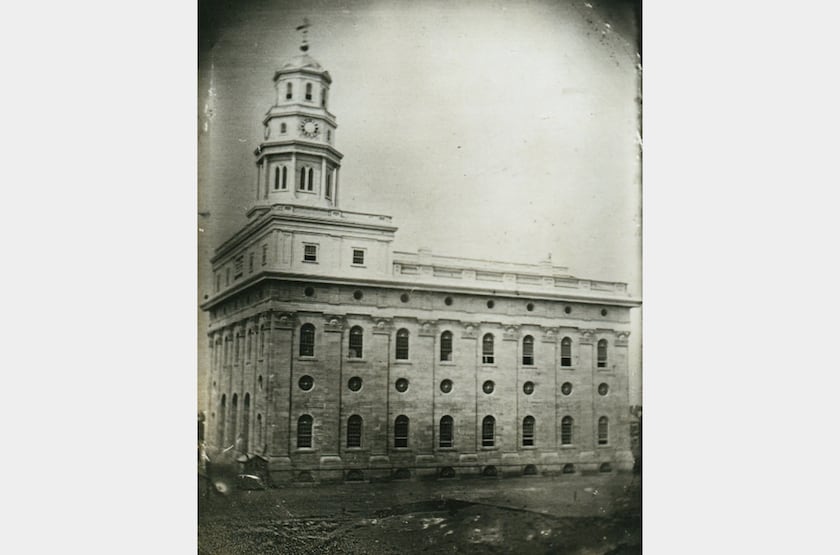
While the Nauvoo Temple was the second house of the Lord in this dispensation, it was the first where ordinances were performed. That’s because the Kirtland Temple of The Church of Jesus Christ of Latter-day Saints, dedicated in 1836, had been a place of worship and instruction, not for temple ordinances. So although the original Nauvoo Temple no longer stands as it was first built, it stands in history as the start of the early Saints’ understanding of temple work.
After the Saints relocated from Missouri to Nauvoo, Illinois, in 1839, land for a new temple in Nauvoo was secured in 1840. On Aug. 15, 1840, the Prophet Joseph Smith revealed that the Saints would now be able to be baptized by proxy for deceased ancestors. They joyfully embraced the chance to perform vicarious baptisms, with the first ones done in the Mississippi River.
Then on Jan. 19, 1841, the Lord directed Joseph Smith to have proxy baptisms performed inside a temple. “For a baptismal font there is not upon the earth, that they, my saints, may be baptized for those who are dead — For this ordinance belongeth to my house, and cannot be acceptable to me, only in the days of your poverty, wherein ye are not able to build a house unto me. But I command you, all ye my saints, to build a house unto me; and I grant unto you a sufficient time to build a house unto me; and during this time your baptisms shall be acceptable unto me” (Doctrine and Covenants 124:29-31).
The Lord added that as the Saints built this temple, “even in this place, that you may prove yourselves unto me that ye are faithful in all things whatsoever I command you, that I may bless you, and crown you with honor, immortality, and eternal life” (Doctrine and Covenants 124:55).
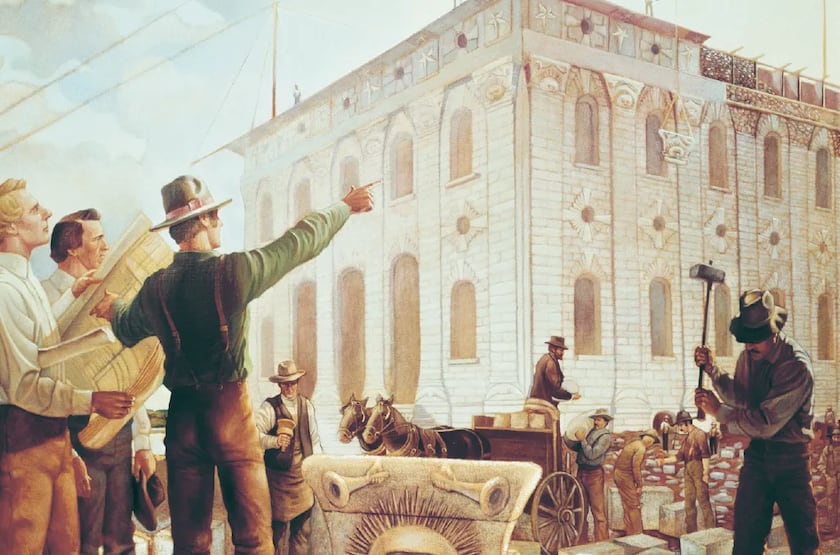
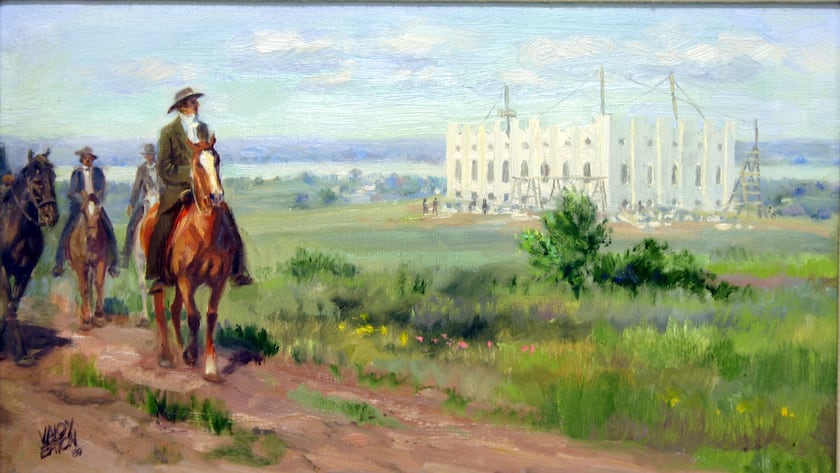
Construction began the next month — on Feb. 18, 1841 — and the cornerstones were laid on April 6, 1841. For the next four years, Church members labored and sacrificed to build the temple. Work halted temporarily when Joseph and Hyrum Smith were killed in June 1844, but it soon resumed with increased intensity as members eagerly sought to complete the temple and receive its promised blessings.
On Oct. 3, 1841, Joseph Smith discontinued proxy baptisms in the river. While the temple was still under construction, a temporary wooden baptismal font was dedicated Nov. 8, 1841. The first baptisms for the dead in this font were performed not long after, on Nov. 21, 1841. The wooden font would later be replaced by a more durable stone font.
In the fall of 1845, the Saints faced harassment and pressure to leave the state, but they were determined to complete the temple so worthy members could receive temple ordinances before leaving for the West. Brigham Young dedicated the temple’s attic Nov. 30, 1845, for the purpose of administering marriage sealings and the endowment for living people. Temples wouldn’t have proxy endowments until the St. George Utah Temple. By early February 1846, more than 6,000 Saints had received the promised endowment.
One was Sarah Rich, who recorded: “Many were the blessings we had received in the house of the Lord, which has caused us joy and comfort in the midst of all our sorrows and enabled us to have faith in God knowing He would guide us and sustain us in the unknown journey that lay before us, for if it had not been for the faith and knowledge that was bestowed upon us in that temple by the influence and help of the Spirit of the Lord our journey would have been like one taking a leap in the dark.”
Although portions of the Nauvoo Temple were unfinished, the entire building was privately dedicated April 30, 1846, then publicly dedicated May 1 to May 3, 1846, by Elder Orson Hyde of the Quorum of the Twelve Apostles. This was nearly two years after Joseph Smith’s death.
In September 1846, the Saints were driven out of Nauvoo and forced to abandon the Nauvoo Temple. It was later destroyed by an arson fire in 1848, and much of the stone structure was toppled by a tornado in 1850. The remaining wall was leveled in 1856 for safety reasons. While leaving Nauvoo, then-Elder Wilford Woodruff of the Quorum of the Twelve Apostles said, “The work in Nauvoo was done, henceforth the city of the Saints was to be nothing more to them than a memory until God should determine otherwise.”
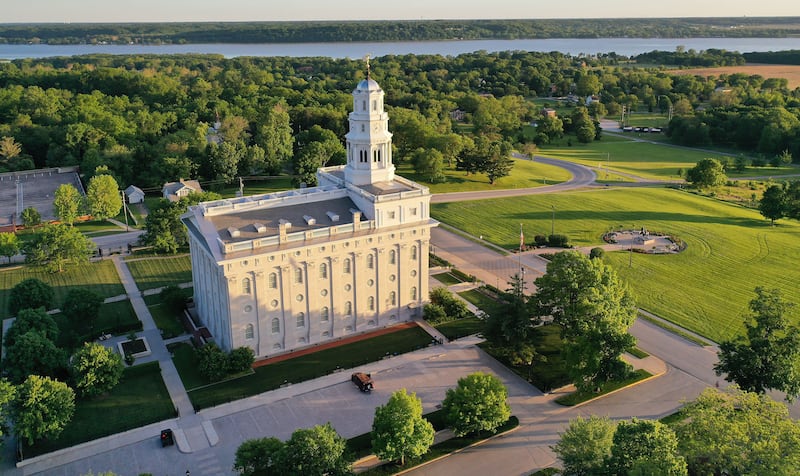
About 150 years after the temple’s dedication, Church President Gordon B. Hinckley announced on April 4, 1999, the rebuilding of the Nauvoo Temple. It was rebuilt on the same site, with the same exterior design and footprint as the original, while the interior was adapted for modern temple worship needs. The Nauvoo Illinois Temple was dedicated by President Hinckley on June 27, 2002, marking the anniversary of the martyrdom of Joseph and Hyrum Smith. The Nauvoo temple now stands at the center of Historic Nauvoo, an area consisting of historic buildings, homes and other attractions.
“The construction of the Nauvoo Temple became the crowning objective of Joseph’s life,” said President Hinckley on the day of the Nauvoo Illinois Temple’s dedication. “The endeavor came as a result of the revealed word of the Lord. His faithful people shared his vision of this truly magnificent building, the finest of its kind in this part of the country.”
Dedicatory prayer excerpt: “We thank Thee that Thou hast given us strength to accomplish the charges delivered by Thee. Thou hast seen our labors and exertions to accomplish this purpose. By the authority of the holy priesthood now we offer this building as a sanctuary to Thy worthy name. We ask Thee to take the guardianship into Thy hands and grant that Thy Spirit shall dwell here and may all feel a sacred influence on their hearts that His hand has helped this work.”
Timeline of the Nauvoo Temple
The Nauvoo Temple was announced Jan. 19, 1841, through revelation to the Prophet Joseph Smith. Construction began not long after, on Feb. 18, 1841. Just over five years later, the Nauvoo Temple was privately dedicated April 30, 1846, and publicly dedicated May 1 to May 3, 1846, by Elder Orson Hyde.
After the Saints were driven from Nauvoo in September 1846, they had to abandon the temple. It was then destroyed in the following years by arson and a tornado.
On June 27, 2002, the Nauvoo Illinois Temple was dedicated on the same site and with the same exterior design and footprint as the original.
Architecture and Design of the Nauvoo Temple
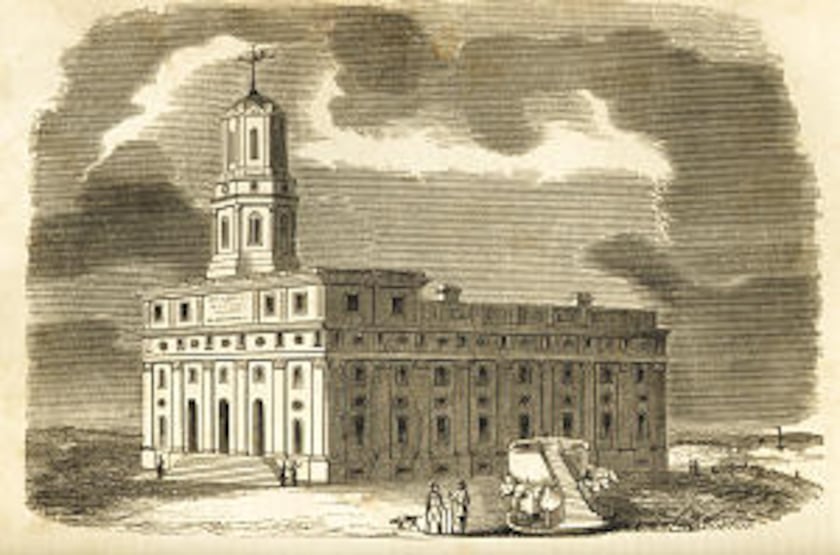
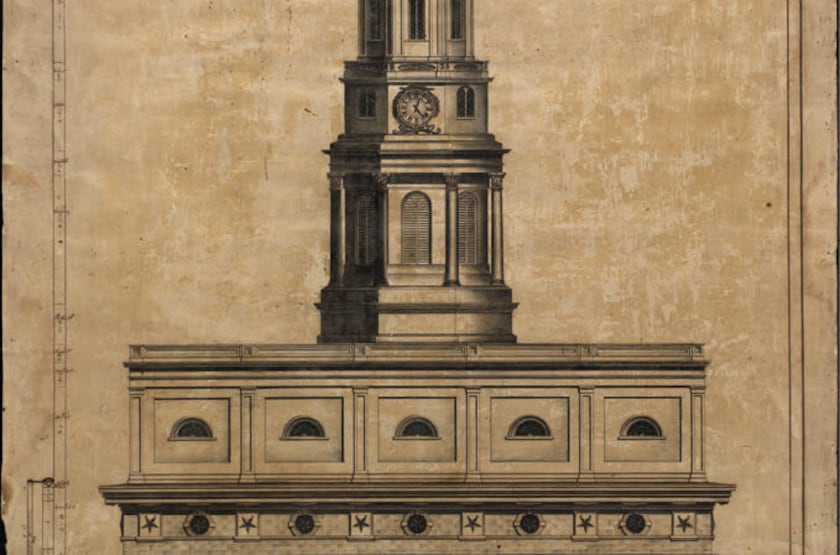
The Nauvoo Temple’s light-gray exterior consisted of limestone quarried to the north and south of the city. With about 60 rooms, the temple had a floor area of approximately 50,000 square feet. It was 65 feet high, with the tower and spire reaching to 165 feet. Timber for the temple came from forests in Wisconsin by route of Black River, a Mississippi tributary. It stood on slightly less than 4 acres on a high bluff on the east side of the Mississippi River.
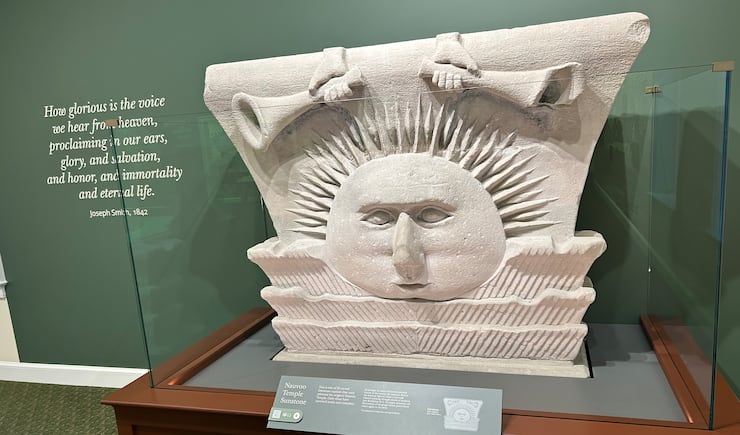
The temple walls featured 30 pilasters, each containing a sunstone, moonstone and star stone. These supporting pillars surrounded the temple, with nine on each side and six each on the front and back. Each 2½-ton sunstone depicted the carving of a radiant sun face emerging from cloud banks, beneath a pair of hand-held trumpets.
A display in the Nauvoo Temple Visitors’ Center explains: “The sunstone depicts the heavenly light of Christ’s latter-day Church breaking through the clouds of darkness (see Revelation 12:1). Trumpets announce the Restoration of the gospel before Jesus Christ comes again to the earth.”
In September 1846, the Saints were driven out of Nauvoo and forced to abandon the Nauvoo Temple. It was later destroyed by an arson fire in 1848, and much of the stone structure was toppled by a tornado in 1850. The remaining wall was leveled in 1856 for safety reasons.
Rebuilding of the Nauvoo Temple
About 150 years after the temple’s dedication, the temple was rebuilt as the Nauvoo Illinois Temple, on the same site and with the same exterior design and footprint as the original. Read more about the rebuilt Nauvoo Illinois Temple here.
Nauvoo Temple Visitors’ Center
The Nauvoo Temple Visitors’ Center was dedicated Saturday, June 27, 2026, by Elder Gerrit W. Gong of the Quorum of the Twelve Apostles. He called it a “triple anniversary” — June 27 marks the 1844 martyrdom of the Prophet Joseph Smith and his brother Hyrum Smith at Carthage Jail, about 20 miles southeast of Nauvoo. The date also commemorates the dedication of the reconstructed Nauvoo Illinois Temple on June 27, 2002.
“What was revealed here in Nauvoo continues to bless Heavenly Father’s children everywhere,” Elder Gong said. “The new Nauvoo Temple Visitors’ Center shares this legacy through exhibits, artifacts and media that help visitors gain a deeper appreciation for sacred temple covenants and ordinances restored by the Lord to Joseph Smith here in Nauvoo and offered in temples worldwide today.”