


When we think of Easter, our minds may turn to Easter Sunday, the joyful spring morning when we celebrate the Resurrection of Jesus Christ. Yet Easter is more than a single day. It is more than Holy Week — it’s a season. It’s a period of weeks that invites us to reflect on the Savior’s life, ministry, atoning sacrifice and Resurrection.
This simple shift of seeing Easter as a season will elevate how we prepare for, experience and are changed by this sacred time of year.
Modern prophets teach Easter is a season
In his April 2025 general conference address, Elder Gary E. Stevenson of the Quorum of the Twelve Apostles emphasized this idea repeatedly. He taught to celebrate ”Easter as a season and not just a holiday, with an emphasis on Jesus Christ" and shared he was striving to “make Easter a season rather than just a day.”
He also said, “First Presidency encouragement to look ‘forward to Easter and the Resurrection of Jesus Christ — the most glorious of all messages to mankind’ highlights the magnitude of this season.”
This language has also appeared in recent messages from the First Presidency, including in 2026: “We invite each of you during this Easter season to ‘seek this Jesus of whom the prophets and apostles have written’ (Ether 12:41). As you do so, we testify that your Easter celebrations can strengthen your own faith and testimony that ‘death is conquered; man is free. Christ has won the victory’” (“He Is Risen!” “Hymns,” No. 199).
In a 2023 letter, the First Presidency wrote, “During the Easter season we can strengthen our faith in Jesus Christ and share His gospel with others as we consider His life and mission.” In 2024 the First Presidency again invited us, “This Easter season, we invite you to ponder the Savior’s atoning sacrifice and glorious Resurrection, which bless all of us.”

A seasonal comparison
While Christmas is celebrated on Dec. 25, the weeks leading up to it are part of the Christmas season. During these weeks, homes, social events and Church activities are filled with music, devotionals, decorations, traditions, scripture study and acts of service.
Those same elements, centered on the life of the Savior can also be part of our Easter season. Following are ways each can contribute to a Christ-centered Easter season.
Decor
Simple, meaningful décor can remind us daily of the sacred events of the Easter season. Appropriate colors may include golds, purples, greens and spring pastels. Palms remind us of Palm Sunday and symbolize triumph and victory; fresh greenery, the Easter lily and flowers symbolize life and renewal.

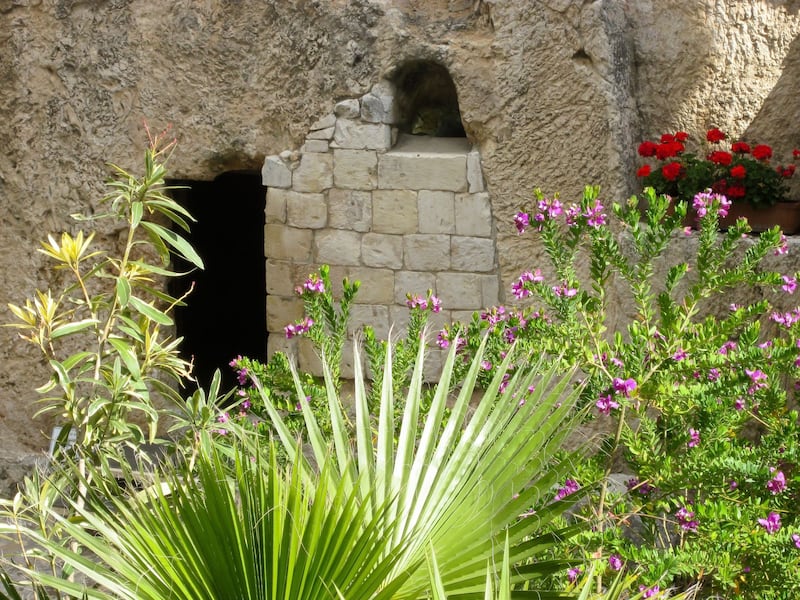
Meaningful symbols might include an empty tomb, a cross, palm leaves, a crown of thorns, or a small vase or perfume jar recalling the woman who anointed the Savior (see Mark 14). Many of these items can be homemade, allowing families time to discuss the symbols together as they create. One of my favorite decorations is an empty tomb made from clay that my young daughter made.
Traditions
Just as certain foods are closely associated with favorite holidays, food during the Easter season can also carry spiritual significance.
In his April 2023 general conference message, Elder Stevenson encouraged us to “adopt appropriate Christ-centered Easter traditions found in the cultures and practices of countries worldwide.” In many Christian traditions, hot cross buns are eaten on Good Friday, and fasting on that day is common. Lazararika bread, a Greek Orthodox tradition, is a kind of roll shaped like a person wrapped in burial cloth. This bread commemorates Lazarus, whom Jesus raised from the dead shortly before the beginning of Holy Week.
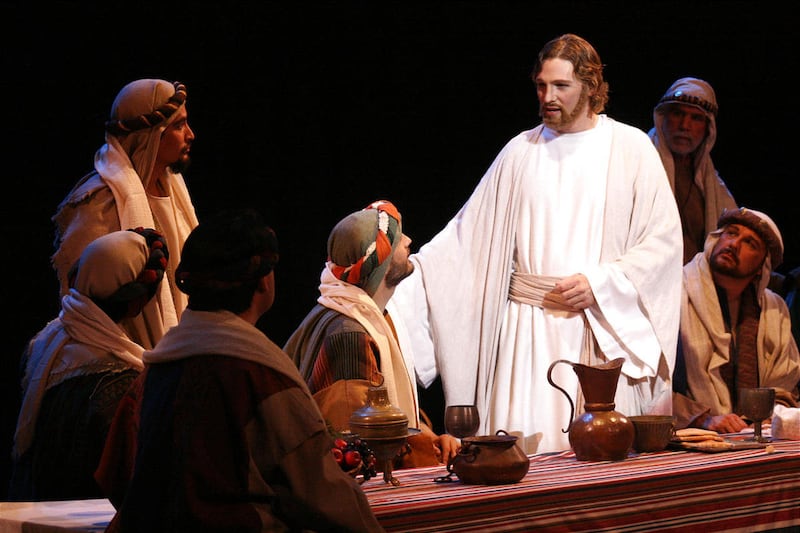
Mediterranean foods like lentil soup, pita bread, hummus, dried apricots, grape juice, nuts and cheeses are simple and can be used for a Last Supper commemoration.
“Resurrection rolls” which consist of bread dough baked around a marshmallow that melts away, can help children visualize the empty tomb. Eating broiled fish and honeycomb as part of our Easter Sunday meal can remind us of the resurrected Savior eating with His disciples (see Luke 24:41–43). Fresh green salads can symbolize new life, and sweet treats can remind us of the sweetness of the Savior’s love shown when he died for our sins, or the joyful message: “He is risen.”
Scripture study
While only a couple New Testament chapters recount the Christmas story, the Easter narrative on the other hand spans numerous chapters. More than 40 percent of the Gospel of John (chapters 12–21), nearly 40 percent of Mark (chapters 11–16), about one-third of Matthew (chapters 21–28), and about one-quarter of Luke (chapters 19–24) focus on the Savior’s final days, death and Resurrection. Plus, the Book of Mormon Easter story in 3 Nephi 8-10, and chapters 11-28 is 70% of the book of 3 Nephi. This amount of scripture is vast and can feel overwhelming, but studying the passages a little at a time can help us understand and appreciate these holy events.
Images
The scriptural narrative surrounding this time is rich with miraculous events, profound teachings and expressions of the Savior’s love. It can be helpful to review many of these events by placing printed images on a wall or spaced out on the floor and see if we can put the events in order. By seeing and reviewing the images throughout the season even young children can remember much of the sequence of events.
The Church has many images of the Savior available on its website through a link at Easter.ChurchofJesusChrist.org.
Families or church groups might also reenact events from Holy Week: a Palm Sunday procession, parable charades, extra cleaning to remember the cleansing of the temple, a Last Supper commemoration, or a reader’s theater of the Crucifixion narrative on Good Friday and sunrise devotional on Easter Sunday.
Service during the Easter season
We often associate “doing good” with Christmas, but the Easter season also invites Christlike service. One clear and powerful example is the woman who anointed the Savior with expensive perfume prior to his burial (see Mark 14:3–9). She did not ask what she could receive from the Savior, but instead thought of and acted on what she could give Him. Jesus asked that her actions be told wherever the gospel is preached.
Service during the Easter season is also inspired by the Savior’s final teachings at the temple: “Inasmuch as ye have done it unto the least of these, ye have done unto me” (Matthew 25:40) and at the Last Supper: “As I have loved you, so you must love one another. By this everyone will know that you are my disciples, if you love one another” (John 13:34 NIV). Local opportunities can be found through resources such as JustServe.org.

Music
Just a few notes of a Christmas hymn can instantly bring the spirit of Christmas. Easter music can do the same. Listening to music connected to specific holy days can help connect one with those events. In his 2023 general conference message, Elder Stevenson said a Christ-centered Easter “includes a greater and more thoughtful recognition of Palm Sunday and Good Friday as practiced by some of our Christian cousins.”
Perhaps particular music for these days may be appropriate. For example:
- Palm Sunday: “Hosanna,” “Rejoice, the Lord Is King!” “Praise to the Lord, the Almighty,” and other hymns of praise.
- Maundy Thursday: “Gethsemane,” “Love One Another,” “While of these Emblems We Partake.”
- Good/Holy/Atoning Friday: “Were You There?” “There Is a Green Hill Far Away” and other crucifixion hymns.
- Easter Sunday: “He Is Risen!” and other joyful Resurrection music
- The 40 days following Easter: Missionary-themed hymns such as “Go Forth with Faith,” remembering the Savior’s great commission to take the gospel to the world. Handel’s Hallelujah Chorus was written as an Easter anthem.
- Ascension Day: Hymns about the Second Coming.
- Pentecost: Hymns about the Holy Ghost.
- Weeks following the Ascension, Book of Mormon Easter events: “Hosanna,” “This Is the Christ,” and “I Will Walk with Jesus.”
Greater span of time allows flexibility
The Easter season can be a period of many weeks, or even months. For example, Catholics have a Lenten season, which starts about 40 days before Easter Sunday, and then an Easter season that spans seven weeks, from Easter Sunday to Pentecost. Latter-day Saints traditionally haven’t delineated between a Lenten season and an Easter season. A webpage on ChurchofJesusChrist.org about planning Easter worship services posed this question: “How can we intentionally worship the Savior in the weeks leading up to and following Easter Sunday?”
We are blessed to be able to add on the Book of Mormon Easter events, with the appearance and ministry of the resurrected Savior in the Americas, after the Ascension (see 3 Nephi 10:18, 3 Nephi 11:12).
At Christmas time there can be a sensitivity to do less, and to allow for family time. For many of us, society does not slow down during the Easter season in a similar way. Adding to this difficulty is that the date of Easter Sunday changes from year to year. Sometimes it coincides with children being out of school. Other times, dates of Holy Week are in the middle of a busy sports season and school performances. I remember one year trying to plan a Good Friday activity for our family, only to learn that there was a major activity that evening.
Part of the beauty of viewing Easter as a season and knowing we have a large span of time to discuss and honor these holy events can alleviate some of the stress. If schedules make it difficult on a particular part of the season, we can find time on a different day. An additional benefit of intentionally worshipping in the weeks leading up to and following Easter Sunday is more time and opportunities to speak of the goodness of God.
I know as we follow prophetic counsel and embrace Easter as a season, we will focus more on the teachings and divinity of Jesus Christ and our faith in Him will increase.
— Lani Hilton is an author, speaker and teacher. She is married to BYU religion professor John Hilton III and they have six children.
