


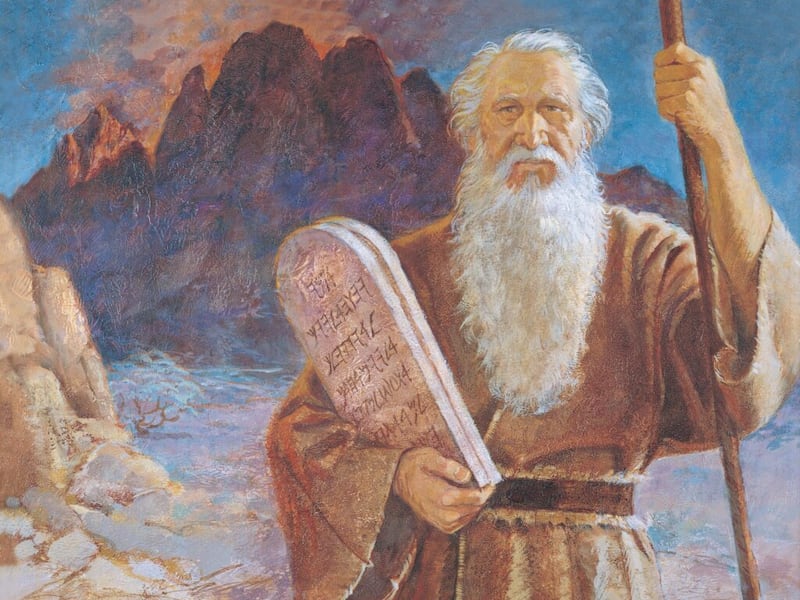

This week’s “Come, Follow Me” study guide covers Exodus 19-20, 24 and 31-34, which includes the Ten Commandments.
Following are a few quotes from past and present leaders of The Church of Jesus Christ of Latter-day Saints about these chapters of scripture.
‘Thou shalt have no other gods before me’
“The Ten Commandments are fundamental to the Christian and Jewish faiths. Given by God to the children of Israel through the prophet Moses, the first two of these commandments direct our worship and our priorities. In the first, the Lord commanded, ‘Thou shalt have no other gods before me’ (Exodus 20:3). …
“The second of the Ten Commandments elaborates the direction to have no other gods and identifies what should be the ultimate priority in our lives as His children. ‘Thou shalt not make unto thee any graven image, or any likeness of any thing’ in the heavens or the earth (Exodus 20:4). The commandment then adds, ‘Thou shalt not bow down thyself to them, nor serve them’ (Exodus 20:5). More than merely forbidding physical idols, this states a fundamental priority for all time. Jehovah explains, ‘For I the Lord thy God am a jealous God, … shewing mercy unto … them that love me, and keep my commandments’ (Exodus 20:5-6). The meaning of ‘jealous’ is revealing. Its Hebrew origin means ‘possessing sensitive and deep feelings’ (Exodus 20:5, footnote b). Thus we offend God when we ‘serve’ other gods — when we have other first priorities.”
— President Dallin H. Oaks, then a member of the Quorum of the Twelve Apostles, October 2013 general conference, “No Other Gods”
“Although we admire and respect many talented and remarkable men and women for their abilities and contributions, the degree to which they are revered, if taken to an excess, can be the equivalent of the children of Israel worshipping a golden calf in the desert of Sinai. …
“For the children of Israel, the challenge was not the gold that they brought with them on their journey to the promised land but rather what they allowed the gold to become: an idol, which then became the object of their worship, turning their attention away from Jehovah, who had parted the Red Sea and delivered them from bondage. Their focus on the calf impacted their ability to worship the true God (see Exodus 32).
“The hero — our hero, now and always — is Jesus Christ, and anything or anyone that distracts us from His teachings, as found in the scriptures and through the words of living prophets, can negatively impact our progress on the covenant path.”
— Bishop W. Christopher Waddell, then the first counselor in the Presiding Bishopric, October 2023 general conference, “More Than a Hero”
“Remember that when Moses came down from his singular experience on Mount Sinai, he found that his people had ‘corrupted themselves’ and had ‘turned aside quickly’ (Exodus 32:7- 8). There they were at the foot of the mountain, busily fashioning a golden calf to worship, in the very hour that Jehovah, at the summit of the mountain, had been telling Moses, ‘Thou shalt have no other gods before me’ and ‘Thou shalt not make unto thee any graven image’ (Exodus 20:3-4). Moses was not happy with his flock of wandering Israelites that day. …
“Realizing that we all have to come down from peak experiences to deal with the regular vicissitudes of life, may I offer this encouragement. … With the gift of the Atonement of Jesus Christ and the strength of heaven to help us, we can improve, and the great thing about the gospel is we get credit for trying, even if we don’t always succeed.”
— The late President Jeffrey R. Holland, then a member of the Quorum of the Twelve Apostles, April 2016 general conference, “Tomorrow the Lord Will Do Wonders among You”
‘Thou shalt not take the name of the Lord thy God in vain’
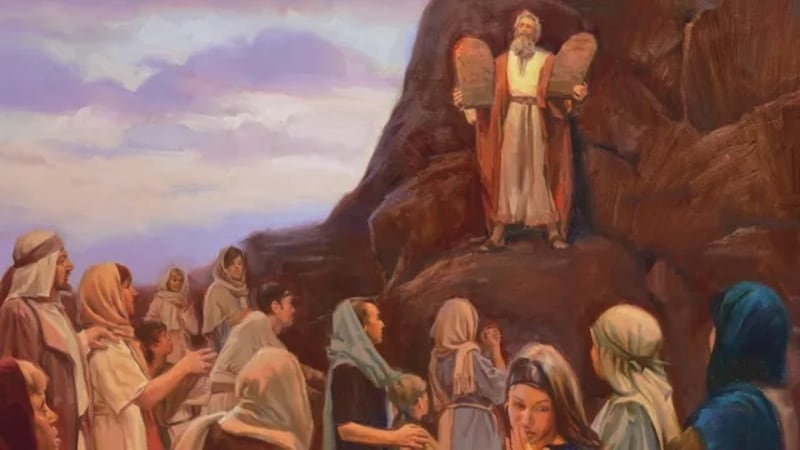
“At baptism and when we partake of the sacrament, we witness that we are willing to take on ourselves the name of Jesus Christ. In this context, let us be mindful of the Old Testament commandment, ‘Thou shalt not take the name of the Lord thy God in vain’ (Exodus 20:7). To our modern ears, this sounds like a prohibition against irreverently using the Lord’s name. The commandment includes that, but its injunction is even more profound. The Hebrew word translated as ‘take’ means to ‘lift up’ or ‘carry,’ as one would a banner that identifies oneself with an individual or group. The word translated as ‘vain’ means ‘empty’ or ‘deceptive.’ The commandment to not take the Lord’s name in vain can thus mean, ‘You should not identify yourself as a disciple of Jesus Christ unless you intend to represent Him well.’”
— Elder Dale G. Renlund of the Quorum of the Twelve Apostles, April 2023 general conference, “Accessing God’s Power through Covenants”
‘Remember the sabbath day, to keep it holy’
“In Hebrew, the word Sabbath means ‘rest.’ The purpose of the Sabbath dates back to the Creation of the world, when after six days of labor the Lord rested from the work of creation. When He later revealed the Ten Commandments to Moses, God commanded that we ‘remember the sabbath day, to keep it holy’ (Exodus 20:8). Later, the Sabbath was observed as a reminder of the deliverance of Israel from their bondage in Egypt. Perhaps most important, the Sabbath was given as a perpetual covenant, a constant reminder that the Lord may sanctify His people (see Exodus 31:13, 16). …
“The Savior identified Himself as Lord of the Sabbath. It is His day. Repeatedly, He has asked us to keep the Sabbath (see Exodus 31:13) or to hallow the Sabbath day. We are under covenant to do so.
“How do we hallow the Sabbath day? In my much younger years, I studied the work of others who had compiled lists of things to do and things not to do on the Sabbath. It wasn’t until later that I learned from the scriptures that my conduct and my attitude on the Sabbath constituted a sign between me and my Heavenly Father (see Exodus 31:13). With that understanding, I no longer needed lists of dos and don’ts. When I had to make a decision whether or not an activity was appropriate for the Sabbath, I simply asked myself, ‘What sign do I want to give to God?’ That question made my choices about the Sabbath day crystal clear.”
— The late President Russell M. Nelson, then a member of the Quorum of the Twelve Apostles, April 2015 general conference, “The Sabbath Is a Delight”
‘Honour thy father and thy mother’
“Thousands of years ago ... the Lord God of Israel gave his people 10 commandments. The fifth commandment that the Lord gave through the prophet Moses was:
“‘Honour thy father and thy mother: that thy days may be long upon the land which the Lord thy God giveth thee’ (Exodus 20:12). ...
“The commandment to honor our parents has strands that run through the entire fabric of the gospel. It is inherent in our relationship to God our Father. It embraces the divine destiny of the children of God. This commandment relates to the government of the family, which is patterned after the government of heaven.
“The commandment to honor our parents echoes the sacred spirit of family relationships in which — at their best — we have sublime expressions of heavenly love and care for one another. We sense the importance of these relationships when we realize that our greatest expressions of joy or pain in mortality come from the members of our families."
— President Dallin H. Oaks, then a member of the Quorum of the Twelve Apostles, April 1991 general conference, “‘Honour Thy Father and Thy Mother’”
‘Thou shalt not kill’
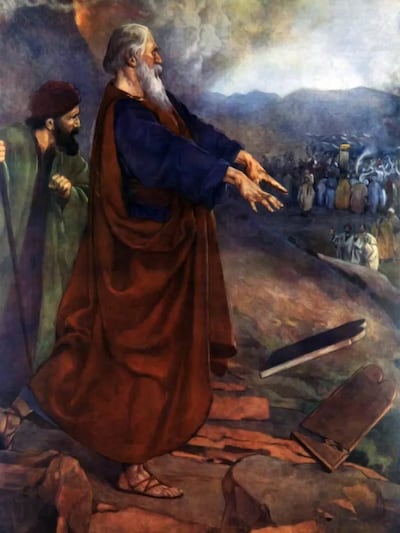
“As we strive to be obedient in today’s world, we declare our love and respect for all of Heavenly Father’s children. Yet it is impossible for this love for others to modify God’s commandments, which were given for our good. For example, the commandment ‘thou shalt not … kill, nor do anything like unto it’ (Doctrine and Covenants 59:6; see also Exodus 20:13) is founded upon spiritual law that protects all of God’s children, even the unborn. Long experience suggests that when we ignore this law, immeasurable sorrow results. Yet many believe it is acceptable to terminate the life of an unborn child for reasons of preference or convenience."
— The late Elder Robert D. Hales, then a member of the Quorum of the Twelve Apostles, April 2014 general conference, “‘If Ye Love Me, Keep My Commandments’”
‘Thou shalt not commit adultery’
“We live in a world of reason, debate, argument, logic and explanation. Questioning ‘Why?’ is positive in so many aspects of our lives, allowing the power of our intellect to guide a multitude of choices and decisions we face each day.
“But the Lord’s voice often comes without explanation. Long before academics studied the impact of infidelity upon trusting spouses and children, the Lord declared, ‘Thou shalt not commit adultery’ (Exodus 20:14). Beyond relying on the intellect alone, we treasure the gift of the Holy Ghost.”
— Elder Neil L. Andersen of the Quorum of the Twelve Apostles, April 2018 general conference, “The Prophet of God”
‘Thou shalt not steal’
“‘Thou shalt not steal’ (Exodus 20:15). Teach your children to be honest and to respect that which belongs to others, especially that which belongs to our Father in Heaven. Teach them by example to pay a full tithing and give generous offerings. As they stamp their actions with honesty, they will be filled with the Spirit and power of God. Teach them the joy of giving and sharing."
— Elder Lynn A. Mickelsen, then a General Authority Seventy, October 1995 general conference, “Eternal Laws of Happiness”
‘Thou shalt not bear false witness’
“A public statement of love when the private actions of love are absent at home is hypocrisy — and weakens the foundation of a great work. Publicly declaring testimony when faithfulness and obedience are missing within our own homes is hypocrisy — and undermines the foundation of a great work. The commandment ‘Thou shalt not bear false witness’ (Exodus 20:16) applies most pointedly to the hypocrite in each of us. We need to be and become more consistent."
— Elder David A. Bednar of the Quorum of the Twelve Apostles, October 2009 general conference, “More Diligent and Concerned at Home”
‘Thou shalt not covet’
“Being provident providers, we must keep that most basic commandment, ‘Thou shalt not covet’ (Exodus 20:17). Our world is fraught with feelings of entitlement. Some of us feel embarrassed, ashamed, less worthwhile if our family does not have everything the neighbors have. As a result, we go into debt to buy things we can’t afford — and things we do not really need. Whenever we do this, we become poor temporally and spiritually. We give away some of our precious, priceless agency and put ourselves in self-imposed servitude. Money we could have used to care for ourselves and others must now be used to pay our debts. What remains is often only enough to meet our most basic physical needs. Living at the subsistence level, we become depressed, our self-worth is affected, and our relationships with family, friends, neighbors and the Lord are weakened. We do not have the time, energy or interest to seek spiritual things."
— The late Elder Robert D. Hales, then a member of the Quorum of the Twelve Apostles, April 2009 general conference, "Becoming Provident Providers Temporally and Spiritually"
‘A peculiar treasure’
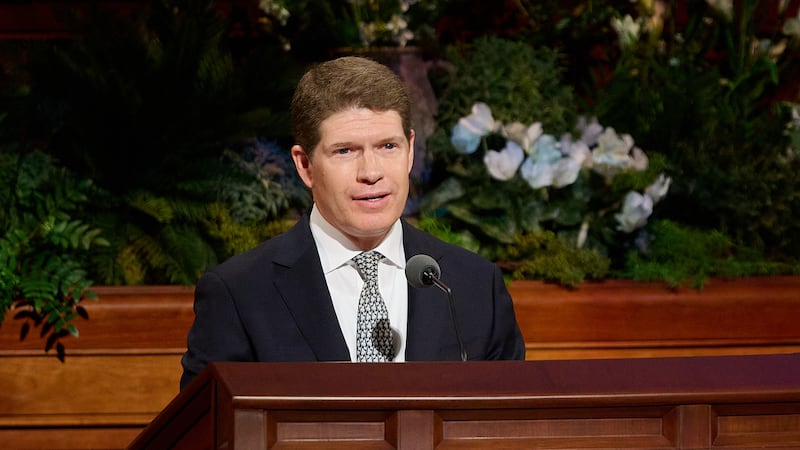
“As we study the scriptures, we encounter the word ‘treasure’ dozens of times — most often as a warning not to set our hearts upon riches or upon the fleeting things of the world. Yet among all those warnings about earthly treasure, there is one passage that reveals something astonishing: the Lord Himself speaks of us as His treasure. I speak of the moment when the Lord addressed the prophet Moses upon Mount Sinai and declared that His people would be a ‘peculiar treasure’ unto Him if they would obey His voice and keep His covenant (see Exodus 19:5). …
“In His benevolent teaching to Moses, the Lord established a pattern of application not only to the ancient children of Israel but to all those who desire to become His treasure — the Lord’s covenant people. That pattern includes two simple but powerful conditions: to obey His voice and to keep our covenants with Him (see Exodus 19:5). Then we will be a peculiar, or special, treasure; and as such we will be blessed, strengthened and favored through the Savior’s atoning sacrifice.”
— Elder Alan R. Walker, General Authority Seventy, April 2026 general conference, “A Peculiar Treasure”
‘I know thee by name’

“Even as Jesus Christ invites us to always remember Him and take upon ourselves His name, He also remembers us and knows each of us by name.
“In the Old Testament, the Lord taught Moses this assuring truth: ‘I know thee by name’ (Exodus 33:17). …
“And He knows you and calls you by name too — from crowded cities to quiet villages, in whatever language you speak. He hears, sees and knows you.”
— Elder Clement M. Matswagothata, General Authority Seventy, April 2026 general conference, “He Knows You by Name”
