


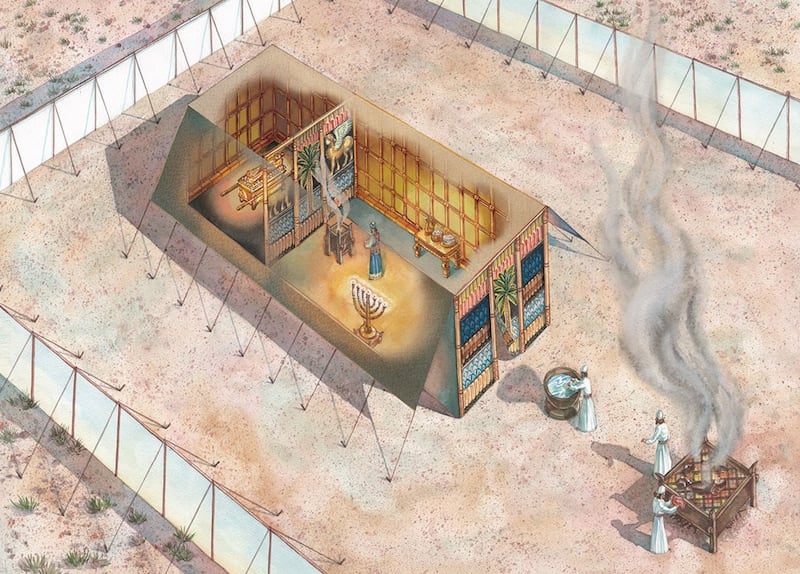

This week’s “Come, Follow Me” study guide covers Exodus 35-40 and Leviticus 1, 4, 16 and 19, which includes details about the ancient tabernacle and animal sacrifices.
Following are a few quotes from past and present leaders of The Church of Jesus Christ of Latter-day Saints and scholars about these chapters of scripture.
Exodus 35
“Heavenly Father can bless us with wisdom and understanding, especially as we diligently desire and seek them.
“‘And he hath filled him with the spirit of God, in wisdom, in understanding, and in knowledge’ (Exodus 35:31). …
“We gain wisdom and understanding as we learn to recognize God’s voice and Spirit.”
— Elder Gerrit W. Gong of the Quorum of the Twelve Apostles, August 2025 BYU Education Week, “An Ear to Wisdom, a Heart to Understanding”
“One of the days of the week that I enjoy most is Sunday — the Sabbath, or even better, the Lord’s day. On this day we are given the opportunity to show the great love we have for our Heavenly Father, for His Son, Jesus Christ, and for our fellow human beings by punctually attending sacrament meeting, taking the sacrament with seriousness and reverence, renewing our covenants and fulfilling our callings and assignments; as well as spending time with our family, studying things that are inspiring and doing so with the aim only of the glory of God.
“Regarding the commandment to honor the Sabbath, we read in the Old Testament: ‘And Moses gathered all the congregation of the children of Israel together, and said unto them, These are the words which the Lord hath commanded, that ye should do them.
“‘Six days shall work be done, but on the seventh day there shall be to you an holy day, a sabbath of rest to the Lord’ (Exodus 35:1-2).”
— Elder José L. Alonso, General Authority Seventy, in the April 2019 Liahona article, “Deuteronomy 5:15: The Lord thy God Commanded Thee to Keep the Sabbath Day”

Exodus 39
“Inscribed on each temple are the words ‘Holiness to the Lord’ (see Exodus 39:30). That statement designates both the temple and its purposes as holy. Those who enter the temple are also to bear the attribute of holiness. It may be easier to ascribe holiness to a building. … As temples are prepared for our members, our members need to prepare for the temple.”
— The late President Russell M. Nelson, then a member of the Quorum of the Twelve Apostles, April 2001 general conference, “Personal Preparation for Temple Blessings”
Exodus 40

“After the children of Israel had begun their journey into the wilderness, the Lord commanded Moses to build a tabernacle. … Sacred clothing was prepared for those who would function as priests, including garments to be worn beneath other symbolic clothing. Such clothing was ‘put upon’ the priests in connection with washing and anointing (Exodus 40:13). After the tabernacle had been built following the Lord’s detailed instructions, ‘a cloud covered the tent of the congregation, and the glory of the Lord filled the tabernacle’ (Exodus 40:34). In that fashion the Lord accepted the tabernacle, and it became His sacred space. …
“Since ‘God is the same yesterday, today, and forever’ (Mormon 9:9), I am confident that the Lord also accepts all His temples today. Gratefully, even though we are imperfect, we are invited as His guests into His house. … We should want to enter His house often because Jesus is anxious to meet with us there.”
— Elder Allen D. Haynie, General Authority Seventy, in his October 2023 BYU devotional, “Meeting Jesus in the House of the Lord”
“Another important dimension of order in the priesthood is seen in the Old Testament, in which many of the references to the word order are directly related to temple and sacrificial offerings. In Exodus 40 we read about the rearing of the tabernacle. Here the Lord gave detailed instructions about the ark of the covenant, the altars, and the table on which Moses is to ‘set in order the things that are to be set in order upon it,’ including the bread (Exodus 40:4). Aaron is then to bring his sons and prepare them to ‘minister unto me in the priest’s office: for their anointing shall surely be an everlasting priesthood throughout their generations’ (Exodus 40:1-15). …
“Clearly, from before time we were taught of the order in the priesthood and its ordinances, and this knowledge can bless us now as we work to make acceptable our offerings to the Lord.”
— Stephen M. Jones, then the dean of the BYU College of Fine Arts and Communications, during his March 2006 BYU devotional, “‘He Hath Made with [Us] an Everlasting Covenant, Ordered in All Things, and Sure’”
Leviticus 1
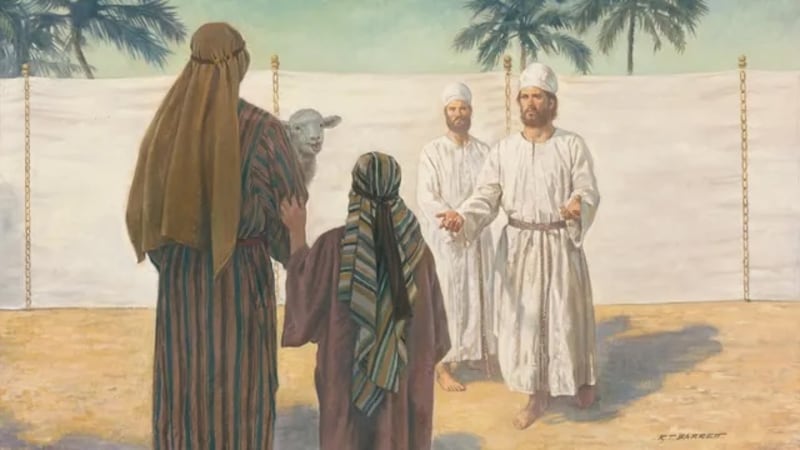
“Often when members of the Church think about sacrifice in the Old Testament, we think of the numerous commandments of sacrifices and offerings in the law of Moses as outlined in Leviticus. These sacrificial laws were designed to teach the children of Israel how to become more like God. …
“The various sacrifices taught many important gospel principles. For example, the burnt offering was primarily offered as a symbol of the forgiveness of sins and a reminder of the coming of Christ (see Leviticus 1). The offerer humbly approached God with a ‘willing heart’ (Exodus 35:5), in the spirit of repentance and obedience, giving their very best from their flocks, ‘a male without blemish’ (Leviticus 1:3), manifesting faith in the power of forgiveness and adherence to their covenantal obligation. The offering was symbolic of the complete and total offering of the Savior on our behalf. The death of the offering symbolized the death of the sinful man or woman and the rebirth through God of the new man or woman. The blood that was poured out on the altar pointed to the blood of the Atonement of Jesus Christ offered for all of us. The sacrifice was burned completely on the altar.”
— David Rolph Seely and Jo Ann H. Seely, BYU professors in the Department of Ancient Scripture, in the September 2022 Liahona article, “Sacrifice: In Similitude of the Savior”
“Leviticus refers to a religious practice that pertains to the flaying of the bullock after it was slaughtered: ‘He shall kill the bullock before the Lord. … And he shall flay the burnt offering’ (Leviticus 1:5-6).
“To flay here apparently means to skin the animal. After the sacrificial offering was killed, the one making the offering or a member of the priesthood would skin the animal. The Hebrew word ‘psht,’ translated as ‘to flay,’ usually means ‘to strip off clothing.’
“Flayed sacrificial animals were symbols of Jesus Christ. Jesus was unceremoniously stripped of clothing — His garments and ‘coat’ — before His Crucifixion:
“Then the soldiers, when they had crucified Jesus, took his garments, and made four parts, to every soldier a part; and also his coat: now the coat was without seam, woven from the top throughout.
“‘They said therefore among themselves, Let us not rend it, but cast lots for it, whose it shall be: that the scripture might be fulfilled, which saith, They parted my raiment among them, and for my vesture they did cast lots’ (John 19:23-24). …
“The flaying of sacrificial animals also anticipated the scourging of Jesus. When He appeared before the Roman governor Pontius Pilate, Jesus was stripped of parts of His skin as He was scourged (see Matthew 27:26). Perhaps Peter referred to this scourging or the subsequent nail prints in the Savior’s hands and wrists when he wrote that Jesus bore ‘our sins in his own body’ (1 Peter 2:24).”
— Donald W. Parry, BYU professor of Hebrew Bible and Dead Sea Scrolls, in the February 2010 Liahona article, “Christ & Culture in the Old Testament”
Leviticus 16

“Leviticus 16 describes how the high priest, on the Day of Atonement, is to sprinkle the blood of the animal sacrifice ‘upon the mercy seat’ to ‘make an atonement’ (Leviticus 16:15-16). Paul uses the word ‘propitiation’ to compare the saving work of Jesus Christ to something his readers were familiar with: the work of priests in the temple to take away the people’s sins and reconcile them to God. Paul, however, clarifies that it is not the blood of animals that saves but rather ‘propitiation through faith in [Christ’s] blood’ (Romans 3:25).”
— Jason R. Combs, then a BYU assistant professor of ancient scripture, in the August 2023 Liahona article, “Paul’s Metaphors of Salvation in Their Ancient Contexts”
“The blood from the sacrifices symbolizes the power of Christ’s atoning blood to make God’s children holy. When the high priest took the sacrificial blood through the veil into the Holy of Holies on the Day of Atonement and sprinkled it on the mercy seat of the ark of the covenant (see Leviticus 16:14-16), he symbolically represented Christ, the ‘great high priest,’ who through His Atonement parted the veil for us and made it possible for us ‘to enter into the holiest by the blood of Jesus’ (Hebrews 4:14; 10:19). …
“Following repentance and fasting by the Israelites, on the Day of Atonement the high priest took the blood of the substitutionary offering and entered the Holy of Holies and sprinkled it on the mercy seat on behalf of all Israel to ‘cover’ their sins and bring them back into harmony with God (see Leviticus 16:15).”
— David Rolph Seely and Jo Ann H. Seely, BYU professors in the Department of Ancient Scripture, in the September 2022 Liahona article, “Sacrifice: In Similitude of the Savior”
“The laying of hands on the head of certain sacrificial animals was a significant part of the ancient sacrificial system. …
“The act of laying hands on sacrificial animals teaches the law of proxy, or the power for one to act as a substitute for another. In this case it symbolically transmits the sins of the people onto the animal’s head. Or, as one biblical scholar has stated, the laying on of hands ‘identifies the sinner with the sacrificial victim to be slain and symbolizes the offering of his own life’ (‘Theological Dictionary of the Old Testament,’ by Johannes Botterweck and others, published in 1995). The symbolism of the laying on of hands, in the context of sacrificial offerings, is expressed in Leviticus 16:21-22, where the high priest transmitted Israel’s sins and iniquities to the goat’s head:
“‘Aaron shall lay both his hands upon the head of the live goat, and confess over him all the iniquities of the children of Israel, and all their transgressions in all their sins, putting them upon the head of the goat. …
“‘And the goat shall bear upon him all their iniquities.’
“The sacrificial animals, of course, were types and shadows of Jesus Christ, who bore our sins and iniquities before His death on the cross.”
— Donald W. Parry, BYU professor of Hebrew Bible and Dead Sea Scrolls, in the February 2010 Liahona article, “Christ & Culture in the Old Testament”
Leviticus 19
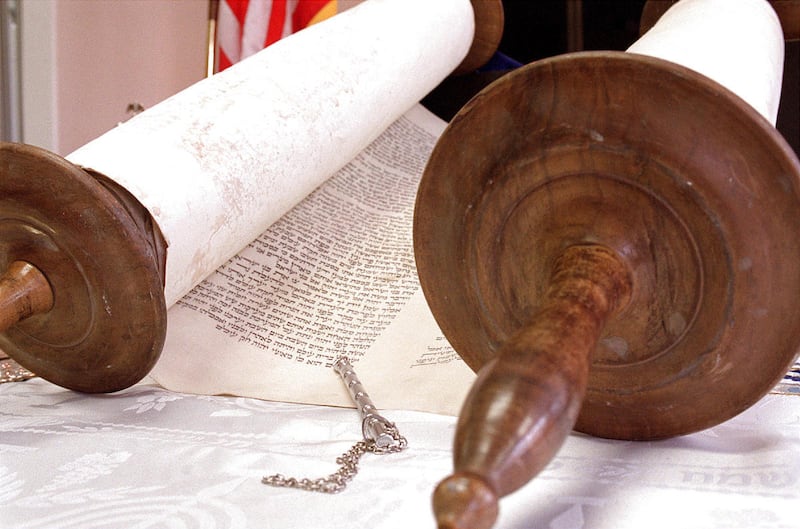
“The importance of not mistreating others is highlighted in an anecdote about Hillel the Elder, a Jewish scholar who lived in the first century before Christ. One of Hillel’s students was exasperated by the complexity of the Torah — the five books of Moses with their 613 commandments and associated rabbinic writings. The student challenged Hillel to explain the Torah using only the time that Hillel could stand on one foot. Hillel may not have had great balance but accepted the challenge. He quoted from Leviticus, saying, ‘Thou shalt not avenge, nor bear any grudge against the children of thy people, but thou shalt love thy neighbour as thyself’ (Leviticus 19:18). Hillel then concluded: ‘That which is hateful unto you, do not do to your neighbor. This is the whole of the Torah; the rest is commentary. Go forth and study.’”
— Elder Dale G. Renlund of the Quorum of the Twelve Apostles, October 2020 general conference, “Do Justly, Love Mercy and Walk Humbly with God”
“It is our hope that you will prayerfully determine what you can do — according to your own time and circumstance — to serve the refugees living in your neighborhoods and communities. This is an opportunity to serve one on one, in families, and by organization to offer friendship, mentoring, and other Christlike service and is one of many ways sisters can serve. …
“Sisters, we know that reaching out to others with love matters to the Lord. Consider these scriptural admonitions:
“‘The stranger that dwelleth with you shall be unto you as one born among you, and thou shalt love him as thyself’ (Leviticus 19:34).”
— Sister Linda K. Burton, then the Relief Society general president, April 2016 general conference, “‘I Was a Stranger’”
“The word ‘stranger’ comes from the Latin word ‘extraneus,’ which means ‘exterior’ or ‘from the outside.’ Generally, it designates someone who is an ‘outsider’ for various reasons, whether it be because of origin, culture, opinions or religion. As disciples of Jesus Christ who strive to be in the world but not of the world, we sometimes feel like outsiders. We, better than many, know that certain doors can be closed to those who are considered to be different.
“Throughout time the people of God have been commanded to care for all individuals who are strangers or who may be seen as different. In ancient times a stranger benefited from the same obligation of hospitality as a widow or an orphan. Like them, the stranger was in a situation of great vulnerability, and his survival depended on the protection he received from the local population. The people of Israel received precise instructions on this subject: ‘But the stranger that dwelleth with you shall be unto you as one born among you, and thou shalt love him as thyself; for ye were strangers in the land of Egypt’ (Leviticus 19:34).”
— Elder Gérald Caussé of the Quorum of the Twelve Apostles, then the first counselor in the Presiding Bishopric, October 2013 general conference, “Ye Are No More Strangers”
