


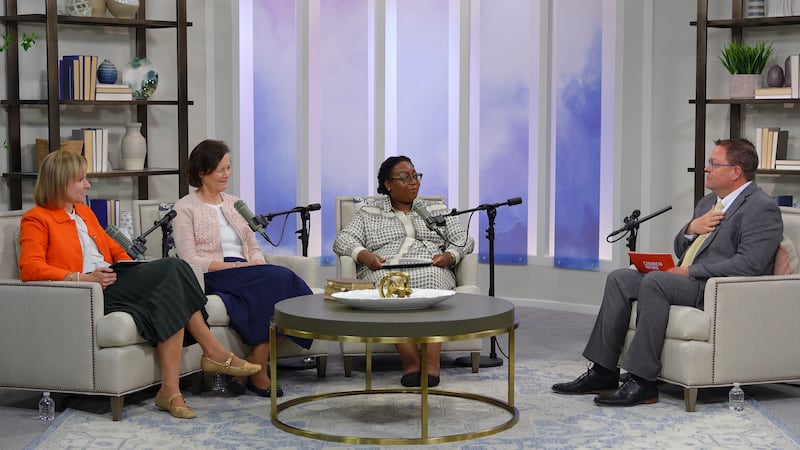


In the April 2026 general conference of The Church of Jesus Christ of Latter-day Saints, members of the Church sustained a new Primary general presidency to begin their service on Aug. 1. The current Primary general presidency has served together since 2022 and will conclude its service on July 31.
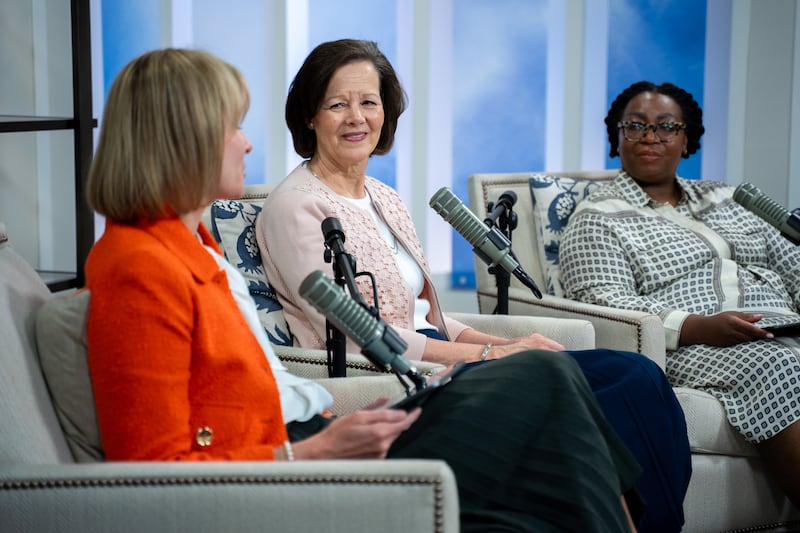
On this episode of the Church News podcast, President Susan H. Porter and her counselors, Sister Amy A. Wright and Sister Tracy Y. Browning, talk with Church News editor Jon Ryan Jensen about their observations of children around the world who are learning the gospel of Jesus Christ at home and in church settings.
“We have tried to drink so deeply from the Savior’s example in 3 Nephi,” President Porter said in the interview. “When He gathered children so often around Him, and He prayed for them, and He called down angels, and He invited them, He loosed their tongues, invited them to share.”
The three members of the Primary general presidency recall favorite moments from their time serving together and the ways their own testimonies of the Savior grew through fulfilling a calling that President Porter described as initially being “overwhelming” but became a blessing in each of their lives.
Listen to this episode of the Church News podcast on Apple Podcasts, Amazon, Spotify, bookshelf PLUS, YouTube or wherever you get podcasts.
Transcript:
Jon Ryan Jensen: I’m Jon Ryan Jensen, editor of the Church News. Welcome to this episode of the Church News podcast.
Today, we’re excited to have with us the Primary general presidency of The Church of Jesus Christ of Latter-day Saints to talk with us about the time that they’ve had serving as the Primary general presidency and serving with parents, leaders and teachers as they’ve ministered around the world.
We welcome them today to our studio. Sisters, thanks for being with us today.
President Susan H. Porter: Thank you.
0:33
Jon Ryan Jensen: I really am excited to have this conversation with the three of you today. You found out, or probably knew a little ahead of time, that in April a new Primary general presidency would be called. And yet you are powering forward in the last few months of your calling.
But I want to go back to the beginning and, President Porter, perhaps start with you and ask how, when you accepted a new calling to serve here, what emotions that brought and what you did to kind of set the tone for accepting this calling and beginning to serve in it.
1:14
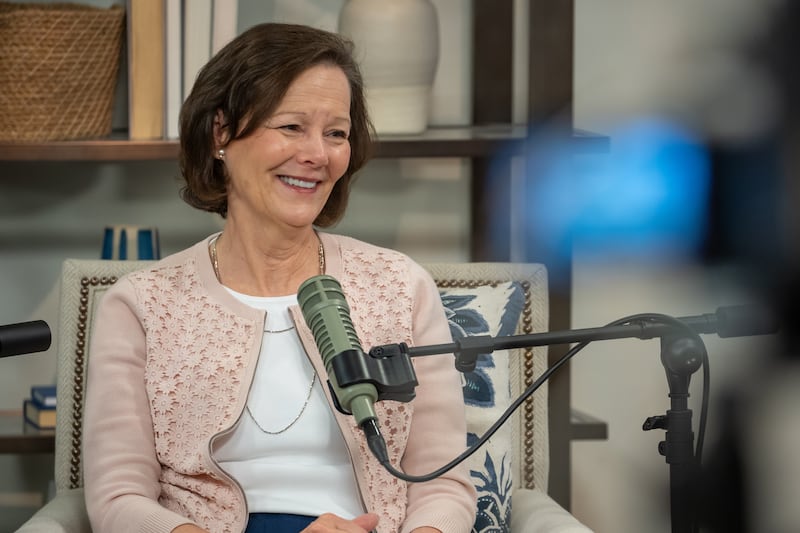
President Susan H. Porter: Well, a calling like this is overwhelming. There’s just this profound feeling of humility. There was also joy in knowing I would have two counselors. And Sister Wright and I had served together in the presidency with [President] Camille Johnson for one year. Also, we had known each other as Sister Wright had served on the Young Women general advisory council.
And then Sister Browning, we had had some wonderful associations as members of the Relief Society general council, and I just felt so grateful for the very clear inspiration that brought them both. And I realized that each of these sisters brought a unique perspective and unique life experiences, and unique and very strong testimonies. So I was so grateful for that.
2:05
Jon Ryan Jensen: I love you sharing that, because the opportunity to serve in a presidency is something that we see happen across the Church. It doesn’t matter if we’re starting from the youngest youth classes, you have new presidents called to serve, and they’re choosing presidents. And it’s a similar process all the way up through the organizational presidencies of the Church.
As the three of you began to serve together, what was it like for you to come to consensus on things you wanted to focus on as you would begin your ministry?
2:39
President Susan H. Porter: I’d love to hear from Sister Wright and Sister Browning and just start with: We wanted to know: “How did the Savior view children? How did He minister to them? What did He invite them to do?” We really wanted to follow His example.
And so for the whole time we’ve served together, we’ve just referred again and again to the chapters in 3 Nephi when the resurrected Savior visited the people in this continent — 3 Nephi chapters 11, 17 and 26. And I think we all have them memorized and have pulled out the principles. But I’ll just start with one and want to hear from Sister Wright and Sister Browning.
The first one is that He testified to the people, when He descended, of who He was, and then He invited them to do something. He said, “Arise, and come forth unto me, that you can feel my hands and the marks in my side, so that you can have this experience one-on-one with me.”
It’s interesting to us that that would have included children. And so children were invited to come have an individual experience with the Savior so that they could hear Him, see Him, feel His presence, feel the marks in His hands. And then they had an opportunity to bear record. And we have used those scriptures in 3 Nephi chapter 11 over and over again, as we’ve wanted to invite children to have a personal experience with the Savior.
4:15
Jon Ryan Jensen: Sister Amy A. Wright?
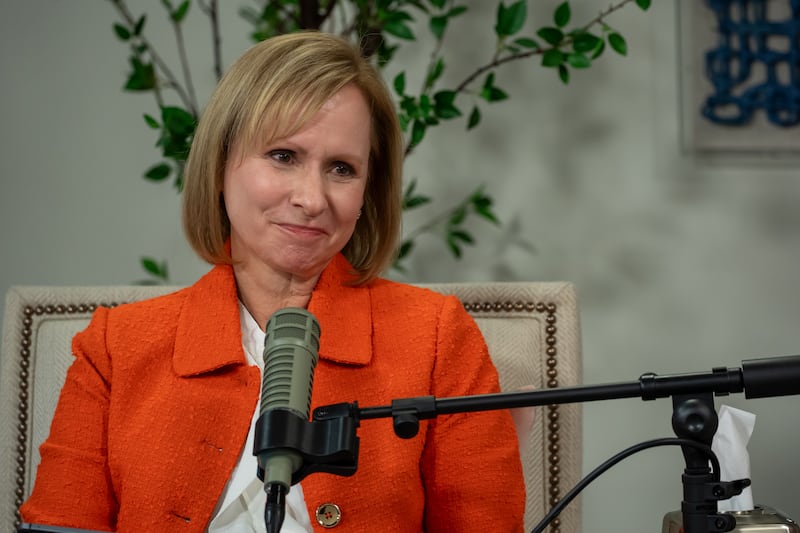
Sister Amy A. Wright: You know, it’s so interesting when you look at the secular world serving in a position like this, people tend to begin with: “What is going to be my legacy? What am I going to create or produce or change that’s directly connected to me?” And that is not how we serve in the kingdom of God. And that’s absolutely not how President Porter leads either.
And so we came together as a presidency without any preconceived notion or ideas of what we felt like our service should look like. And so we just got on our knees and asked the Lord, “What would You have us do?” And I think that’s so beautiful, because every time we presented to councils a particular product or a proposal, we weren’t emotionally attached to it, because we knew that this was not our work. This was the Lord’s work. It’s His work and His glory. He’s perfectly capable of doing His own work.
And so, when we received answers in those councils — because His way is not one of debate; it’s of counsel and seeking revelation and learning together to discern His will — and so our answers, I don’t feel like we ever received a “no.” It was a resounding “yes.” Or equally important is a “not now.” Or my favorite was “I have a better way.” And then we would come back to our presidency and counsel, and the Lord would give us line upon line.
And it’s just another witness to me that this is Jesus Christ’s work. And the miracle of it all is that He invites us to be part of His work so we can have opportunities to learn and to grow, to strengthen our testimony in our Heavenly Father and in our Savior, but also to strengthen the love and the relationships we have with one another, with those that we serve with.
6:12
Jon Ryan Jensen: Sister Tracy Y. Browning, you have had the doubly unique experience to carry on that topic a little bit, being part of the council and presenting two councils to have work considered.
Have you felt different being on this side, being part of a presidency and having that role versus having something that you’ve worked on go in front of a council?
6:38
Sister Tracy Y. Browning: Certainly it’s different being a Church employee versus being called to serve in the presidency of an organization. There are some things that overlap, meaning that you seek to bring whatever the Lord has allowed you to be blessed with, and each of the things that He calls you to do. I felt very much called to work for the Church, for my personal life and to give a portion of my professional life to that. And within that, I gained some unique perspectives and some skills that I hopefully was able to bless my time serving in the Primary presidency. But it was such a joy to then be asked to serve with President Porter and Sister Wright. That was just, for me, one of the choicest blessings that I’ve had in my life.
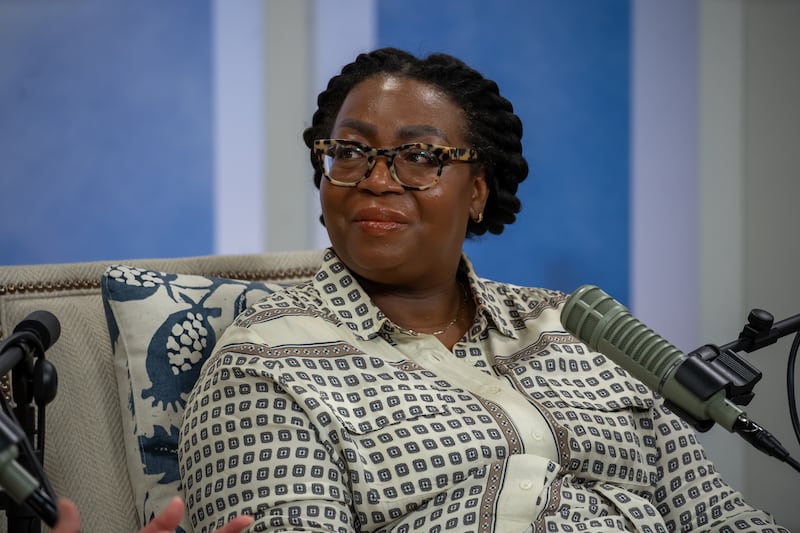
And to consider the question that was asked originally, just to kind of connect to what President Porter said about coming immediately to this assignment and feeling very connected to the scriptures and the Lord pointing us directionally to a set of scriptures that help to give a vision of how He sees children and a vision of how we might serve. And then to spend a lot of time on our knees as a presidency, seeking the Lord’s will to understand what are some priorities.
Something that came to my mind, or came out of that process with the presidency, was really just the magnificence of the spiritual ministry that is Primary. It is such a privilege to be called to minister, to teach and minister, to support, to prepare the Savior’s youngest disciples as they’re growing in their covenant relationship with Him.
It’s such a privilege to be a support to parents as they’re seeking to fulfill their responsibilities. It’s such a privilege to have association with leaders and teachers and all those who are seeking to bless and to behold the Savior’s youngest disciples. It’s been one of our priorities to help raise the vision of what it is to be called to serve in this organization, because we have come to really see that the Savior has invited us to really look at these young disciples and to consider how to help them walk more with the Savior, to grow in love in that relationship and to feel confident that they have, as they make covenants, they have access to the same priesthood power, the same blessings that anyone who makes a covenant with the Lord has access to.
It’s expressed differently in their season of life as children, certainly. They come with less complexities at times, for some children, in that season of life. But the Lord invites them into a covenant relationship with Him. And helping those who are invited to come and be a part of this spiritual ministry, raise their vision to what that means, has just been a joy for us to come to that.
9:39
Jon Ryan Jensen: I was talking recently with a brother who’s being released as a bishop, and he said, “I used to hear outgoing bishops say, ‘Oh, only in this Church can you go from being a bishop to serving in the Nursery, serving in the Primary.’” And he said, “I used to think that that was kind of demeaning to those in the Primary.” He said, “Now that I’ve served as a bishop, I’ll say the same thing, but I say it because I know that if they can get off on the right foot spiritually, that it prevents so many other challenges that they can experience in their lives.”
And so as I hear you talk about this, I see a modeling that the three of you are doing. How do you talk about that, as you go around the world and as you meet with those who you are serving? How do you help them to do the same things you are doing and feel empowered to honor the Spirit and the impressions that they get?
10:31
President Susan H. Porter: You know, we point out that more than half of the children in Primary, the adversary has no access to their hearts because of the atoning sacrifice of Jesus Christ. It’s so encompassing that those little children there, those who serve in Primary, their testimonies of Christ can sink deep into those little children’s hearts and change their lives. So when we think about, “Who are we going to call to serve in Primary?” wouldn’t it be the ones with the deepest and sweetest testimony of the Savior to share with those precious children?
Also, when we travel, we often invite adults to share experiences. Is there a Primary teacher or leader that changed your life? Those witnesses are powerful and help open eyes. I mean, I could be teaching the 5-year-olds, and it looks to me like they’re climbing over the chairs and they’re hitting each other and they’re wiggling. And I think, “Wow, all that preparation, what’s it doing?” We have no idea what is sinking deep into their hearts and will stay with them and be with them throughout their lives.
11:40
Jon Ryan Jensen: As soon as you said that, I could think immediately of Sister Rather, who was my Valiant teacher when I was in Primary. And I can go back to those classes when she was just so excited for us to be learning about the Savior. And yeah, I agree; we all have those moments.
One of the changes that I think we’ve seen happen during the time that you all have been serving is an increase in children not just being in Primary, actively being taught in Primary, but them taking a step forward and having a chance more frequently to be in sacrament meetings or in stake conferences.
How have you seen that affect wards and stakes and locations that you’ve visited during this time?
12:21
Sister Amy A. Wright: Well, it’s definitely expanded vision. And most specifically, the vision that’s expanded is seeing the capacity of children to contribute in magnificent ways.
You know, when you look at the miracle of the feeding of the 5,000, and the Savior multiplied the offering of the loaves and the fishes, and I always thought it was interesting that He did not distribute the loaves and fishes. He invited His disciples to do that, because He wanted them to be part of the miraculous. He wanted to strengthen their faith in Him and also have opportunities to serve.
And that’s exactly what we’re doing with children. These children that are baptized and confirmed, they are members of The Church of Jesus Christ of Latter-day Saints, and therefore they have a covenantal responsibility to help build the kingdom of God and prepare for the Savior’s return. And they are absolutely essential.
President Porter talks often about the body of Christ and how they’re an important part of the body of Christ. And sometimes you use the analogy that children are the toes, and you think, “Oh, well, that’s because they’re cute and little,” right? But when you look at a foot, toes not only give us balance, but they also propel us forward. They are essential in helping us move forward.
And as we invite them to participate in this work, we are seeing miracles all over the world. And sometimes the greatest miracle is coming from adults who say: “I had no idea our children were so smart. I had no idea that their testimonies were so deep. I had no idea that they could contribute in such a significant way in building the kingdom of God.”
14:04
Jon Ryan Jensen: Sister Browning, what are some of the other ways, other than or including those meeting participation, that we can help those Primary children — as you called them, young disciples — how do we help them grow in that discipleship of Jesus Christ?
14:16
Sister Tracy Y. Browning: Well, I think that continuing to give them opportunities to lead in ways is certainly helpful. There are ways that they can do that in Primary. And Primary, naturally, is a place that helps them prepare them for leadership in the Lord’s kingdom.
In Primary, they learn how to pray, and they’re doing so for their class and for the groups of children that they’re gathered with, they’re giving talks. They’re also interacting with other children and learning how to serve each other in that space. And then we sort of take and build upon those experiences in Primary to help continue to prepare them.
Parents are doing it at home as well. They’re inviting them to pray in their homes. They’re allowing them to maybe be the ones to teach the lessons, and they’re asking them questions that bring out their testimony, that invite them to share what it is that they’re learning.
And then as leaders in the wards and in the branches, we are inviting them beyond the Primary walls, again, back to the sacrament meeting. They are invited to go and pray on behalf of the ward, invited to go and give prayers or invited to speak.
And what’s kind of beautiful there is that this is not something novel or new. This has always been a part of what the Church has invited children to do. It’s a part of our handbook. And all we’ve really done is pointed leaders to the areas and said that, “Here is what the Lord’s restored Church has invited all members to do.” And a member, as Sister Wright has described, is as young as an 8-year-old because they are confirmed members of the Lord’s Church.
So, continuing to find those opportunities to build on the natural things that they’re already being taught in Primary, that helps them to lead and bring them outside of the Primary walls and allow them to do that in the ward and then in their homes and then in the community, continues to grow that discipleship.
16:07
President Susan H. Porter: That’s interesting, Ryan: So, we’ve been talking about how I think in the first few years of our presidency, we did feel really drawn to helping children fulfill their covenantal responsibilities as members of the Church, in the Church. And with President Russell M. Nelson as our Prophet during those times, and he just stressed the blessings that come to us as covenant members.
And then a few years ago, we’re reviewing the work of a team that is writing the history of Primary — and marvelous work, and we can’t wait to see it whenever it’s done — but one day we were looking at some pictures from the Deseret News right after World War II, and there were pictures of Primary children carrying boxes to a train, and the caption said these Primary children were carrying clothes and toys that were donated by Primary children to be shipped to Primary children in Europe who were, of course, suffering in the aftermath of World War II.
Remarkably, there was another picture in the Deseret News with children in the Netherlands standing on the steps of a church in Holland, and the caption in the Deseret News said they’re wearing clothes donated by children in Salt Lake City. And we started to realize that we could invite our Primary children to do more.
We love God. That’s the first great commandment. We love God, we serve Him, and then we serve our fellow man, which includes looking out in our communities. And we realized our children have great capacity to make a difference in their communities. And that kind of was the genesis of the invitation to have an annual community service activity.
18:08
Jon Ryan Jensen: And those are something that leaders are now put in a position to say: “What does that look like for me? What do we do?”
What has the response been for that? And what guidance would you give as you’ve seen what those look like in their varying ways around the world?
18:29
Sister Amy A. Wright: It’s been extraordinary. We’ve received letters from all over the world of Primaries, as small as a handful of children to very large Primaries. And I think where it becomes most significant is when the children are part of the revelatory process.
The older Valiant-aged children are part of the council to determine what type of service that they’ll be engaged in, and then also that they’re part of the invitation process. Many of them make invitations, they distribute, they invite members and members of other faiths, people throughout their community to come and gather.
And then also, when the service is focused on children serving children — because we have a history of that here in the valley, we have a history of that at the early inception of the Church of children seeing the need and coming together, whether it’s building a hospital or donating clothing post-World War II.
And so that’s where I think we’ve seen the greatest impact, is that children are part of the entire process, from the very ideation, revelatory phase of “What should this look like?”
19:37
Sister Tracy Y. Browning: I’ve participated in several of these, and I’ve just watched how remarkable these experiences are for the children and for all those who have been gathered. Because children, it really taps into one of their natural talents, which is to kind of naturally seek to be a blessing to others.
We often ask children questions about, “What can you do to be a blessing or follow the Savior’s example this week?” And more times than not, the answer is a service-oriented answer. They want to help someone in need. They want to feed the sick. They want to be a blessing in some way. That sounds like service.
So, as I’ve gone around and participated in these, I’ve watched what is just natural to children. They, when invited to do this, are very bold. They are very intentional in the ways that they seek to support others. They have ideas, so they want to share those ideas. And it’s just a fantastic opportunity to watch them really glow in their discipleship as they’re given this opportunity to really think about the ways that they can serve and support.
And we’ve seen in the last year and a half that this invitation has been extended around the world so many children doing various things in their communities to be a blessing. And we’ve seen them invite others not of our faith to participate with them. And we’ve also seen them invite the adult members or the youth to join with them. It’s just been a remarkable experience.
Jon Ryan Jensen: How beautiful.
21:06
President Susan H. Porter: It ties so well also into the current teachings of our Prophet, President Dallin H. Oaks, in his most recent talk, about peacemakers.
Just recently, Sister Browning and I had the opportunity to travel to Mexico, and we went to the southernmost state in Mexico, in Chiapas, and had the opportunity there to participate in a large community service activity that involved children from several stakes. And they were there to plant trees, paint picnic tables, clear up playgrounds in a large, beautiful park in a large city.
And a member of the local government was there. He was over religious affairs. He was very interested to be there, because he felt like the answer to some of the challenges in that state of Mexico, of crime and poverty, was to promote and support religious faith of all faiths. And so for him to be there and see those children who were participating in a park that would bless everyone in their community was quite a profound experience for him.
What were your thoughts there, Sister Browning, as we met with him?

22:27
Sister Tracy Y. Browning: Yeah, I also felt that he was really impressed by just the capacity of the children and their interest in this, because as I went around to each of these children as they were serving in the park, they were so joyful. I think sometimes we might expect that children being asked to paint, to clean, to do those things that they may do at home might sound like a chore.
Jon Ryan Jensen: Yeah, they’re not excited to do it around the house.
Sister Tracy Y. Browning: They’re not excited, right. And yet they were gathered together, so happy to be there, so excited to be painting and knowing that they were beautifying their community and putting a tree and planning a tree in the ground that they could come back and visit sometime later and see its growth. It was just a joyful experience.
And to what President Porter mentioned, what I think that government official was able to see was how you can also look to the rising generation as part of that solution in helping meet the challenges and opportunities that they’re trying to resolve, which is create this sense of civic alongside their spiritual-mindedness, basically by inviting them to be participants in their community. And you can do that when they’re young, because they were so happy to be doing this for their community.
23:41
Jon Ryan Jensen: You don’t wait till a certain age to say, “Now you’re old enough to serve.”
Sister Tracy Y. Browning: Correct.
Jon Ryan Jensen: You can start from the very beginning.
23:46
Sister Amy A. Wright: Yeah. They’re altruistic by nature. “Love, share and invite” is just part of their nature, their DNA.
And you know what’s so interesting about it is we started serving as the world was coming out of COVID, and our hearts were very tender towards these children who were not gathering, some of them, for well over a year, and they were hungry to be together. And many of them were instruments in bringing their entire family back to church, knowing that their Primary teacher loved them and would be looking for them, or their bishop knew their name.
And so one thing that we started doing as a presidency as we would go on assignment is have children’s devotionals, where we invited children to conduct the meeting. They led the music, they were part of the choir, they played the organ, the piano, they taught, they testified. We would bring musical instruments and teach through music. We would teach through the scriptures, gospel principles. We would engage them as they would draw pictures of what they can do to participate in the work of salvation and exaltation, receiving answers: “I can give a copy of the Book of Mormon to my friend. I can share my food with someone at school who’s hungry.”
One question that was really significant when asked, “What can you do to unite your family for eternity?” Without skipping a beat, a young child said, “I can be a peacemaker in my home.” We always think that temple work only takes place in the house of the Lord, but it begins at home.
And so, what we saw there was the capacity of children. And their parents are present, their leaders are present, so everyone’s vision is expanded as these little ones teach and testify boldly. As we ask them, “What do you know about Jesus?” and we receive pure testimony, or “What can you do to follow Jesus?” and they share some of these examples that President Porter and Sister Browning shared.
And so that really did more than even our leadership instructions, because it wasn’t a telling, it was showing the capacity of these baptized and confirmed children and where their hearts are. And then what we started doing is having service projects after the devotional. So they’re taught gospel principles, they teach one another what they can do to follow Jesus, and then they go and do. They arise and go forth.
And it’s just been extraordinary to see, as it’s not just something that we’re doing, but areas are doing it on their own. And the revelation that they’re receiving that is unique to that area is really miraculous and inspiring.
26:25
Jon Ryan Jensen: Well, we’ve talked about learning, teaching, serving. One of my most memorable parts of Primary was the music. And many members of the Church are anxiously waiting for the final release of a hymnbook, but happy to have the gradual release of new songs. And I can’t help but wonder what your experience has been as you’ve engaged with music and Primary children around the world. Are you seeing the Primary children excited about the songs of the Church as well?
26:52
Sister Tracy Y. Browning: Primary music is an integral part of the Primary experience. We know that it’s there to help teach children the doctrine, and it is there to infuse a great amount of joy in that experience of learning the gospel and coming closer to the Savior. It’s a very accessible and easy way to tap into the Spirit really quickly, and that is true for children as well.
So, one of the things that’s lovely about Primary is it’s one of the few places where I go where I don’t see necessarily open hymnbooks, but everybody seems to know the songs, and they’re singing from memory because it’s planted really deeply. It’s just an experience that it comes quite organically from them. Those words are in their mind, and they’re repeating them over and over for a really long time.
So, what’s nice about this new hymnal is you sort of see this opportunity for the Primary children to go into spaces where they’re learning these songs and really know them, like “I Will Walk With Jesus.” It’s memorized for them. And then they go into the chapel, and you finally hear their voices because they’re the ones that are familiar with these songs, and their voices may ring a little louder as the adults are learning and are catching up to some of the new hymns that are being sung. And children have this blessed opportunity to be the ones that are teaching these new songs to the Church because they love them.
And so we’re really excited as new songs are released, and we always love and encourage teachers to really look at the music as — and parents — as an opportunity to teach doctrine. There’s real truth being taught there that will be a blessing for a child, not just in that particular season of life, but as they grow, it can return to them to help them in that covenant relationship.
28:50
President Susan H. Porter: This new hymnbook is such a blessing because it does; it puts the Primary songs, children’s songs and hymns in one book. And so we’re seeing more and more of this music being sung, and it’s a blessing for children. It’s also a blessing for adults. I spoke to one priesthood leader who was attending a sacrament meeting, sitting on the stand, and realized “This Little Light of Mine” was going to be kind of an intermediary hymn, you know, between two speakers.
And he kind of thought, “Oh wow, is this appropriate for sacrament meeting?” He said, “Fortunately, I didn’t say anything.” So it comes to that song, and he said every adult who’d kind of been looking at their phone, or every youth who was kind of a little bit checked out, sat up, smiled and just started singing that joyful reverence. It was totally appropriate for sacrament meeting. It was joyful. And it engaged everyone in that joyful invitation to let that light that is in all of our hearts shine and bring others closer to our Savior.
29:52
Sister Amy A. Wright: I’m reminded of an experience. One aspect of our ministry, our global ministry, which has been so joyful, is to minister in homes. And one opportunity I remember took place in Guatemala, and my husband and I were there on assignment with Elder and Sister Giuffra, and we were ministering to the home of a 9-year-old little boy, and he was there with his grandmother. He received permission to be excused from school early, and he had a three-piece suit on. It was the sweetest thing.
And I asked him if it would be OK if he led us — I asked him what his favorite Primary song was, and he said, “Families Can Be Together Forever.” I said, “Would it be OK if you led us in singing that song together?” And he was so excited. And so we all sang “Families Can Be Together” as he led us in Spanish.
And then afterwards, I asked him, “What are you feeling right now?” He said: “I feel peace. I feel joy.” I said, “Where do you think those feelings are coming from?” He said, “God.” I said: “Why? Why do you think God wants you to feel peace and joy when you sing ‘Families Can Be Together Forever’?” And he paused for a moment, and he thought. And then he responded, “Because He has a work for me to do.”
Now, remember, this is just a 9-year-old little boy. And I followed up with one final question: “What is that work that God has for you to do?” And without hesitation, he declared, “He wants my family to be eternal.” Now, notice I didn’t tell him what he was feeling, where those feelings were coming from or why. He taught and testified to us. And it all began with a Primary song filled with doctrine that invites the Spirit into our hearts, into our homes, into our Sabbath worship. And then out of that came profound truths taught by a 9-year-old little boy.
31:48
Jon Ryan Jensen: All these experiences are wonderful. And the Church is, we say, the same no matter where you are. You can walk into a sacrament meeting, and you have an idea of what to expect. Primary, I imagine, is similar.
Are there things, though, that you have learned as you’ve been serving? Are there things that you’ve learned as you’ve gone to other places and thought, “Oh, I wish —” Are there things you want to transplant to other places and that you see? And how has that learning experience been as you’ve visited the Church around the globe?
32:21
President Susan H. Porter: One thing we’ve learned and we’ve felt — and every culture has it, but it’s expressed in different ways — is the joy we’ve been talking about. So you might be in Africa. I remember sitting there for the first time on my first assignment in Africa West and sitting there, and there was going to be a song sung. And all of a sudden I realized, “There must be 500 people here.”
The same with children, that way of expressing joy through song. Returning recently from Brazil, I think easily 800 hugs and kisses. So that joy expressed there. So, I think that, as Elder [Patrick] Kearon has reminded us, this is a church of joy.
And I think that’s been one learning for me as I’ve traveled, is the many beautiful ways to express joy in our Savior, in our Heavenly Father and in His Church, through this joyful singing, through this warm embrace, whatever that looks like in whatever culture, that embrace of one another, that we all belong and we’re all part of the body of Christ. So I’ve loved experiencing culturally how children express joy in Christ.
33:34
Jon Ryan Jensen: I love that you mentioned that. The Africa West Area, you’re looking at Ghana, Togo, Benin. The first time that I went to the Africa South Area, I was with Elder Quentin L. Cook of the Quorum of the Twelve Apostles. And we were about to head to Zambia. And he said: “Ryan, I just need you to know: You might think you know the New Testament, but you don’t know the New Testament. They know the New Testament.”
He said, “Also, you’re used to hearing the Mormon Tabernacle Choir,” as it used to be known. He said, “This will not be like that experience, but you will feel something different.” And the very first song that they sang in the very first meeting we attended, I was absolutely blown away as they had their unit singing as we arrived. And it is a joyful, joyful sound. Sister Browning?
34:27
Sister Tracy Y. Browning: You know, as I think about some of the things that we’ve gotten to experience as we’ve visited all these various cultures around the world, as President Porter mentioned, there is this beauty in the diversity that we’ve found there in the way that they express how they live the gospel of Jesus Christ and how that fits into that context of culture and of society and things of that nature.
But what’s been interesting to me also is finding the ways that children are all alike around the world, which has been beautiful, particularly for me. Because sometimes when we go on these assignments, we’re given a lot of context to help us understand more about the culture and have experiences and invite us to really think about how they express their spiritual lives in the context of that culture.
And yet, what I have found to be true is that love kind of sits on top of all of that, that people respond really well to love. And also children will be engaged if you seek to engage them. Every child, regardless of their culture, will find it fun when you infuse fun into their lessons and you allow the natural part of what childhood means, which is, “I like to wiggle,” and maybe not expect them — I don’t know that I’ve been to any culture where a child didn’t appreciate a moment where we sort of stomped our feet and got up and stretched and went outside for a minute or came back in. Even in cultures that might be more reserved, we still see that children are children, and the ways that they’re similar around the world has been beautiful to me. And I’ve loved that.
One of my favorite memories is in Japan of a little, Nursery-aged Primary child who was so fascinated. We didn’t speak the same language, but I could tell that she was just fascinated with me when I was in class. And then several hours later, when we were in a children’s devotional, she was supposed to be a part of the musical number that they were doing. And I was sitting on the stand, and here is this, in a very obedient culture, this little Nursery-aged friend who just ignored the instructions from the teacher to get ready and line up with the other children to sing a song, and just marched herself up on the stand with her arms wide open to me to give me a hug. And then she was ready to go and sing.
And there was something really teaching for me in that moment, which is that love is such an important principle and can kind of supersede what we think we understand about culture. And secondly, children are children. They respond to love and are very interested in being engaged when you invite them to have an experience one by one or invite them into things that allow them to feel like they belong and are a part.
37:15
President Susan H. Porter: I have to just tell one experience thinking about children and engaging them and teaching them. And this comes from something I learned from Sister Browning in a children’s devotional. Whatever the theme is, if it’s helping them become missionaries or follow Christ or serve others, Sister Browning invited them, she would say: “If I’m giving a really good example of, let’s say, trying to be a missionary, you just stand up and put your hand on your heart. If it’s not a good example of being a missionary, I want you to call out, ‘Try again.’”
To take that principle of joyful repentance, all it means is try again. So you get frustrated with your little brother and you yell at him or whatever, just try again. And I’ve seen so much joy in teaching that principle through children and allowing them, not just lecturing them what it is, but allow them to participate in helping us understand joyful repentance.
38:22
Jon Ryan Jensen: One of the things that I think a lot of members of the Church don’t know or understand super well is exactly what the three of you get to do. And we did a series in the Church News a couple of years ago about the process of councils and counseling in general.
And each of you serves on councils, but I would love to hear from your perspective what kind of role that plays in the calling and how important it is to the work that you’re called to do.
38:50
President Susan H. Porter: What a blessing it was when we were first called, we each received letters from the First Presidency of the Church inviting us to each participate in executive councils. Receiving that letter from the First Presidency to be a member of a council gave us pause in that it helped us realize we needed to actually be spiritually prepared to be a contributing member and speak those words and those thoughts that the Lord put into our heart.

I remember the first time I was going to attend one of the executive councils I had been assigned to, and I was walking over. There are two sisters assigned to each executive council. We were walking over together. And I remember very clearly saying: “Everybody else in this council has been serving together for a number of years. They know the topics. They know the issues. We’re brand new.” I said, “I don’t know about you, but me personally, for the first month or so, I’m going to listen and learn.”
And I’ll never forget that first council meeting. We’re all sitting around a table, and the member of the Quorum of the Twelve who was the Apostle started the meeting. The first issue came before the council, and he turns to me, and he says, “Sister Porter, what are your thoughts on this?” What a teaching moment.
Councils in the Church aren’t about what’s our professional experience on this topic, but that we come, as I said before, humble before the Lord, spiritually in tune and seeking to share something that He’s put in our hearts.
Jon Ryan Jensen: Yeah, you weren’t feeling like you were going to say, “No, no, I’m good, thank you.”
President Susan H. Porter: I opened my mouth and offered something.
40:39
Jon Ryan Jensen: And I just want to clarify: Two sisters serve on each council, not from the same presidency. So you’re on those councils with members of the Young Women general presidency and the Relief Society as well, correct?
President Susan H. Porter: Yes, I was walking to that council with Sister Kristin Yee, and what a sweet association that’s been for the past number of years to serve on that council together. And that’s really been a sweet association.
41:00
Jon Ryan Jensen: Yeah. Sister Wright? Sister Browning?
Sister Amy A. Wright: Yeah, currently I serve on the Missionary Executive Council. I’ve been serving on there for just over five years. And we meet every Wednesday for two hours, and they do give you information to study prayerfully and read so you can come prepared the night before.
And my first day, I had a very similar experience to President Porter, where Elder [Dieter F.] Uchtdorf was leading that council, and an item came to the forefront that was not on the agenda, and it was significant. And he turned and said, “Sister Wright, what do you think?” And he was teaching me something very profound that day. First and foremost, the Brethren want and need to hear the voice of women. And two, I had responsibility, as President Porter so beautifully expressed, to come prepared to contribute.
And one thing that was profound, too, and interesting to note — and we’ve all had this experience — is the assignments, we have assignments that are extended invitations beyond that council. I served initially with Sister [Bonnie H.] Cordon, the other general officer, and now it’s with Sister [Emily Belle] Freeman. President Cordon and President Freeman.
And we have had invitations to be at press conferences when there’s been a significant change with the Missionary Department or missionary service. We have helped with the launch of Light the World or the Easter initiative. We have been on assignments with Apostles that serve on that council, where we’ve met with missionaries and missions. We are invited to instruct new mission leaders every year at the new mission leader seminar, as well as new service missionary coordinators and newly called MTC leaders, presidencies.
And so it’s really, like you said, it’s a good portion of what we do. And some of the greatest opportunities for growth and stretching have come from invitations that were extended by these wonderful Apostles to sisters to serve and minister and teach in various capacities. And it’s probably been one of the greatest blessings of my service as a general officer.
43:08
Sister Tracy Y. Browning: I love serving on these councils, first because I get this wonderful opportunity to be on councils where they are presided over by at least one Apostle, sometimes more. And to be in that space where you have prophets, seers and revelators who have been asked to oversee this work, you can obviously imagine, can be an instructive experience at times and wonderful to be invited by them to participate in discussions and in council about topics that for me have been really stretching.
As President Porter mentioned, you don’t always feel quite qualified to be in some of these spaces and to be asked to share any perspective on some of these topics. But really, these experiences have brought me to meet with leaders from around the world. That’s an unusual experience for me. They have brought me to the Utah Capitol. I’m not someone who spends a lot of time with leaders who might be leading nations or states or cities or things of that nature.
It has allowed me to consider how the messages of the Church and the message and the ministry and the mission of the Savior can be expressed in different ways to help people understand more about the Savior, understand more about His Church, understand who we are as a faith and what we hope to do to be more of a blessing to all people in the world.
It’s allowed me to consider how even the artwork that we see and we send out into the world can be a tool to teach people about the Savior and how we look at that art and find ways to be instructive to families and to be instructive to children and where we should use that in part of the messaging that we have to share with the world.
It’s been a really beautiful experience and certainly instructive as I’ve allowed, as I’ve been given the opportunity to stretch. And that’s what I’ve felt that the executive councils have allowed me to do and stretch in ways that I couldn’t have imagined before and under the direction of prophets and apostles.
45:31
President Susan H. Porter: Over the period of four years that we’ve served as a presidency in the executive councils I’ve served in, there have been changes in assignments for which members of the Quorum of the Twelve preside over those councils.
And so what a blessing it’s been to see how each one brings their unique capabilities, their unique talents and their unique way of leading, all under the direction of the Savior. I think it’s a beautiful thing. It gives us humility but also confidence that the Lord takes what you have uniquely to offer it, and He can use it to move His work forward. So we’ve seen how the work of the Lord moves forward under different styles, capacities and talents that are offered with a fullness of heart.
46:22
Jon Ryan Jensen: I love that too because, again, going back to every ward member has a calling, and you have responsibilities within that calling. So even the Apostles have assignments within their calling, just like you have assignments to those executive councils.
Sisters, I’m so grateful for all of the things that you have shared today and for the things that you’ve shared throughout your service. We have a tradition on the Church News podcast, and I would love to give you an opportunity to share one final testimony with us today, and ask you: What do you know now, having served as the Primary general presidency of the Church?
46:54
Sister Tracy Y. Browning: I started my presidency, serving in this presidency, being invited by the Lord to read Matthew chapter 18, in a really profound way, where — this is the passages where the Savior is asked the question, “Who is the greatest in the kingdom?” (verse 1). And a child was set in their midst. And we were instructed, we are instructed, to consider their humility. We’re invited to receive them in such a way that we are promised that receiving them will allow us to be received by the Savior and that we’re also receiving the Savior.
And as I’ve considered these last several years of having one of the choicest blessings of my life, being able to serve the Savior and my Heavenly Father in this way, I’ve come to recognize how discipleship is a plan for all of God’s children, and it starts when we’re really young. And He’s given us the ability, when He sends us here to earth, to have within us the capacity to feel very connected back to the Savior.
And we need to be quite humble in that as His children, the way to connect ourselves with this Spirit that makes us ready and meet for the kingdom of God, that He points to children is this sense of being humble in that. I have felt very humble and privileged as I have tried to understand the ways in which the Savior would have me receive His little ones, and also recognizing that a big blessing that’s come from that is that I have felt closer to the Savior in my own life and that the Savior seeks to bless me as I joyfully serve His youngest disciples, and that I can find myself learning that simple doctrine, which is what we teach in Primary.
The truths of the gospel are quite simple, and that out of simplicity can come really deep spiritual conversion, really deep testimony. My testimony of Jesus Christ has deepened as I’ve been seeking to understand the ways that I can connect with Him through prayer, through singing songs, through teaching the doctrine of Christ, through loving more and connecting more by showing appreciation for those who served.
I have a greater testimony that Jesus Christ is the Light and the Life of the World and our Savior and Redeemer. And I’m grateful that that privilege of the last four years has had — that I’ve had that opportunity to begin there with that testimony and to grow that testimony deeper as I’m concluding my service. And I share that with you in the name of Jesus Christ, amen.
49:49
Sister Amy A. Wright: Ryan, I was born into a family of all boys. I even have a twin brother, married into a family of all boys, mother of all boys, grandmother of one grandson. And as a young girl, I used to pray for a sister. I love how the Lord compensates the righteous for the righteous desires of our hearts. And I have been blessed with sisters. And it is such a sacred sisterhood. I love these women dearly, as family, as friends.
As I think about our service together, it’s not just as a Primary presidency, but we’ve also been called as general officers, and so we serve on executive councils. We have been called all over the world to teach and testify to men, women, youth and children.
And I’m reminded of a scripture that I’ve been pondering a lot lately, because endings remind us of beginnings, right? And it’s in Deuteronomy 2:7, and this is where the children of Israel are standing on the precipice of their inheritance, and Moses is reminding them of some of the things they learned during this 40-year journey.
And he says — and this just resonates with me in the sacred work that we as sisters have been called to do — “For the Lord thy God hath blessed thee in all the works of thy hand.” We are witnesses of His tender mercies, that as we serve faithfully and joyfully, He will magnify our efforts, and far beyond any natural ability or talent. And we have seen this every single day.
And then the verse continues, “He knoweth thy walking through this great wilderness.” God knew exactly what our presidency was going to experience, what we were going to be asked to do, how we needed to get comfortable with being uncomfortable, and the strength and the wisdom that we would need to be able to move forward.
And then he says, “These forty years the Lord thy God hath been with thee.” We have felt Him with our presidency every single day. Some days it felt like 40 years, some days it felt like four minutes.
And then my favorite phrase: “Thou hast lacked nothing.” It is with immense gratitude and a firm testimony in our Heavenly Father and Savior, Jesus Christ, that I witness that we as a presidency “hast lacked nothing.”
As we have put our whole heart, might, mind and strength into this calling and offered what little offering we had, as we were the means, God provided the increase again and again and again. We did not walk this alone. This is His work, His glory, and it has been an absolute privilege to walk this path with these dear friends and to participate in such a miraculous and glorious work.
I testify that God lives, that Jesus is the Christ. I testify that if we are obedient and keep our covenants to the best of our ability, we can become partakers of all of our Heavenly Father’s promised blessings. I can’t begin to imagine the definition of “all,” but I do know the greatest of which is eternal life and exaltation, the privilege of returning to live with God the Father and Jesus Christ again as eternal families and to live the type of life they live. This is what we hope for, for all of God’s precious children. This I so testify in the name of Jesus Christ, amen.

53:33
President Susan H. Porter: I would say what I know now is more about the character of the Lord Jesus Christ, through our association with children, through praying for them, through spending time with them.
When we talked about how we have tried to drink so deeply from the Savior’s example in 3 Nephi, when He gathered children so often around Him and He prayed for them and He called down angels and He invited them, He loosed their tongues, invited them to share.
But it’s very interesting. Early in that ministry, He invited all to come, as we mentioned earlier in the podcast, and then He taught them about baptism. But then He said this in 3 Nephi 11: “Again I say unto you, ye must repent, and become as a little child, ... or ye can in nowise inherit the kingdom of God” (verses 37–38). And we’ve just — I’ve just come to know more clearly what it means to become as a little child.
As we read about the character of Christ in many scriptures, they’re humble, meek, submissive, gentle — all these qualities of Christ. Little children have those qualities. And how much we can learn from them. One quality of children I was just thinking of recently was — that relates to the Savior — is children love to give gifts. Each of us has countless numbers of pictures that children have drawn of us. It’s very revelatory. They draw pictures of their families, of their pets, of those they love, and they want to give it to us from their heart.
And I just think about our Lord and Savior, we’re taught, is the Giver of all good gifts. All good gifts come from Him. (See James 1:17.) So I just feel profound gratitude to my Heavenly Father for the invitation to focus on, to pray for, to learn from and to teach His littlest children, who can help us become as the Savior is.
I leave with my testimony and witness that God, our Heavenly Father, lives. And as evidence of that love, He sent His Son, the Lord Jesus Christ, to show us the way home, to teach us what we need to do and then to open the door, to rent the veil in half so that we can walk through, through covenants and living His gospel, back to His presence. And I am so grateful to be a member of His Church and to be led by a living prophet. And I do leave that in the name of Jesus Christ, amen.
