


Editor’s note: In March 2026, The Church of Jesus Christ of Latter-day Saints released 10 brief discussion videos in Gospel Library for women, featuring the 10 members of the Relief Society general advisory council.
The council members wrote about the videos’ five topics for the Church News. This is the second of five articles and is about the topic “managing competing priorities.” Read part one about finding strength and relief in Jesus Christ here; part three about building emotional resilience here; part four about staying committed when facing offense, hurt or trials; and part five here about discovering the divine design of the family here.
Managing competing priorities is one of the central challenges of life. Responsibilities pull us in different directions — family, work, personal growth and service to others. Yet a unifying principle emerges when we anchor our priorities in what matters most: loving God and loving others.
Jesus taught about priorities when He said, “Seek not the things of this world but seek ye first to build up the kingdom of God, and to establish his righteousness, and all these things shall be added unto you” (Joseph Smith Translation, Matthew 6:38; in Matthew 6:33, footnote a).
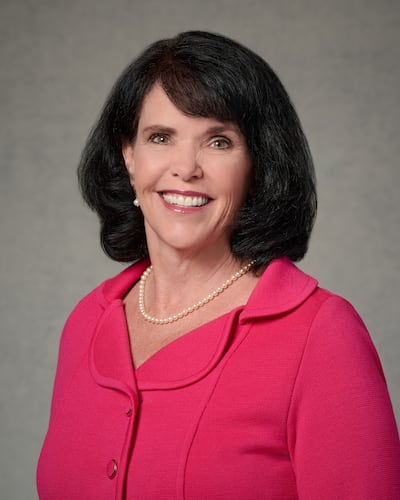

“‘Seek … first to build up the kingdom of God’ means to assign first priority to God and to His work,” explained President Dallin H. Oaks (“Focus and Priorities,” April 2001 general conference).
The reality is that no two lives look the same. Some of us are raising children, some are working with fractured families, some are supporting extended families, and others are navigating life independently. Because circumstances vary so widely, managing priorities cannot rely on a one-size-fits-all checklist. Instead, it must be rooted in principles that transcend circumstance.
Putting God first is the key principle. Through His Son, Jesus Christ, Heavenly Father provides a stable center, allowing individuals to organize their time and energy in ways that reflect eternal values rather than temporary pressures.
Time, in particular, becomes a revealing measure of priorities. As President Oaks observed in his April 2001 general conference talk, “Our priorities are most visible in how we use our time.”
This insight invites honest self-reflection. By examining daily habits — how we spend our hours, what we choose to emphasize and what we neglect — we gain clarity about whether our lives align with what we claim matters most. This kind of evaluation is not meant to produce guilt, but rather to inspire realignment.
When the use of our time reflects devotion to God and service to others, competing priorities begin to harmonize instead of conflict.
One powerful concept that helps in this process is the idea to “remember, remember.” This repeated scriptural invitation points to a fundamental human tendency: We forget. We forget past blessings, previous guidance and the ways we have been sustained through difficulty. In moments of new challenges, it can feel as though we are facing uncertainty alone.
But remembering past experiences with our Savior builds trust. It reassures us that just as we have been guided before, we will be guided again.
This trust is essential in managing competing demands. When we trust God, we are less anxious about outcomes and more focused on faithful action. Challenges do not disappear, but they become more manageable.
As Relief Society General President Camille N. Johnson recently taught: “You can do hard with Jesus, or you can do hard alone. That is your choice. But when you do hard with Jesus Christ, the hard becomes holy. You become holy women” (“Holy Women Fix Their Focus on Jesus Christ,” Relief Society worldwide devotional, March 2026).

Even in hardship, there can be resilience and even joy. This perspective reframes adversity — not as evidence that something is wrong, but as part of a larger, purposeful journey.
Thinking about priorities can also be approached through the lens of creation. Every choice about how we spend time is, in essence, a decision about what kind of life we are creating.
Rather than reacting to demands as they arise, we can act intentionally, asking: What do I want my life to become? When God is the foundation of that creation, other elements — career, relationships, responsibilities — find their appropriate place. They are no longer competing forces but components of a cohesive whole.
This perspective shifts focus from what we do to who we are becoming. Instead of defining ourselves by profession or productivity, we begin to define ourselves by character and discipleship.
Love for Jesus Christ and devotion to Heavenly Father become a “North Star,” guiding decisions both large and small. This orientation also invites spiritual guidance. As individuals seek to stay close to the Spirit, they can receive direction. Doctrine and Covenants 50:41 reads, “Fear not, little children, for you are mine.”
— Sister Sharlene Miner and Sister Garna Mejia are members of the Relief Society general advisory council.


