





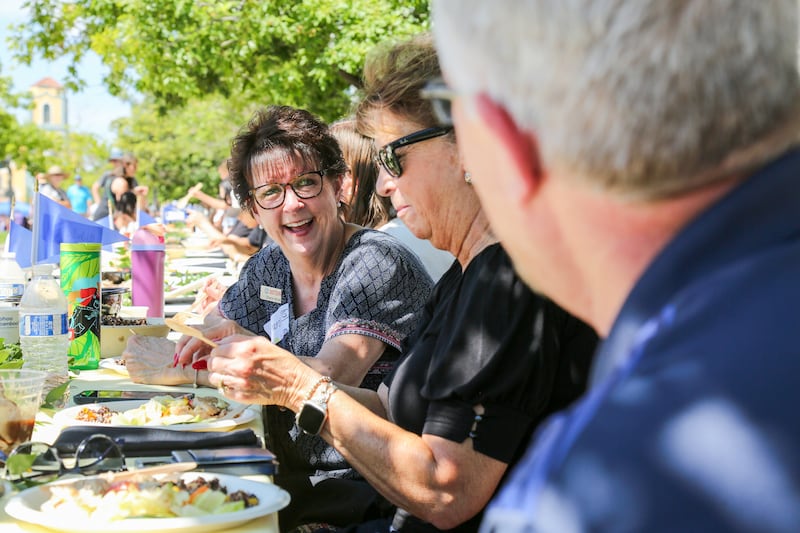
In 2025, members of The Church of Jesus Christ of Latter-day Saints spent 7.4 million hours volunteering in their communities for those in need. That’s nearly 1 million more hours volunteered than in the previous year.
“We see beautiful, beautiful things that are occurring, but what catches my attention most is the individual,” said Blaine Maxfield, managing director of the Church’s Welfare and Self-Reliance Services, on the Church News podcast. “We’ve seen this in emergency response events, where there’ll be two neighbors that maybe don’t get along. And before you know it, by the end of the day, hearts — hard and frozen hearts — have thawed and melted. And now they’ve set that aside, and they can come together because they’re working together to help someone else.”
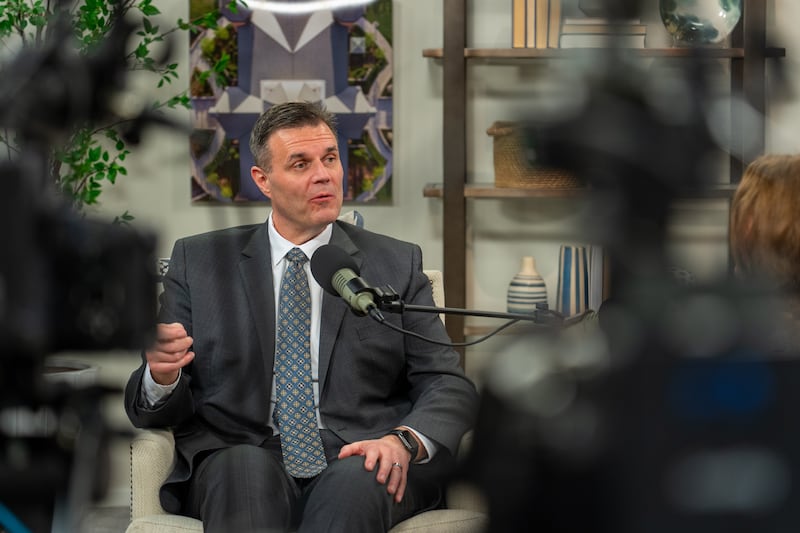
Maxfield said he sees an antidote for the current divisiveness in the world by looking “outside of yourself” to care for another.
Members of the Church strive to follow the two great commandments taught by Jesus Christ — to love God and “love thy neighbour as thyself” (Matthew 22:39).
“We want to become more like Him,” Maxfield said. “We want to follow Him as His disciples. And so we do those things that He has done. Those things that we’ve seen Him do, we should do those likewise.”
The Church’s efforts to care include both the work of the Church as an organization and the individual efforts of Latter-day Saints around the world. Many efforts done by Church members around the world are organized through the Church’s JustServe platform and app. In 2025, a new milestone was reached on JustServe with 1 million registered users.
Building self-reliance
In addition to offering self-reliance courses, the Church supports the principle of self-reliance for those in need with a special focus on giving people a hand up, rather than a handout. Then, when people have received help, they can in turn help others.
As an example, Maxfield shared the story of a woman in Zimbabwe named Future. When she first started attending a literacy class, she was able to read only at a kindergarten level. But after six months of attending the class, she improved to a third grade level.
“She now takes what she’s learned in our experiences, and she helps kids in her community to learn some of the same principles that she’s learning,” Maxfield said. “She wanted to give back as a disciple of Jesus Christ.”

Maxfield said the woman was recently called as a temple worker in the newly dedicated Harare Zimbabwe Temple.
“So we just see what she’s doing in the trajectory of her life that’s changing, the trajectory of the kids’ lives that’s learning from her, and her desire to even better follow Jesus Christ as she provides service in the house of the Lord,” Maxfield said.
Divine identity
The Church’s efforts to care for those in need in 2025 included spending $1.58 billion — supporting 3,514 humanitarian projects, donating 37,063,409 pounds of food through bishops’ storehouses and aiding 569 emergency relief projects.
The Caring for Those in Need 2025 report is the fifth such report released from the Church detailing the Church’s recent efforts, and Maxfield said he’s learned a lot from the first report to the latest.
“The first year that we did it, we received some great feedback from the report,” he said. “And in it, we had put labels, outside labels on people, like ‘vulnerable’ or other terms. And I was reminded … that these are short-term labels, and really, it can perpetuate or diminish their most important identity, which is a son or daughter of God.”
Maxfield added that his ability to see God’s children as sacred beings has improved as he’s observed members of the Church serving “the one.”
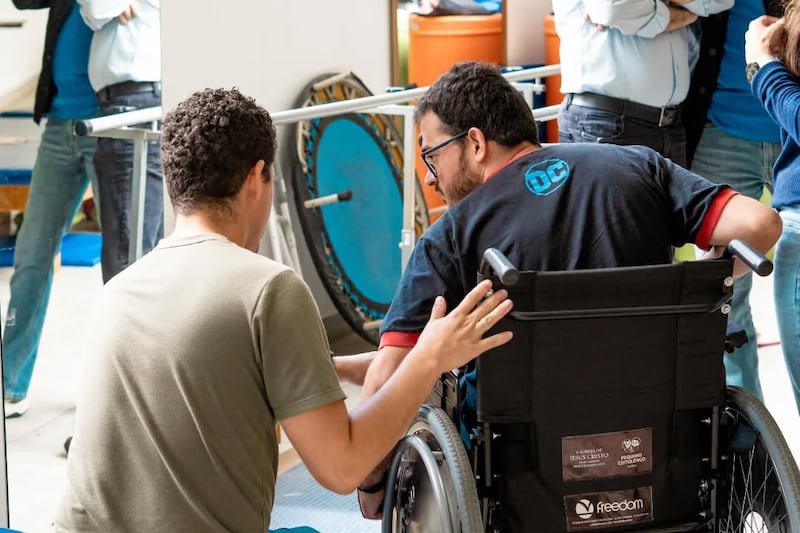
“We see how the Savior ministered one by one. And we see the impact that it’s having on people’s lives all over the world — those that are receiving aid, those that are reaching outside of themselves to help others,” he said.
Helping women and children
The Relief Society organization is leading the Church’s efforts to care for women and children. In 2025, the Church contributed $63.4 million in these efforts to improve the health and well-being of women and children around the world, especially through child nutrition, maternal and newborn care, immunizations and education.
This initiative groups together four consortia, each focused on projects benefiting women and children in 12 high-need countries.
“We kind of consider ourselves now more of a conductor of a symphony in bringing them all together with their great parts,” Maxfield said of the nonprofit organizations in the four consortia. “Some of them are better with these countries, some are better with these fields. And so we come together, we allow them to know, ‘Stop competing with each other, and let’s focus on helping God’s children.’”
