




The Caring for Those in Need 2025 report shows that The Church of Jesus Christ of Latter-day Saints exceeded the previous year’s record, spending $1.58 billion to help those in need.
The Church’s efforts to care include both the work of the Church as an organization and the individual efforts of Latter-day Saints around the world. The summary highlights humanitarian aid, volunteer service and welfare and self-reliance efforts worldwide.
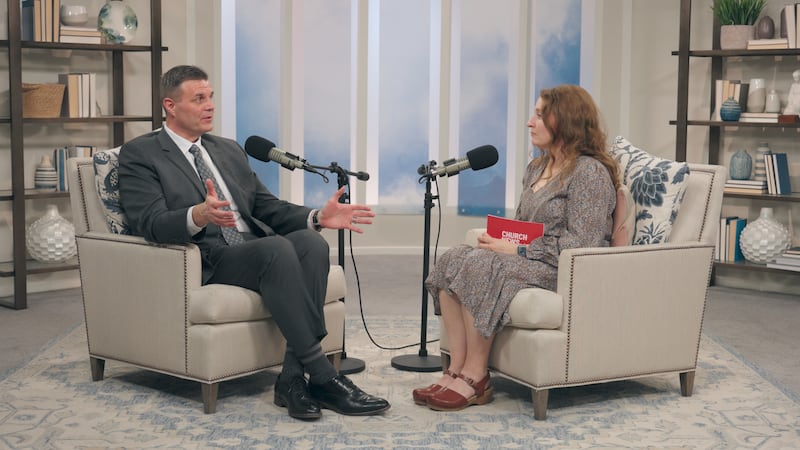
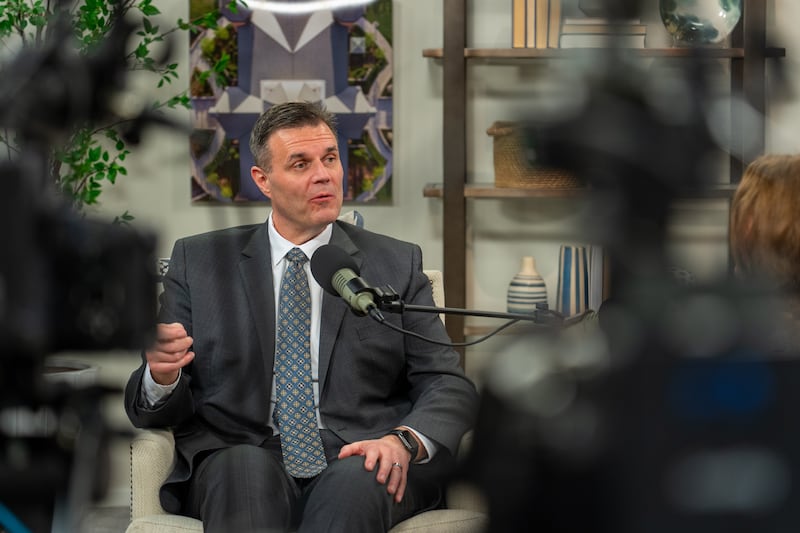
On this episode of the Church News podcast, Blaine Maxfield, managing director of the Church’s Welfare and Self-Reliance Services, joins Church News reporter Mary Richards to talk about this important work. They discuss how members, as disciples of Jesus Christ, strive to follow His teaching to “love thy neighbour as thyself” (Matthew 22:39).
Listen to this episode of the Church News podcast on Apple Podcasts, Amazon, Spotify, bookshelf PLUS, YouTube or wherever you get podcasts.
Transcript:
Blaine Maxfield: As disciples of Jesus Christ, we follow the Savior and the way that He reached out and helped the sick and how He lifted those despondent and how He helped those who were in need of comfort and peace. We follow that same very example. And I’ve seen it done by wonderful people of all faiths all over the world.
0:22
Mary Richards: This is Mary Richards, reporter at the Church News. Welcome to the Church News podcast. Today, we are taking you on a journey of connection as we discuss news and events of The Church of Jesus Christ of Latter-day Saints.
Blaine Maxfield, managing director of Welfare and Self-Reliance Services for The Church of Jesus Christ of Latter-day Saints. Thank you for joining the Church News podcast.
Blaine Maxfield: Thank you. It’s a pleasure to be here.
0:48
Mary Richards: I want to talk about some of these incredible numbers from the Caring for Those in Need 2025 report. We’ll start off with these, and then let’s talk about them.
So, The Church of Jesus Christ of Latter-day Saints expended $1.58 billion in 196 countries and territories to care for those in need in 2025. And the report lists so many numbers. Here are a few of them: 3,514 humanitarian projects, more than 37 million pounds of food donated through bishops’ storehouses, 569 emergency relief projects and 7.4 million hours of volunteer work. All of these numbers just seem so amazing to me.
But I wanted to kind of get your thoughts on this overall picture — but then what has impressed you the most when you ponder these numbers?
1:40
Blaine Maxfield: Thank you so much. You know, what really impresses me is simple: It’s people. That’s what matters most to us. And we see how the Savior ministered one by one. And we see the impact that it’s having on people’s lives all over the world — those that are receiving aid, those that are reaching outside of themselves to help others.
You mentioned that 7.4 million volunteer hours. It’s almost a million hours up from last year. You know, when there’s disasters all over the world, I think people know that the Latter-day Saints will come, and they bring friends with them. And it’s a beautiful way to help a community heal. In a time where we see a lot of division that’s going on and divisiveness, an antidote to that is to look outside of yourself and care for another. And so we see beautiful, beautiful things that are occurring, but what catches my attention most is the individual.
2:34
Mary Richards: Each of those numbers, there are people behind them.
Blaine Maxfield: Yes, they are.
Mary Richards: People who are giving the relief and those receiving that relief.
Blaine Maxfield: That’s right.
2:41
Mary Richards: Yes. Are there any stories that kind of stand out to you or a story in particular that has affected you?
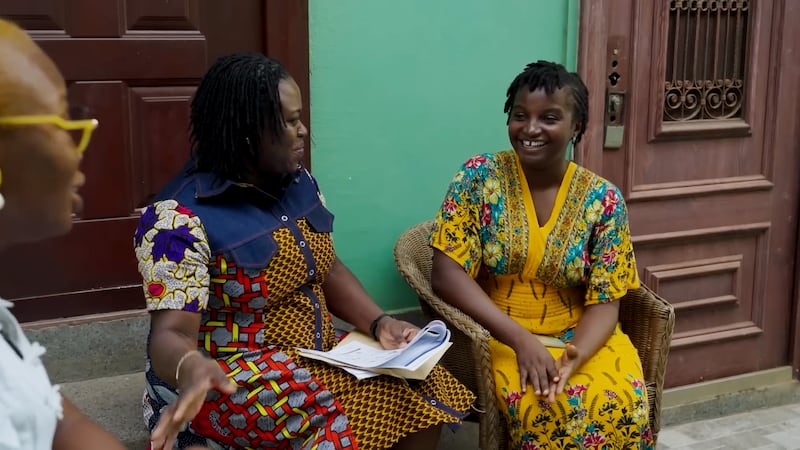
Blaine Maxfield: Oh, this is the hardest question ever. Just a few months ago, I found myself in Africa West. And I was able to go visit with a family there. And you can just picture the situation. It is the most meager of circumstances. And then they just told me their story, which is what I wanted to hear. Dad had received some bad news and was unable to work. Mom was dealing with something as well physically and was unable to work. Their daughter’s name was Claudia, received wonderful grades all through high school. Now it was incumbent upon her to care for her entire family. She had thoughts, she had hopes, she had dreams, and she just set those aside and went to the market and began to work.
A neighbor came to them, who was a member of The Church of Jesus Christ of Latter-day Saints, and talked to them about the Savior. They felt like they needed hope. They felt like they needed healing. And so mom and daughter went to one of our worship services. There, Claudia was connected to a gathering place. In that gathering place, with all other YSAs, young single adults, she went to one of our self-reliance groups. And in it, she learned about education for better work, and she learned about how to start and grow a business. And she applied those principles, taught them to her mom, who went to work.
Now, Claudia learned about some additional experience, and she’s found herself now studying to become a nurse. And she told us this complete story, but you want to know what touched my heart the most? As we went into this house and she’s telling me these stories, she’s testifying of the Savior, Jesus Christ, she’s bearing witness of the President of the Church, she goes and gets this bag that’s full of waters, which I know would have cost her a lot to do. And she’s thinking of us, and she gives us these waters. And I couldn’t bring it home with me, but I’ve kept that cap to that water just as a reminder of her story, and now how she sees others in different ways, and she’s motivated to look outside of herself as she’s on her journey of self-reliance.
4:52
Mary Richards: Wow. I love that so much because the name of your department, Welfare and Self-Reliance Services; so, we’re not only as a Church putting money toward helping those in need and helping maybe lift them, but maybe teaching these skills and giving them — like those self-reliance classes you talked about.
Why is it so important to have this idea of self-reliance and building that for long-term effects?
5:18
Blaine Maxfield: That’s really one of the unique principles that we try to focus on, is to give people a hand up rather than just a handout. And those humanitarian projects, those that teach self-reliance skills, are some of our most wonderfully accepted programs that we do have.
Let me tell you another story. Is that OK? In Central America, in Honduras, I visited with a sister there named Berta. And Berta was struggling. Her family was struggling. Through one of our humanitarian projects we had with one of our implementing partners, we brought people in, and most of them were sisters, most of them were women, and taught them either farming or how to care for chickens and manage eggs. And so she went down the farming route, gathered some chickens. She learned how to care for them. She learned how to move those eggs in wonderful ways to help with protein, to help with their living. And she turned this into a business that is now providing for her family.
But it didn’t stop there. She knew how important it was for her. And so her and another sister created a group that’s called United Hands. And now they’re teaching everybody in their community the same experience that they went through. So first they were receivers, and now they’re givers. And now they’re going out to really try to help others in remarkable ways.

I love, we love, these principles of self-reliance. And particularly when we bundle that with humanitarian projects, we think that can make all the difference.
Mary Richards: It’s building her own life. It’s changing her life, her family’s life, her community. And it ripples out from there.
6:56
Blaine Maxfield: It reminds me of a scripture, if I can share it. You know, I just think about the experiences with the law of the fast in Isaiah 58. And it talks about the blessings that can come from the law of the fast. And then in that, it talks about those followers of Jesus Christ. And as I look at this, it’s found in Isaiah 58, the scripture says this: “And they shall be of thee that shall build the old waste places: thou shalt raise up the foundations of many generations;” — and now when I think of Berta, I think of this — “and thou shalt be called, The repairer of the breach, The restorer of paths to dwell in” (Isaiah 58:12).
And it’s just a beautiful reminder to me of the work that she’s doing. She’s gained dignity. She’s gained hope. And she’s motivated more than ever to help others. And she has eyes to see others who need the help that maybe you and I would not.
7:47
Mary Richards: She’s right there. This also makes me think of the way the Church works with those locally. Local organizations who are on the ground, who know the needs of these communities. Well, and the Church is everywhere anyway already, too, with our local units.
So, how important is that work, as we sit here in Salt Lake City and talk, to know that around the world the Church is working so closely with local nonprofit organizations and our local leaders on some of these issues?
8:15
Blaine Maxfield: We’re just one of many that are doing this work. And we look for ways to accelerate work all over the world to help. One of our key initiatives this last year has been with women and children. And we focus on local organizations that can help with that as well; whether it’s through nutrition for women and children, whether it’s through education efforts that take place, whether it’s through vaccinations, whatever it be, we really want to focus on that and work locally as much as we possibly can, because they know what’s best to help in needs.
We’ll often work with organizations and groups, and we’ll ask them two key questions: “What do you need, and how can we help?” And they know best in that local situation what they need and how we can possibly help.

9:04
Mary Richards: Those conversations happen all the time. This is something that is just a part of your DNA.
Blaine Maxfield: It’s ongoing, really, and we look for problems that are out there and then sustainable solutions. In some of the most complex places around the world, as the landscape is shifting around the world, all it really does for us is strengthen our resolve to know how important it is to help and strengthen our commitment to help.
Can I tell you a story about Haiti?
Mary Richards: You have so many good stories. I want all of your stories.
9:33
Blaine Maxfield: So, in Haiti, we see the greatest things that we work with an organization that is helping us that really knows what the needs are there, and one of the most complex areas in the world and areas of greatest need. We work with farmers as we connected this self-reliance element that says: “How can we help provide you additional seeds? How can we provide you additional tools and classes to improve your yield?”
Now, when that’s improved, you know what we do with that food? We then take it and provide food during school, school lunches for children. Now, we think, “OK, great; we’re helping the farmers, we’re helping the economy,” but what takes place at school is nothing short of a miracle. As we work with those different schools, we’ve found that in some cases, once we started providing food, enrollment goes up by 80%. And now, not only does it go up by that much, they’re fed and they can learn now as a part of their experience.
So it affects their cognitive receptive that takes place with their school, it affects them attending school, and it helps the farmers with their self-reliance. And so it’s just a beautiful cycle of giving and what love looks then that day is food. And it’s just an experience that once you see it, you’ll just never forget it. But you want to know? You don’t have to see it to be motivated to look outside of yourself and really help someone.
11:01
Mary Richards: I love that thought because our Relief Society General President Camille N. Johnson has also taught that in ways, for example, in caring for women and children. There are ways that we can, of course, think globally and act so beautifully with those partnerships and collaborations, but also to think locally.
Those 25 ways, for example, that I can get involved in that effort is to look across the fence. My neighbor, how can I care for her? Or what can I do at my school down the road?
Or I guess I would love to ask you, then, because of course the Church is involved and we said all these huge numbers at the beginning, but what also can we do locally in our own sphere?
11:45
Blaine Maxfield: That’s the biggest question that we get, particularly from young single adults: “We want to help. We want to be involved. Where do I even start?” And I love that you said that we can start with those that are closest to us. We didn’t have to be in Haiti, or we didn’t have to be in Africa West, we didn’t have to be in these other locations to look to help somebody that’s close to me.
One of the great ways to get started is to look at JustServe, which is a tool that helps to connect us with volunteer opportunities. And so I would invite anybody to go out to JustServe.org. You can just punch in the zip code that you live in, and you can find projects that you can go and help. And that is just a wonderful, wonderful way to get started.
12:23
Mary Richards: I love just serving my family, because whenever my teenagers are starting to feel a little bit teenager-y — is that a word? — I think, “We might need to serve some other people.” And through JustServe, the app or the website, you can put in by location, by interest, by age. There were some remote service possibilities as well. There really is something for everyone. And that is growing, too. More and more cities are on board. More and more countries have this.
12:52
Blaine Maxfield: Last year, we had our 1 millionth user of JustServe. We have more than 300 high school clubs. Can you imagine this? And so now we have these clubs that we should watch how they take the lead. Can you imagine a YSA gathering place with their JustServe clubs that they would have their JustServe opportunities? Amazing things are going to happen and are continuing to happen because we’re looking outside of ourselves to care for others.
13:16
Mary Richards: Yeah. You talked about how — and there are studies that back this up — that serving others helps you. And what better thing is there for our teenagers, for our young adults, for all of us, really, to give relief? And it’s not just to feel good. This is following commandment, isn’t it? To love God and love our neighbor.
13:36
Blaine Maxfield: As disciples of Jesus Christ, we follow the Savior and the way that He reached out and helped the sick and how He lifted those despondent and how He helped those who were in need of comfort and peace. We follow that same very example. And I’ve seen it done by wonderful people of all faiths all over the world.
In a world that’s never been more connected electronically, there’s many of us that are feeling more and more alone. We need interactive relationships with people, and this service is one great way to do this. We’ve seen this in emergency response events, where there’ll be two neighbors that maybe don’t get along. And before you know it, by the end of the day, hearts, hard and frozen hearts, have thawed and melted. And now they’ve set that aside, and they can come together because they’re working together to help someone else.
Mary Richards: Yes. There’s something about rolling up your sleeves and getting into some hard work side by side with someone, or serving someone helps you grow to love them.
Blaine Maxfield: Absolutely.
14:40
Mary Richards: Yes. This idea is so beautiful. We talk about the reason for caring for those in need to do as the Savior would, but why is that so important? Is it about us becoming more like Him or being His hands on the earth?
Blaine Maxfield: Exactly. We want to become more like Him. We want to follow Him as His disciples. And so we do those things that He has done. Those things that we’ve seen Him do, we should do those likewise.
I saw a little glimpse of something very sweet in Zimbabwe. In one of our first literacy classes that we had there, I met a sister there, and her name was Future. Isn’t that a beautiful name? Future. And as she came in to visit with us, her aptitude for reading was kindergarten level or lower. And she came to six months’ worth of our classes. It was more than an hour walk to get there, and she came to almost every one over six months.
At the end of that six-month period, her reading level is now third grade or higher. And she now takes what she’s learned in our experiences, and she helps kids in her community to learn some of the same principles that she’s learning. She wanted to give back as a disciple of Jesus Christ, and so she was thrilled to let us know that she was recently called to be a temple worker in the newly dedicated Harare Zimbabwe Temple.
And so we just see what she’s doing in the trajectory of her life that’s changing, the trajectory of the kids’ lives that’s learning from her, and her desire to even better follow Jesus Christ as she provides service in the house of the Lord.
16:20
Mary Richards: Oh, that is beautiful. I’m so happy for them to have that temple and to hear the story of her life being changed.
These are all priorities of the Church, right? When I was looking through the 2025 Caring Report, I saw so many of these examples of literacy, of clean water, education, of wheelchairs, of glasses, vision, immunizations. There are so many beautiful ways that the Church is making a difference.
16:48
Blaine Maxfield: As I look at it — we talked just a little bit about this women and children initiative — something that really stood out to me under the direction of the Welfare and Self-Reliance Executive Committee, and really the Relief Society general presidency, with this is: Last year, more than 20 million women and children received vitamins. And we had a goal of about 12 million, so it exceeded that with the work that’s taking place. Of that, more than 200,000 women were cared for who were pregnant or otherwise expecting.
And it’s just an amazing effort that’s taken place. That same effort in the country of Sierra Leone. When we started, almost none of the clinics had the appropriate vitamins, prenatal vitamins, that were needed. And now, almost all of them have them. So we see sweet experiences that are taking place, and it really, really stands out and resonates.
And then there are other more practical things, as you mentioned: 140,000 plus people entered into a self-reliance group. And the way that we’re helping people in various ways, including our Perpetual Education Fund. More than 16,000 students enrolled in our Perpetual Education Program, which is the highest that it’s ever been. And this coming year, this current year, we’re celebrating the 25th anniversary of the Perpetual Education Fund.
And so, there are amazing things, but still the most amazing is people and how it’s impacting their lives to either serve, receive aid and then look for ways to help others.
18:13
Mary Richards: Yes, because then, like you said, as they then are lifted and have grown in that self-reliance, then that expands, that grows.
Blaine Maxfield: It’s a beautiful cycle.
Mary Richards: Yes, yes. I’m glad you brought that up about the 25 years of the Perpetual Education Fund. There have been some beautiful stories out of experiences there, too, because it is really one by one. We think about these big pictures, big numbers, big anniversaries, but each of those is a person, a child of God.
18:43
Blaine Maxfield: It really is, yeah. Beautiful experiences that we see with people helping through the Perpetual Education Fund. If you talk about one by one, Mary, you ought to join us at one of our meetinghouses around the world where we’re inviting people to bring their kids in, children 0 to 5, to be measured. And then we help them with education, training and nutritional foods.
In an experience where I was there in Africa West, a dad and mom brought in their little daughter, who’s 18 months old, and she was wasting. And we were very much worried about her experiencing severe malnutrition. And we were able to connect them with local authorities, local medical aid, and also provide them some therapeutic food to help them.
About nine months later, they came back in, and where she was once in our red category, now she was trending towards green. The color of her hair had changed. The color of her skin had become more normal for her. It was just beautiful, beautiful to see how with education, some therapeutic food, It was something that could be treated.
And the trajectory of her life, the future of her life, is hugely different. Mom and dad can now see her for who she is, a divine daughter of heavenly parents who love her. And there is so much ahead for her in her future. It’s a beautiful thing to see.
20:10
Mary Richards: Oh, I love that. Wasting and stunting are a big issue in some populations around the world, in the U.S. and around the world. That’s where — and you were talking about in the red and the green — that’s with that tape measure around the upper arm?
20:23
Blaine Maxfield: Yeah, that MUAC score that we’re doing around the arm, and we’re able to evaluate that. And then we have a process that we go through to help. And one of the great ways that we help is through the counsel of the Church. So, ward council, Relief Society and elders quorum ministering brothers and sisters that are going out and helping and discussing and following up and connecting them with local medical agencies to really help them long term.
In Central America, I was there in one of these clinics, and something caught my attention. Mothers who came in, and they were in great need, but it just was clear how much they loved their children. And I loved it, their little, I guess, paper that they would have that would keep track of their weight and different types of things, immunizations. How they would care for that. They would wrap it in this beautiful plastic bag. And when it was time to show with us, they were just so careful to show this with us.
They cared for that because they knew that it represented health of their children and their future. And so all the things that they may have lacked, what they took great care with was their children and watching out for keeping a record of how to help them.
21:34
Mary Richards: Wow, that’s beautiful. This really is growing, this initiative to care for women and children, because — and it strikes me that President Johnson has said when we care for women and children in particular, we really are caring for our future. Those children that they love so much, that’s their future.
21:52
Blaine Maxfield: It’s their future, our future, and the future of their communities, the future of the Church. It’ll be just a beautiful experience for them individually, can be as they move forward.
And they see themselves, they allow themselves to be defined by their most important — which is their divine identity as sons and daughters of heavenly parents, as I mentioned, and helping them with their dignity. And everyone that I see that is out helping in this way, I go back to that scripture in Isaiah, because they’re all “repairer[s] of the breach” (Isaiah 58:12). They’re helping in special ways because they see that everyone around them is sacred.
22:34
Mary Richards: And, like you said before, we’re not alone in this work. Tell me more about these organizations around the world and some of these nonprofits and such that we collaborate with, that the Church works with and collaborates with.
Blaine Maxfield: We do work with so many. We recognize that we’re one of many that’s doing this work. You mentioned there were more than 3,500 projects that took place. There’s just no way that we could do that all on our own. So we look to other collaborating organizations to help us. We have long-standing relationships with so many, whether larger organizations like the World Food Programme or UNICEF, smaller local organizations that are helping in various ways. We focus from water to food to housing to emotional aid. So, there’s so many that we work with, have a long-standing relationship with.
And then a part of our effort is collectively we’ll go back in before a project starts, while a project is going and after it’s over, and go through a monitoring and evaluation process. So, we want to verify that what we think is happening is happening. And one of the great things that take place is learning. So, what can we learn to do better? Or what could we learn to do different? Or what did we learn that worked wonderfully well in our efforts to help people? And so, we love working with organizations. We take it very seriously. And we monitor it very seriously, because we know the sacredness of the funds that are being used to help God’s children.
24:03
Mary Richards: Yeah. We’ve done some stories in the Church News about some of these large donations and such where the Church has contributed to an organization and to help its needs in particular, meeting those priorities that the Church has. And I love what you said about monitoring and following up and working together. There are times when we are all brought together in the same room and are able to talk together, too, about these efforts.
24:29
Blaine Maxfield: We do, and we noticed that we felt like we could accelerate the work, particularly pertaining to women and children. And so we’ve done something that we hadn’t done before as a Church, which was we brought together eight organizations, and we call it a convening strategy and created four consortia to focus on helping to accelerate the help for women and children in various places around the world, 12 countries in particular.
And we think it’s a model that has been inspired. Particularly with some of the changing landscape that we’ve seen over the last year or two, we think it’s helped us to even show a greater commitment to helping women and children, and we think we’ll continue to do it down the road. We’ve gone through two years with this group, and we anticipate it being at least a five-year program with the goal of helping more than 100 million women and children.
25:20
Mary Richards: This idea that, yes, all these organizations are working in all their spheres, but if we bring them together, if we’re talking amongst ourselves, the impact is going to be greater.
Blaine Maxfield: Yeah. We kind of consider ourselves now more of a conductor of a symphony in bringing them all together with their great parts. Some of them are better with these countries, some are better with these fields. And so we come together, we allow them to know, “Stop competing with each other, and let’s focus on helping God’s children.”
25:49
Mary Richards: I love that. I’d love to get your thoughts, too, on the way that this all connects. All of this work and being a part of caring for those in need helps us and God’s children on the covenant path, this way to return back to Him.
Blaine Maxfield: Yeah, I think that’s a wonderful question. And as we follow the Savior, Jesus Christ, and look outside of ourselves to help others, what we’re really doing is helping ourselves and others with our covenantal responsibility to really care for those that are in need.
I love in 2022, President Oaks gave a talk in general conference. And in it, he referenced the Book of Mormon and said that we’re trying to be like this story in the Book of Mormon. And if I could just read the scripture, it’s one of the guiding things that we look to to help us to remember those things that are important.
It says — President Oaks said — “All of the humanitarian efforts of The Church of Jesus Christ of Latter-day Saints seek to follow the example of a righteous people described in the Book of Mormon.” Now, think about our covenantal responsibilities that we do have.
Now, listen to how the Book of Mormon describes them. And it’s in Alma: “And thus, in their prosperous circumstances, they did not send away any who were naked, or that were hungry, or that were athirst, or that were sick, … and they … were liberal to all, both old and young, both bond and free, both male and female, whether out of the church or in the church” (Alma 1:30).
And that’s the real example as we follow the Savior, Jesus Christ, and this righteous group of people that was described in the Book of Mormon, whether inside of the Church or outside of the Church, the special opportunity that we have to care for those in need, the covenantal responsibility that we have.
27:38
Mary Richards: Yes. I was just thinking, too, of that beautiful example from the sister in Zimbabwe, and now she is working in the temple. I’ve had this connected in my brain for a while.
I actually took the emotional resilience self-reliance course from the Church, and how this idea of emotional self-reliance and emotional resilience is tied to our spiritual self-reliance, as we care for those in need and as how we also care for ourselves and become more self-reliant.
Then we are more likely to be spiritually self-reliant, be able to move forward on the covenant path ourselves, to be able to make and keep sacred covenants with our Heavenly Father and Jesus Christ?
28:17
Blaine Maxfield: I like that you said that. Can I tell you a story about the title of “Emotional Resilience”? When we prepared it, we were invited to reconsider a new title name. And so we thought about it, and it took us back to the Book of Mormon, when Alma finds himself in Ammonihah and then leaves (see Alma 8). An angel comes to him and says, “Hey, you’re doing so much better than you think.” He goes back into Ammonihah, enters in just a little different way and runs into his dynamic duo partner, Amulek.
And so they see wonderful things, and they see tragic things. And Alma knows that his friend Amulek needs help. And so in Alma 15, there’s a scripture that in essence says that Alma took Amulek into his own home and administered to him. And then this beautiful sentence: “And [he] strengthened him in the Lord” (verse 18). And I often wonder what must have taken place in that home to strengthen him in the Lord, which had to include discussions about his emotional health and well-being.
And so, because of that, we were approved to change the title of the Emotional Resilience manual to “Finding Strength in the Lord: Emotional Resilience for Self-Reliance.” It is very important, and it’s something that is discussed more now than ever. That manual in particular helps the worried well, that recognizes that we all deal with some kind of anxiety or some kind of depression, but it can give us tools to help us to work through that and also identify those that are still in need of professional help, which is absolutely appropriate, and we should set aside any stigma that goes with that.
29:58
Mary Richards: I think every soon-to-be missionary should take the course, soon-to-be college student.
Blaine Maxfield: Yeah. That course, along with “Adjusting to Missionary Life,” has been wonderfully well to help missionaries in preparation and as part of mission service.
30:11
Mary Richards: Yeah. It’s so interesting how much all of this is tied together. Humanitarian aid, volunteer service, welfare and self-reliance efforts are all tied so closely to our spiritual well-being as well, as we strive to love God and love our neighbor.
Blaine Maxfield: Yeah. It is a part of that, and as we think about these two great commandments, it does start with loving God. And President [D. Todd] Christofferson has said when we do that, we in essence partner with Him, and we’re better able to know how to look outside of ourselves and care for others. And so they wonderfully go together, loving God and loving our neighbor as ourselves.
30:50
Mary Richards: Where can people find out more information about the report and how they can also get involved in this work?
Blaine Maxfield: Yeah, one of the best places to go is go to caring.ChurchofJesusChrist.org, and you can find out information on the report and some other great things. There’s an interactive map that’s found in there as well, so that you can see where different projects are taking place all over the world.
And we’d invite people to take some time in the report. There’s more than 130 stories in there, and there’s a question in many of the sections that goes something like this: “What can I do?” And so our hope is that it will motivate you to put your best intentions into action.
31:30
Mary Richards: Well, this leads well to our last question on the Church News podcast. We always ask our guests, and we give them the last word. We like to ask them what they know now.
And so, Blaine, I’d love to know: What do you know now in this work about caring for those in need and caring one by one for God’s children?
31:50
Blaine Maxfield: This is our fifth year of this annual report. And the first year that we did it, we received some great feedback from the report. And in it, we had put labels, outside labels on people, like “vulnerable” or other terms. And I was reminded by the person who was looking it over that said that these are short-term labels, and really, it can perpetuate or diminish their most important identity, which is a son or daughter of God. And then reminded me that, “Can’t I see that everyone around me is a sacred being?” And she was absolutely right.
And so what’s different for me, I hope, is that my ability to see God’s children as sacred beings and the important work that we all have to care for God’s children and to help teach principles of self-reliance, to help them to care for themselves and others in this beautiful opportunity that we have to lift all others and bring dignity to many.
