





The purpose of the temple and family history is to unite families for eternity. The Church of Jesus Christ of Latter-day Saints works with records custodians around the world to preserve vital records so that God’s children are remembered, one by one, name by name.
Having these records allows people to accompany their ancestors to the temple, which is a part of gathering Israel.
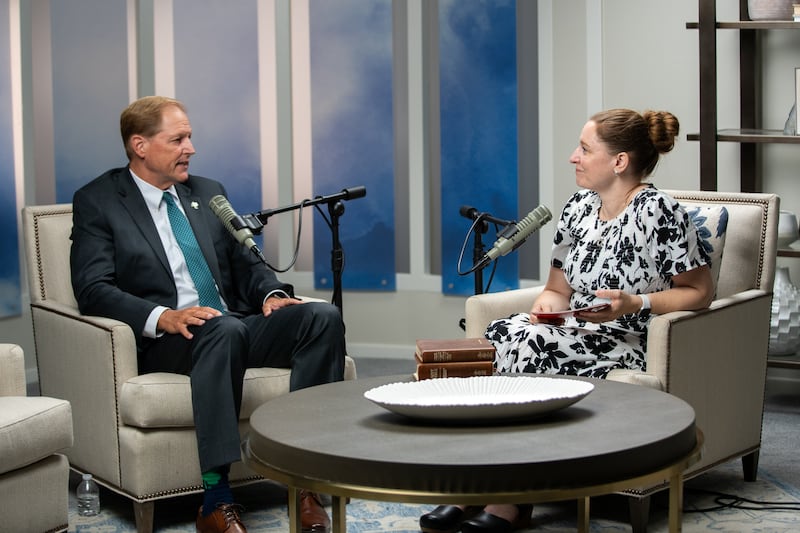
Elder Mark A. Bragg, a General Authority Seventy and executive director of the Church’s Family History Department and FamilySearch International, joins Church News reporter Mary Richards on this episode of the Church News podcast to speak about growing the family tree and the joy and peace that come from family history.
Listen to this episode of the Church News podcast on Apple Podcasts, Amazon, Spotify, bookshelf PLUS, YouTube or wherever you get podcasts.
Transcript:
Mary Richards: I’m Mary Richards, a reporter with the Church News.
The Church of Jesus Christ of Latter-day Saints works with records custodians all around the world to preserve vital records. This is a way to show Heavenly Father that we love His children, we remember them and we want to connect all of them.
Joining me on this episode of the Church News podcast is Elder Mark A. Bragg, a General Authority Seventy and executive director of the Church’s Family History Department and FamilySearch International.
Welcome back, Elder Bragg, to the Church News podcast.
Elder Mark A. Bragg: Thank you. I really appreciate it. Thanks for letting me come.
0:34
Mary Richards: We love learning from you about all the things that have to do with FamilySearch and family history, this endeavor we’re all involved in to gather Israel and Heavenly Father’s children.
Tell me about records custodians. What does that mean exactly, and their role?
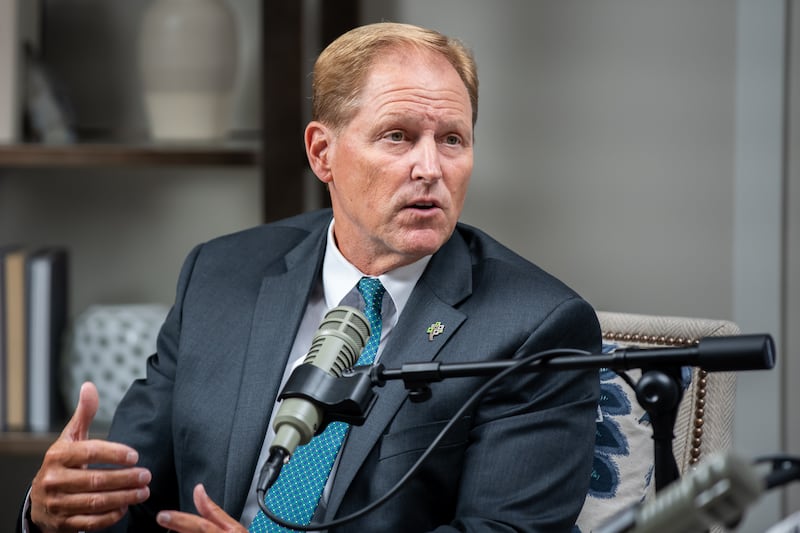
Elder Mark A. Bragg: You know, I love how you started this by talking about how we remember them and connect them. And that couldn’t be a better introduction to this discussion, because records custodians and archivists around the world — could be universities, could be any group that protects and preserves and provides access to vital records that give a glimpse into the past, it could be personal records, it could be historical records — but these are really special people that have what we would believe have felt the Spirit.
We call it “spirit of Elijah,” but it’s the Holy Ghost directing them in this role, that they feel a responsibility to protect records. And what it does, it allows us to find them and remember them and connect them to their modern-day family. They provide such an incredible service.
1:50
Mary Richards: These records aren’t meant to just be kept locked. We want to have these stories come alive, to meet these people, and then hopefully accompany them to the house of the Lord.
Elder Mark A. Bragg: Yeah, that is it. That is the joy of this work. And we talk about that. We’re very upfront with archivists, records custodians, family clans, whatever it might be, we tell them why this is of such interest to us. And it is so that our members can connect to their family and their relatives and perform sacred ordinances in the temple on their behalf. So we feel really strongly that we should talk about that.
And what that does is that it allows us to talk about doctrine. And when you talk about doctrine, the Holy Ghost can be there and testify. And, like I said, the vast majority of the people that we’re going to talk to, they’re not members of our faith. But when you talk about doctrine, it leads to understanding — maybe not agreement with everything that we might do, but it leads to understanding.
And understanding leads to more conversations, and then it leads to cooperation and collaboration. So, we start with — we tell the members — start with Christ as you think about family history work. And what we do with outside archivists and records custodians is we start with doctrine, for the most part.
Mary Richards: I love that, building that understanding. And you’ve done this around the world.
Elder Mark A. Bragg: We have.
3:21
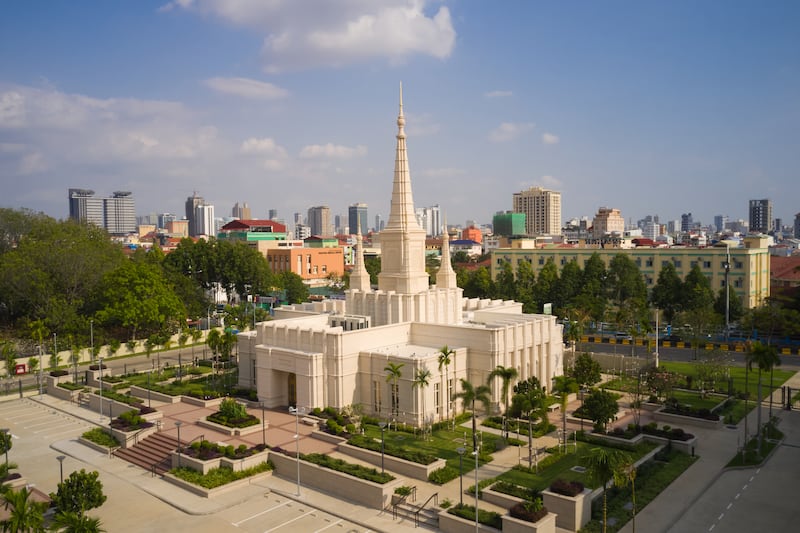
Mary Richards: And there’s coming up, at least at the time of filming this podcast, you’re going to be going again on a trip to Cambodia.
Elder Mark A. Bragg: That’s right.
Mary Richards: What are some of your goals for this?
3:30
Elder Mark A. Bragg: Well, we’re very excited. We don’t have too many temples being dedicated in Asia. And so this one we thought was a really big opportunity to get with archivists and records custodians in that part of the world. So we’ll have about 60. And we have a seminar; we put together a two-day seminar. And we’ll have about 60 of these VIPs, that we call them, and they should be called “VIPs.”
And what happens is — and I think they’re representing nine countries in Southeast Asia. So what we’ll do is we’ll have a dinner with them. I think it’s on a Thursday night. We’ll have a dinner, we’ll kind of explain what FamilySearch does, what we do that might be of interest to them and help them in their responsibilities.
And then the next morning, before the temple is open for the open-house tours of that day, we take them through special tours. So I think we’ll have about four tours. We’ll break that into four groups. And what that does is — when I talk about talking about doctrine, here you are in the house of the Lord, and you’re right at the baptistry, and you can say, “This is why we’re so interested in names of individuals who have lived, and records, birth records, death records, marriage records.”
And then we walk them through the house of the Lord, and we end in the sealing room. And we say, “This is really an important part of why we are so interested in gaining access to records.” And I will tell you this: They get it. In that setting, in that sacred house of the Lord, they understand. It’s not dedicated, I get it. But they get it. They see it, and they see how important it is to us.
Can I tell a quick story? We were in the Ivory Coast, and this was in French, so I’m doing the tour in well — I’m not doing it in French, I’m doing it in English; It’s being translated — and there was a minister, and I can tell he’s not enjoying it. And he just had a scowl on his face. And he differed with our interpretation of what 1 Corinthians 15:29 means, that we believe that that means that they were doing baptisms for the dead. He felt differently, that that wasn’t what that meant.
And as the day went on, the tour went on, it looked like I was losing him. And so afterwards, I went up to one of the local FamilySearch wonderful workers and said, “Hey, could you go talk to him and just see if we’re OK?” And they came back, and he said, his response was, “I didn’t understand it before, but now I know all that you do, you have God at its center.”
So his resting face looked a little harsher than I was anticipating, but the point of the matter is he felt the Spirit. And then when we met with his organization, the head of his organization — this was in Kinshasa, in the Democratic Republic of Congo — turned to him and said, “Should we trust these people?” And he said: “I’ve been with them for a couple of days. We can trust these people.” So it turns hearts, it changes hearts.
6:47
Mary Richards: Wow, that’s beautiful.
Elder Mark A. Bragg: Yeah, it was amazing.
Mary Richards: You can see that the Lord is helping in this.
Elder Mark A. Bragg: Yeah.
Mary Richards: As you go around to these different countries and have these conversations.
6:57
Elder Mark A. Bragg: There’s no doubt about it. Helping in every aspect of this work. And that’s what’s so beautiful. So, you can imagine how excited we are with the new visitors’ center. You can have that temple experience. Anybody that we bring to Salt Lake City, we can take them to that temple experience in the visitors’ center, and they’ll feel that same thing. We can talk to them more about what we do as we stand in front of the baptistry, as we go to the sealing room. It’s just going to change the complete complexion of this game.
Mary Richards: Yeah, it’s a permanent open house, really, on Temple Square. And many people come, will be coming, for the open house. They come to Salt Lake City anyway, because we have this beautiful FamilySearch Library. And I know people listening know this, but I’ve always — it’s just fascinated me how much family history and genealogy is such a worldwide passion.
Elder Mark A. Bragg: It is.
Mary Richards: And we can find ways to connect that. But I love how you were saying, and how we approach it with, “This is the doctrine ‘why’ for us.
7:59
Elder Mark A. Bragg: Yeah. And we’re thrilled that there are so many companies doing so well in providing more and more information to individuals throughout the world that they can use to build their family trees and just understand their family a little bit better. All that we do is so that we can take our ancestors to the temple and perform ordinances in their behalf. That is the reason we do this.
The purpose of the Family History Department — and honestly, the purpose of FamilySearch International — is to unite families for eternity. And that is a spectacular thing to do. But one of the beautiful byproducts is that people that start to understand more about their family, they feel belonging, they feel a strength. Maybe if they get to know their ancestors, their ups and their downs, it helps them become more resilient.
Lineage is so important. Think about this: You have Lehi. He knew it was so important, he sent his sons to go get the records from Laban. Laban knew they were important because it had his lineage. The first couple verses of Matthew, it’s all the lineage of Jesus Christ. And Heavenly Father thinks it’s so important that He has a patriarch under inspiration declare our lineage in our patriarchal blessings. This is important stuff, but it’s so that we feel a sense of belonging to this great family of God.
9:27
Mary Richards: Elder Bragg, I’ve been skipping some of those verses when I read with “Come, Follow Me” with my children. And now I think: “You know what? I can point that out. This is important. This is where they come from. And here’s where you come from.” And I can go back on our lineage and just remind, because we do want to remember, yes, and build that resilience.
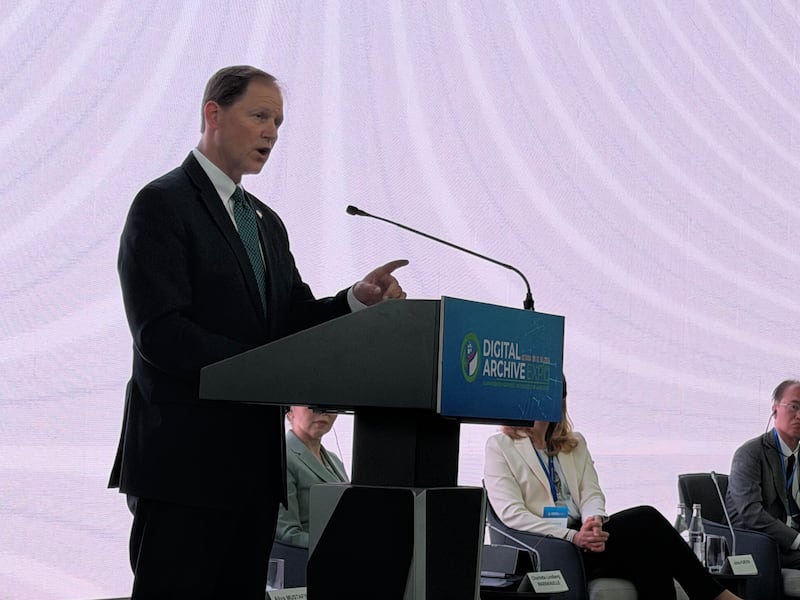
I’d love to — you talked about resilience and all of that and remembering and memory. When you were in Kazakhstan in June, I wrote this down. You said there, when you were talking to archivists, that preserving memory is an act of hope.
What does that phrase mean to you?
10:02
Elder Mark A. Bragg: So, let me answer that in two ways. So, I was speaking to what I think were nonmembers, not of our faith, at least. And I think it’s hope because I think everyone living wants to feel that they’ve accomplished something, they’ve made a mark. And what those archivists did was they made sure that those names were remembered. They make sure that those stories are remembered. And I just think there’s great hope in that, not only in what we can learn but to know that in the future, people will know about us and what we went through, and we can maybe bless the lives of individuals.
But then on the other side, thinking about it from a religious standpoint, is there anything more Christlike than ministering one by one? And that’s what these records do. It allows us to minister to members of God’s family one by one, name by name. And I just — all that we do is because we know that Jesus Christ lives and that we can live together again as families. That is the essence of hope and joy, I think, in this life and in the life to come, that we can be together.
And so the preservation of a record from the Middle Ages means that that individual is remembered, and we will connect that individual to a member of the Church, a family member, and they can perform those ordinances. And that’s the end-all, be-all of family history work.
11:40
Mary Richards: Yes. Oh, I love that. I think about so many people still waiting to be discovered, still waiting, and you think about them and their lives and “Where are they?”
Is it difficult — or maybe you can talk a little bit about how there are differences in countries and how you really are trying to open doors and soften hearts. Or, like these opportunities, when you explain, “This is why we’re doing this,” do you see the work start to hasten and doors open?
12:09
Elder Mark A. Bragg: Yeah. It is an amazing time. I will tell you this: Starting in 1894 with the Genealogical Society of Utah, the reputation that now FamilySearch International has throughout the world is stunning. My first trip, I guess, as executive director was to Portugal, and there was a joint conference that we were putting on with the national archive there. And the archivist, the head archivist, Luis Santos, is just amazing. But they talked about how much the Church and FamilySearch has done for them, and I just never thought of it. I never knew that.
But we can go throughout the world — Montenegro and Albania — and they know who FamilySearch is, and they’re grateful for what we do, and they share that word with other people. And you’re right; we just see doors opening. And whether it’s in the Middle East or in Asia, the Lord is leading and guiding this work. And that’s why we can have such confidence — not cockiness, not overconfidence, but confidence — that when we need to get into a door, the Lord will help us find a way, because this is His work.
13:27
Mary Richards: Yeah. Oh, I love that. I also like to think sometimes, “What can I do?” And we talked in our last podcast about adding what you know to FamilySearch.
Are there also other ways that some of our members or friends of the Church in many countries around the world can do something on the grassroots level, can make connections and relationships with records archivists or parishes or all these different places or try to kind of be an advocate or serve a mission? There are many different things.
13:56
Elder Mark A. Bragg: There are many different things. You mentioned serving a mission. We always need missionaries to go throughout the world.
We were in Vienna, and we met these two wonderful sisters who’ve been on mission after mission after mission. They saw that there was an opening that we needed to digitize records in Vienna. They didn’t speak the language, but they thought: “Wow, Vienna. That’s pretty cool.” And I’m telling you, these are the happiest two sisters I’ve ever met in my life. And they’re in what I think you could only describe as a dungeon, digitizing all day long, and they could not be happier. And they’re finding names, and they’re making connections, even in their own family, in one case in their family. But just the Spirit that they feel.
So, I think the Church does an amazing job of service and community. And I can’t tell you how many times we hear about connections. “Oh” — you know, we go and we visit an archivist, and they say — “Oh, I actually know a member of your faith. They helped here” or “They did this.” And so I think doing that is really important.
And then, when you think about members, what can the members do? The key to all of this, all of the records that we gather and the trees that are built, they always have to be connected to a member. If they’re not connected to a member, we can’t do the work for them. That’s a commitment that we’ve made. So it always has to be connected to a member. So, what can members do? They can open up a FamilySearch account. That is the gateway that helps us get the work done.
And you talked about adding what you know, and there are so many ways you can do that. But really, the best thing is just to add the loved ones that you know. Just start there. But before you do pictures, before you do — just: “What’s your grandma’s name? What year was she born?” And what that does is it allows us to start sending you hints about other family members.
And then you just see how the work that’s been done up to this point, and then technological advances that are happening, it just allows this tree to bloom and to blossom. And before you know it, you have just a bushel of ancestors that you can escort to the temple to perform ordinances on their behalf. It’s amazing.
16:23
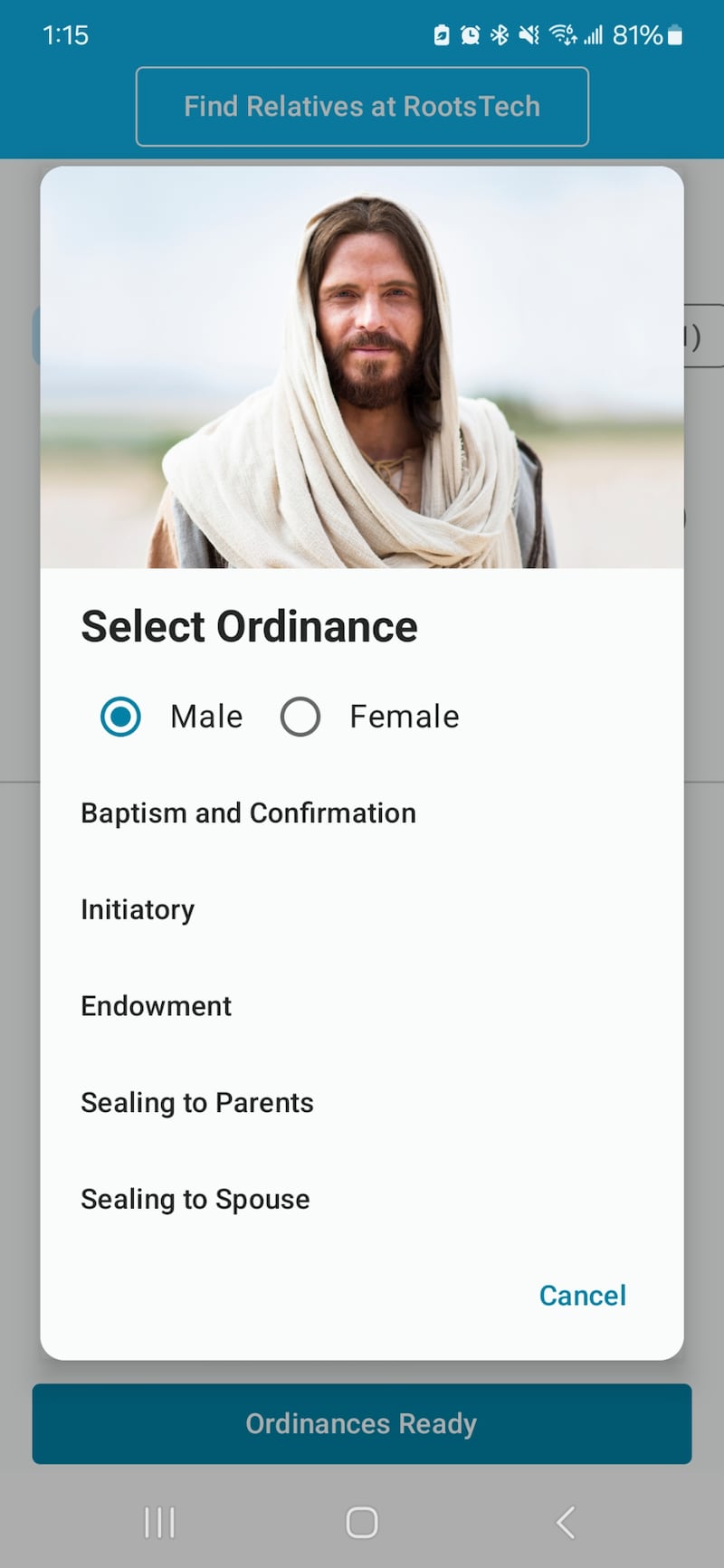
Mary Richards: I’ve seen it too, in my own life. I’ll get an email, “Did you know this about this?” “No, I did not know. I want to learn more about her.” It used to be that I would go to the temple and just go and get a temple name and go and have a wonderful experience. But now I always take a name. And it’s so easy to go into FamilySearch and pick from Ordinances Ready and go. And it says right there who it is, “This is your —”
I think when I went just recently with my son and my husband, my son’s about to go on a mission, and we went and did some work at the temple. And it said, “This is your fourth cousin once removed,” or something.
Elder Mark A. Bragg: How great is that?
Mary Richards: “I want to know more about this.” And staring at that date, when she lived and where.
Elder Mark A. Bragg: Maybe a photo.
Mary Richards: Yes, exactly.
17:22
Elder Mark A. Bragg: You know, our vision is that anyone, anytime, anyplace in the world can use Ordinances Ready to find an ancestor who needs the ordinances of the house of the Lord. And that’s why we have to go throughout the world. And I think, historically, we’ve gathered names, and we’ve hoped to be able to have enough names as we expand the temple building, which is spectacular.
But I envision a day that — and it’s coming, and it’s not far off — where we will have so many names in every corner of the earth that it will give the prophets, seers and revelators more options to place houses of the Lord. And so we won’t be chasing the temple with ordinance-ready names; we’ll be able to say, “We’re set here and here and here.” And through inspiration from the Savior, they’ll know where to place those temples. But we’re going to get to a point where we have so many names that there isn’t a corner of the earth that couldn’t have a house of the Lord right there.
Mary Richards: Yeah. Oh, you think about the history of this world and all the places.
Elder Mark A. Bragg: Right?
Mary Richards: There’s — yeah, there are people waiting.
Elder Mark A. Bragg: Yeah.
18:47
Mary Richards: Can you even talk a little bit about how, say, you’ve got this new relationship that opens up with records custodians somewhere. Then with those records, what’s the process from: “We’ve got them. They’re here in this — they’re in a basement in Vienna. They’re done,” then how does that kind of come through? You said it connects to a member.
Elder Mark A. Bragg: Yeah, yeah.
Mary Richards: And then what’s kind of that process?
19:08
Elder Mark A. Bragg: Well, it starts with just relationships and trust. And usually, we joke about this, but we tell archivists: “Google us. We’re here. We’ve been around for a while, and you’ll be pleased with what you see.” And then they talk to their friends, and then it gets to a point where they say: “Well, we have these challenges. Are there things that you can do to help us?” And we have become experts at digitizing and indexing and records preservation and online access. And so we have a spate of products that we can offer.
And so we figure out what they need, and then we work with them. We do tell them this is the reason we’re doing this. And so there are certain records that we place a much higher priority on — birth records, death records, marriage records, census records — that have just a plethora of information that can build a tree. And then we just work on what would help them, and we enter into a contract, and then we start digitizing. That’s really what it is.
I think we have about 600 camera teams throughout the world right now digitizing five, six days a week, sometimes in multiple shifts. And it’s to do a couple of things. Part of it is to get names for our members. So, once we have those names, members can research and — or, those records — they can research those records. We can also help push records to the members, give hints to say, “I think we found an ancestor.” Our industry friends do the same thing, these companies. But then it connects to a member that way.
What I was going to say is that this process, it can take some time. But we do it not only to build the tree, but there is an aspect — the founding principles of the Genealogical Society of Utah were benevolence, education and religion. Those were the founding three principles. Wilford Woodruff, Franklin D. Richards.
And so the “benevolence” part of that, which is really an important part — “education” is like RootsTech — but the benevolence is going throughout the world and helping protect records at risk. That’s an important part of it. And we’ve been in archives where, well, we’ve literally had to mask up because of the mold and things like that. So, some things age well with time, but paper records and parchment don’t.
And so — and think of a struggling country with all the social needs, dedicating funds to preserving records just isn’t high on the priority list. And so we go in, we digitize, we preserve them, we offer to host them. They retain ownership of the records — but we can help them put them online, make them accessible to everyone around the world. That’s one of the beautiful things now. Family history work used to be so tied to a proximity, right?
Mary Richards: Yeah.
22:37
Elder Mark A. Bragg: But now, anyone, anywhere with an internet connection can do this, make a difference and build a tree, get to know their family. And we can have records digitized in one part of the world, indexed in another part of the world and housed — or hosted, excuse me — here in Salt Lake or someplace else, and then accessed in some far-flung part of the world.
So, we live in the most amazing times. I think we’re — I personally am biased, but — I think it’s at the center of all that we do in the Church right now in gathering Israel on both sides of the veil. It helps missionary work on this side of the veil. It helps us, helps the members, live the gospel of Jesus Christ. Another divinely appointed responsibility is caring for those in need. Well, some of those needs are mental, some of those needs are social, and there’s nothing better than to turn your attention to others and look at a higher and holier use of your time. And so I think it does that, and then of course it unites families for eternity.
Mary Richards: Absolutely.
Elder Mark A. Bragg: So I think it’s right in the center of what we do in the Church today.
23:52
Mary Richards: Yeah. If we really are a covenant people, the Lord’s covenant people, with this testimony of the work of salvation and exaltation, this is it.
Elder Mark A. Bragg: It’s acting on that faith. I mean, it’s a lot of effort, and a lot of people are doing this. And we’re putting forth a great deal of funds to help countries protect and preserve their records, and it’s because of the faith that we have that there’s purpose behind this. There’s meaning behind this. There’s salvation, exaltation behind this.
And when you think of it that way, the confidence that comes from that, knowing that this is the work and the glory and that when you — you talked about some challenges that sometimes we have in the world, that there is a beautiful confidence that comes from knowing that this is the Lord’s work. And if we go down this path, He’s going to lead us to know exactly which way we should go. And it is amazing to see what doors get opened and what technology gets created so that we can move this work forward at the right time and the right place.
25:01
Mary Richards: We have artificial intelligence tools that are being very helpful. I remember hearing about some of that at RootsTech.
Elder Mark A. Bragg: Yeah. And it’s only getting more and more so as we learn about it, as we get better at it, as it becomes more accurate, as it becomes more accessible. We’re just — there’s no doubt in my mind that artificial intelligence was created so that it could move the work of the Lord along.
Now, people are going to use it for a lot of different reasons. But make no mistake about it — it was to save God’s children. And that’s what it’s going to be used for, both in the Missionary Department and certainly in the Family History Department. I used to talk a lot with my dear friend Elder Bassett, Mark Bassett, and we spoke about this and how we were two sides of the same coin.
25:50
Mary Richards: Because he was executive director of the Missionary Department.
Elder Mark A. Bragg: He was executive director of the Missionary Department. And so we talked about how AI was helping both sides of this coin move the work forward and how it really was one work. I know we talk about that a lot, but this is a manifestation of what it means to have one work. And it is to save all of God’s children on both sides of the veil.
26:11
Mary Richards: Yeah. Yes. I thought too about these — another thing I wrote down, because it just touched me so much. The principles you talked about for doing family history, when you were talking in Kazakhstan, that the purpose is enduring, even as these methods might change and advance. It’s exciting to think of what’s already happened, what will still happen. Access is an act of kindness, and collaboration has a multiplying effect, that way of just multiplying outward.
Elder Mark A. Bragg: Yeah. Absolutely.
Mary Richards: Yeah, yeah. That’s great.
26:40
Elder Mark A. Bragg: I do. I think working together, we can have a greater impact, we can help more people connect. And I do think that archivists and records custodians, they want to share what they have, but they’re very cautious because those are sacred records, and they want to be able to trust who they’re working with, and they want to be able to know that those records are going to be used for good, for research, for all these good things. And artificial intelligence is helping them do their job even better and do the things that they need to do.
So, it’s a glorious time. And artificial intelligence, we’re still developing things, but what we’re seeing — and of course, it requires strict review and validation protocols and safeguards. But this is going to absolutely change the way that family history is done. And you and I have spoken about this before. We have this wonderful group of members that love to build trees. And they do so much good. But the majority of the members, they just love having a family tree and adding memories and things like that. But they love the fact that they can go and find their fourth cousin once removed, right?
Mary Richards: Right, yeah.
28:08
Elder Mark A. Bragg: And so artificial intelligence is going to allow us to provide that tree for those who would prefer that it be a gift of family history to them, as opposed to doing the research themselves.
Mary Richards: Oh, interesting.
But I also love this idea, you talked about this a little bit too, of the future. What are we doing for the future generations too? Because it doesn’t end with us.
Elder Mark A. Bragg: Right.
Mary Richards: And as we learn more about the past and remember the past, then what are we doing, then, for the future?
28:50
Elder Mark A. Bragg: Yeah. And I think when you know who you are and where you come from — I know President Nelson talked about this a lot. He loved to talk about our lineage and which tribe we are from because that gives us responsibility. It gives us a vision of what we should do. And I think knowing your family and connecting to your family does the same thing.
And I think anytime we think in a higher and holier way, it elevates us, it improves us, and it allows us to bless the lives of other people. And I think Elder [David A.] Bednar would say, to a certain extent, that’s repentance, just being a little bit higher and holier today than we were yesterday.
Mary Richards: That turning.
Elder Mark A. Bragg: Yeah, yeah, that’s right.
29:35
Mary Richards: Well, turning our hearts and turning our everything. Yes, that repentance. That’s beautiful.
I was thinking too about how this prophetic invitation and covenant responsibility to participate in the gathering of Israel through these efforts — and maybe I’m just trying to help those of our listeners to not maybe think, “Oh, I’ll leave that up to the professionals.” Those records custodians are doing a great job.
Elder Mark A. Bragg: They are. They are.
Mary Richards: My mother-in-law is doing a great job. But what also more, maybe, is there a way to help us remember our own, like Elder Bednar, of repenting, of turning?
30:14
Elder Mark A. Bragg: I’d love to maybe change the terminology “covenant responsibility” and just maybe call it “covenant opportunity.”
Mary Richards: Oh, yes.
Elder Mark A. Bragg: And say this is an opportunity for us to live our covenants in the purest and holiest way. And I think we should — and I think we as a Family History Department and I think we as a membership — we should be grateful for those who love to do this work and have moved it along so well.
And I think the best way that we can thank them, other than literally thanking them, is to use the byproducts of their great efforts by taking the names of those ancestors to the temple so that they can receive the exalting ordinances, and then they can become saviors on Mount Zion on the other side of the veil.
31:07
Mary Richards: Oh, yes. We’re building temples, we’re getting names, now let’s do something about it.
Elder Mark A. Bragg: Yeah. Believe me, I think anyone that loves this work like those experts do, I don’t think anything would make them happier than to see the fruits of their efforts end up as ordinances performed for ancestors in the house of the Lord. That, I think, would be the ultimate thank-you that we could give them.
31:37
Mary Richards: And that way, we are all partaking in building that joy. We’ve talked about how this is joyful.
Elder Mark A. Bragg: It is. It is. It should be. This is good stuff. And I — you and I have spoken about this before — I think we fall into the guilt trap too much.
And so I would say find joy in this, because it’s joy. And if your joy is in just adding a name of a beloved grandmother, fantastic. If your joy is adding photos and journal entries and so forth, fantastic. Just start somewhere, and you will be amazed at where the Lord leads you.

32:35
Mary Richards: This idea of joy and all of this really does lead, I think, well to our last question on the Church News podcast. And we always love to have our guests have the last word and ask them, “What do you know now?”
And so I thought I’d ask you, Elder Bragg, as you travel the world on these assignments and opportunities with FamilySearch, and you meet with people all over the world and talk about these vital records, but also as you work with the Lord’s living Prophet and his Apostles, what do you know now about temple and family history?
33:06
Elder Mark A. Bragg: What I know now better, I think — I always knew it — was how focused the prophets, seers and revelators are on the work and the glory of the Lord and our Heavenly Father, and how important it is. And we see that manifest in the temple building and the effort that’s put forth in family history and FamilySearch. It’s not easy. There’s a peace that comes with family history.
We had an opportunity: We were in Cairo, and we had some time, and we wanted to take some individuals on a boat just for a lunch. And so it was just on the Nile, just up and back. And we had a representative from the Coptic church in Cairo, the Protestant churches in Cairo, the Jewish church in Cairo and the Islamic church in Cairo. And we had of course members of The Church of Jesus Christ of Latter-day Saints, the local branch president — actually, the district president.
And here we were for two hours, I think, going up and down the Nile in perfect peace and harmony because we were just talking about something in common to all of us, and that was our ancestors and turning our hearts to them and having those hearts turn back to us. And I thought, with all that’s going on in the world, this is what’s bringing peace. And in a really important part of the world, Egypt, the Middle East.
We were finding all of us together with a common cause, and it was so peaceful. And it was so loving that when we got back to the dock, I don’t think anybody wanted to leave. It was perfect. And I think when you talk about families and uniting families for eternity, and when you talk about connecting and belonging, there is a peace that comes from the Holy Ghost that blesses everyone that focuses on it.
And so I guess what I know now more than I’ve ever known in the past is that we’re all the family of God. And the more that we can talk about that and actually act on that by connecting all of us, the happier we’ll be, the more peaceful we’ll be and the greater joy we will experience. That’s kind of what I’ve felt.
