




Members of The Church of Jesus Christ of Latter-day Saints believe in following the Savior’s two great commandments: to love God and to love their neighbors.
Loving one’s neighbors includes serving them, and opportunities are all around to serve each other, whether through organized efforts or individual acts.
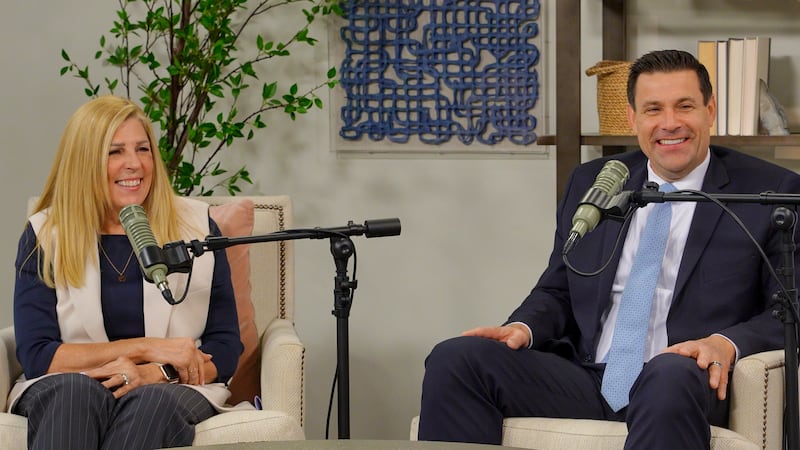
The Church connects people around the globe to service opportunities with the JustServe platform. Stephen Bulpitt, JustServe global manager, and LaDawn Stoddard, JustServe senior strategic relationships manager, join Church News reporter Mary Richards on this episode of the Church News podcast to talk about how service unites people and builds disciples of Jesus Christ.
Listen to this episode of the Church News podcast on Apple Podcasts, Amazon, Spotify, bookshelf PLUS, YouTube or wherever you get podcasts.
Transcript:
Mary Richards: This is Mary Richards, reporter at the Church News. Welcome to the Church News podcast. Today, we are taking you on a journey of connection as we discuss news and events of The Church of Jesus Christ of Latter-day Saints.
Members of The Church of Jesus Christ of Latter-day Saints believe in following the Savior’s two great commandments: to love God and to love our neighbor. Loving our neighbor includes serving them.
Today on this episode of the Church News podcast, I’m joined by two guests with JustServe. We have LaDawn Stoddard, who is the strategic relationships manager with JustServe. Welcome, LaDawn. And we have Steve Bulpitt, who is the JustServe global manager. Thank you for being here.
Steve Bulpitt: Thank you.
0:43
Mary Richards: So, tell me first, for those listening and watching, what is JustServe?
Steve Bulpitt: You know, when we think about what JustServe is, I might go back to kind of some of the foundational, you know, the purpose behind it. As you mentioned, it is to live the two great commandments, to love your neighbor. And it’s a call to service, inviting people to serve locally, inviting people to build themselves and their community and build others. It comes down to caring for those in need, and we know it’s a great uniter within communities, within families.
And so, when we look at what is JustServe, there’s four, you could say, pillars to JustServe.
And the first part of it is our JustServe specialists. We call them our secret sauce. These are individuals that are out in the community. They are conveners, they’re connectors, they’re building relationships with faith groups, organizations, corporations. And their whole goal is to help people care for one another through service.
And then we have our technology, which is an easy way for people to find opportunities to serve in their community.

And then we have recognition with our different various programs. So, we like to recognize others for the good that they’re doing. We have a city program where we recognize cities for those that are really supporting volunteerism. And then we also have recognition for individuals — the Heart of Service Award or a hero, a JustServe Hero Award. And then we have youth clubs, which is a program. We have resources on how to start a high school club or a youth club, community club.
And the last kind of pillar is convening. And that’s what we’re seeing with JustServe, is it’s a great way to convene individuals of different backgrounds, different faiths, different race, all come together to serve.
2:48
LaDawn Stoddard: I think that as we look at what we’re trying to accomplish with JustServe, it is — as you mentioned, Mary — the concept of “Are we trying to follow the example of Jesus Christ?” Service can be a foundation for making a real difference in communities and bringing people together, and that’s what we’re trying to do with JustServe, is help allow service to solve some of those issues in our communities.
3:17
Mary Richards: I love that. When I go to JustServe.org or the JustServe app — it’s so easy to use — I can find things in my own community that I can do. There was a time when it was easier for me to do something remote. Those are opportunities as well on the website and apps, service opportunities that are remote, or you can filter by your talents or your interests.
It’s fascinating to me how this is all set up, and it’s so easy to use, too.
LaDawn Stoddard: It is. It’s really easy. It makes it possible for people to understand the needs around them. Often we live in our own little bubble. We don’t know what we don’t know. And if you can explore on JustServe, it opens your eyes to some of the needs that are around you and allows you to see ways that you can get engaged and help.
4:02
Mary Richards: Yeah. And those are the volunteers. We also have — and you’d mentioned this, Steve — the idea that organizations use JustServe to list their needs. And then through that, we grow from there through these clubs and organizations, JustServe Cities, it’s so great to see those.
And it’s really growing into a movement, isn’t it?
Steve Bulpitt: Yeah. You know, as you talk about that movement, that call to service, getting people engaged with service, it is incredible to see the impact on the individual communities and organizations.
4:35
LaDawn Stoddard: And there’s significant impact on individuals too. Those that serve. It’s fascinating to watch and see the change that comes over people as they get involved. We talk about a kind of a cycle of service, where as you start to serve and volunteer, you start to love the people that you’re working with. It’s hard not to love and get to know people that you’re serving.
And as you move from there, you find personal growth and fulfillment, and it becomes somewhat addictive, and you want to do it again and again. So it’s kind of a cycle that we see, and it’s exciting to watch that happen with people.
5:12
Mary Richards: A beautiful cycle. How is service connected to discipleship in Jesus Christ?
LaDawn Stoddard: I think I mentioned at the beginning that it’s all about emulating the Savior. We’re trying to become more like Him and do those things that He chooses to do. And His whole life was about service, everything that He did.
And as we serve, we start to develop a lot of Christlike attributes: compassion, understanding, love for those around us. It’s — I could go on and on. It’s a long and lengthy list of things that you start to see in individuals and people as they serve.
5:52
Mary Richards: We become more like Him.
Steve Bulpitt: Yeah, we do. And His life was all about service. You know, as members of the Church, we teach of Christ, we prophesy of Christ (see 2 Nephi 25:26), and we can add, “We do as Christ.” We’re His hands and feet here on the earth. And as we do and we act as He did, we become more like Him. You see His light in those that are serving, and so you see disciples in the community living the way He did as they serve.
6:24
Mary Richards: I love that. I think about how this is a worldwide topic, obviously, of service and our Church being a worldwide church. But also this year has been really special. It’s the 250th anniversary of America. And we have America250. That’s generated some excitement around service.
What have you seen about how this service is becoming really just such a powerful part of the America250 celebrations?
6:50
Steve Bulpitt: LaDawn has been spending a lot of time supporting that, and she’s done an incredible job. As we talk about America250, it is a celebration. We’ve seen so much good in this country. This is a time when unity is so important.
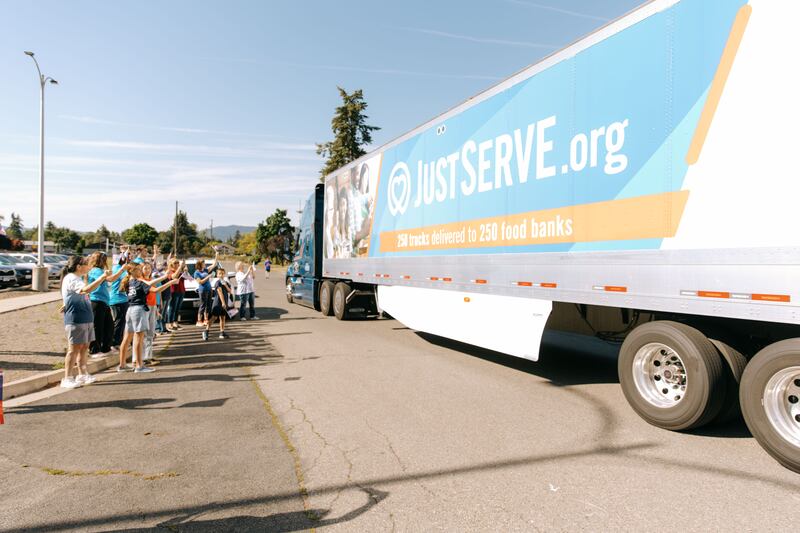
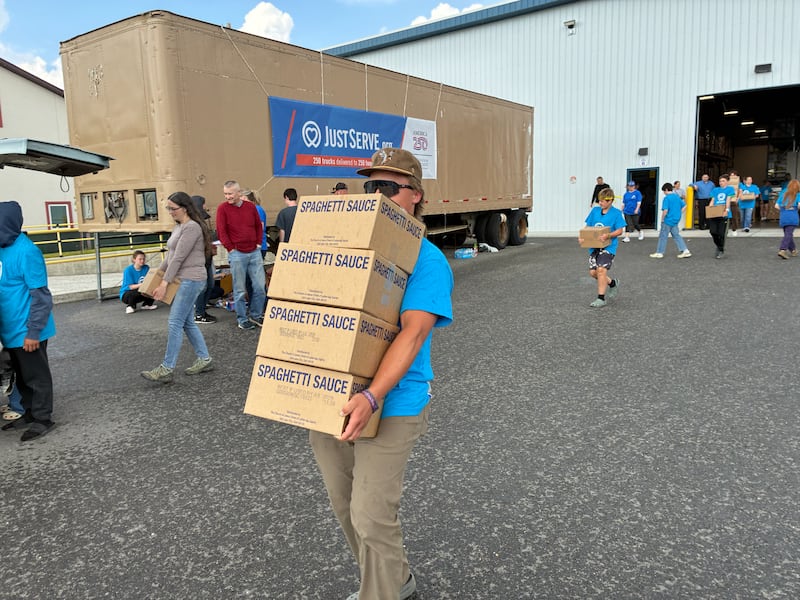
One of the things that the Church has done is deliver 250 truckloads of food across the country. Along with that, JustServe has participated in many of those truckloads in helping individuals serve and help unload and highlight the needs in the communities. It has brought a focus on what makes America great is that service and taking care of one another.
7:38
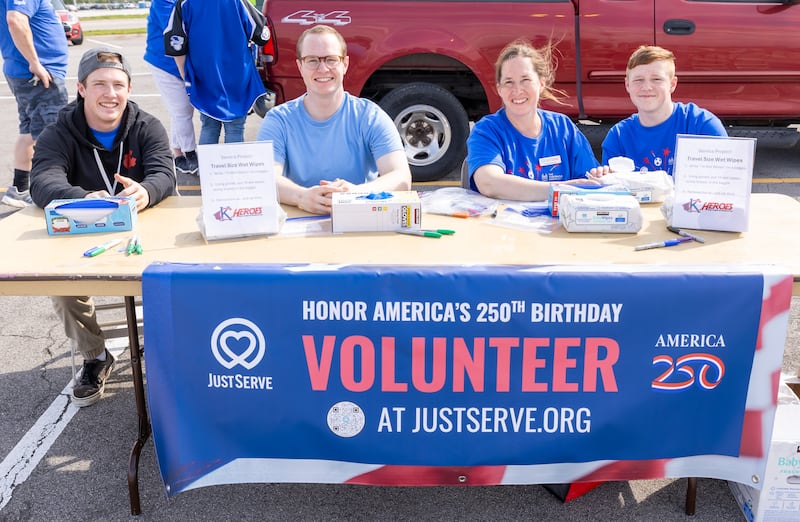
LaDawn Stoddard: From a national commission standpoint, the America250 Commission early on created an arm of that, the celebration called “America Gives,” and they’re focused on having 2026 be the largest year of service in U.S. history. And JustServe has been able to be a part of that.
We’ve been able to help recognize and lift and encourage individuals in service. We’ve tracked service hours somewhat, and if you want to go to the America Gives website, you can see the national total, which is — last time I looked, it was over 43 million hours of service through July. JustServe’s been a small part of that. We’ve been really privileged and feel really grateful to have an opportunity to engage.
The vision for what service can do to help bring people together in our country was always very strong from the very beginning with the America250 Initiative. And I think we’re seeing some of the results of it a little bit in people feeling more comfortable with individuals that maybe they didn’t otherwise know very well, or they’ve had opportunities to engage. We saw amazing celebrations around the Fourth of July, and it was fun to be involved.
8:56
Mary Richards: Yes. And it’s interesting to note, too, that we are filming this on 9/11, which is a day of service as well, the 9/11 Day of Service and Remembrance. We have opportunities throughout the year, any year, Martin Luther King Jr. Day of Service, we have all these beautiful opportunities that are organized and a way for you to be with your community.
But also, individual service might not be tracked. There’s probably so many wonderful people doing things to serve for America250, for 9/11, for all these ways that maybe is never recorded, but we know it’s happening.
9:31
LaDawn Stoddard: I think that the beauty of that is one of our goals is to have service become a way of life. And if it is a way of life, you don’t immediately recognize that you’re involved in service. Does that make sense? It’s just something you naturally do.
We already find that in a lot of ways. There’s a lot of people that serve in ways that they don’t think, “OK, I’m volunteering.” Dads that coach their kids in Little League, right? Moms that help in schools. Those types of things, they don’t initially think, “Oh, I’m a formal volunteer,” right?
And then just neighbor helping neighbor. We — that’s our goal, that it is just who we are and what we do. And not just as members of the Church, but as, you know, members of the world and children of God, that we’re all taking care of each other. That’s ultimately what we’re trying to accomplish.
10:24
Steve Bulpitt: And you look at this day of service, 9/11 Day, it’s an opportunity to get people in that service cycle so that they have an experience with service. We also have a great — we support Global Youth Service Day, Global Youth Service Month, where we have youth around the world serving.
And it’s amazing to see how you can have someone in Argentina cleaning some beaches there, and then have this different group of youth in Puerto Rico doing the same similar project. And then you have on the East Coast in Florida, youth cleaning up their beach, and then in California doing the same thing. And it brings these youth together. They’re taking care of their environment with the same purpose, serving and uniting together.
And so, these days of service are a great way to bring people together and enter that service cycle.
11:16
Mary Richards: Yes. I love seeing those pictures come in from around the world on these different efforts. Like in April, the Global Youth Service Day and Month and these other —
But even just when they organize it or they serve by themselves without an organized day, maybe they’ve just gone to JustServe, or maybe it’s a Primary that’s decided to have its own Primary service activity. Those are just beautiful ways that we are becoming disciples, like you talked about, this way of being, really. Yes.
11:47
LaDawn Stoddard: I think that we’re seeing the younger, the rising generation cares a lot about service. Steve mentioned our clubs. Those clubs started organically from kids that wanted an opportunity to serve and bring people together to serve in their high schools.
And now we’re over 300 clubs across the country that are youth-led and youth that want to find a way to engage. They just feel a special sense of they’re accomplishing something, they’re making a difference. And I think they feel the Spirit when they serve, and they want more of it, and they look for more ways to do it.
12:26
Mary Richards: I’ve seen examples. A lot of times, service projects include maybe compiling hygiene kits or hunger kits or donating food. You mentioned the truckloads of food from the Church going around the country for this year’s anniversary.
Why does feeding the hungry in particular resonate so broadly, do you think?
12:46
LaDawn Stoddard: Food insecurity is an issue that is broad. It’s in every community. Oftentimes it’s unseen, to a certain extent. Oftentimes, if it involves children, their families aren’t able to meet the needs and have food, and so there’s meals that are skipped. There’s just so many different layers to that particular issue. And people are oftentimes introduced to it in different ways. It may be a child in school that sees a child there that doesn’t have a lunch, right?
So, it’s just something, but it’s foundational. Having a meal, not being hungry, is the building block for everything else you do throughout the day. And so it’s a significant issue that I think resonates with people. It’s something that I think all of us can understand because at some point we’ve all maybe not been extremely hungry but have had to skip a meal and know what that looks like.
And it’s also, on the flip side, an easy way to engage, right? You can do food drives, you can volunteer at food banks, you can put together meal kits. There’s a lot of different ways that you can serve and feel like you’re making a difference for the need. And I think the trucks have given a broad visibility for the need itself also. There’s been a lot of awareness brought through these truck deliveries of the food issues around our country.

14:14
Steve Bulpitt: Yeah. You know, just kind of an example of a story that we just received last week, and it was about a need in a small town in the United States where a parent found out that there was children hungry going to school, and they thought about setting up a pantry, a food pantry, for the members of this community. And this individual was like: “Do I really have the time? Do I have the ability?”
And they went home, they discussed it as a family and then just said, “You know what, we’ve got to do this.” And so they set up a food pantry for this town. And this lady had two daughters, and they were helping set up. And one of the daughters said, “Mom, why is this so important?” Because the daughter couldn’t connect, because she hasn’t gone hungry. She hasn’t missed a meal.
And her mother turned to her and said: “What would happen if you hadn’t eaten today or for a few days? How would you feel? How impactful would this pantry be?” And that changed that perception of that young daughter, that young girl, and she understood why her family was putting so much time and effort in setting up this pantry.
And I think that’s why as a Church, we fast every month, right? We take what we would have spent on those meals during that fast and donate it as fast offerings. And it’s because caring for those in need is essential. That’s what the Savior did.
And so, again, when you talk about, “Why do we focus on food insecurity and hunger?” It’s because it’s the core of the gospel. It’s what the Savior did.
16:06
Mary Richards: Oh, what a beautiful example of that family and how service is changing them.
Are there other service examples you could share, other examples that you’ve seen of service that have impacted you?
LaDawn Stoddard: We watched a few years back with refugees and the ability for individuals to connect with refugee families. And I can’t think of one specific, but I know of many that the families built deep, meaningful relationships with refugee families that came into Utah specifically.
And trying to — I try to put myself in the place of: “I’m coming to a completely different country. I don’t speak the language. The culture is completely different. The food that I see daily is not what I’m used to. I’m not sure even how to prepare that food, what to do with it.”
And these are some of the things that the families that kind of mentored some of these other refugee families helped them do: understand how to prepare a meal with American food, right? Understand how to use an iron and an ironing board, because they’d never seen one before. Understand how to fill out forms for getting their child registered for school. There’s so many pieces of things that I think we take for granted on a day-to-day basis. It doesn’t dawn on us how complicated and difficult it might be for someone who has never done something like that before. So it amazed me.
And then the relationships that were built amongst these families, and how beautiful and how much it must have meant to the refugee families to actually have an advocate or someone that they can reach out to when they have questions and different things like that. Someplace that they can go for support that isn’t a business or a corporate or a really formal structure, it’s just someone there to help. So I think it’s an amazing example of the ministering that we’re all asked to do on a regular basis.
18:19
Steve Bulpitt: We see countless stories. You know, when you think about the impact, I think sometimes as — maybe this is me referring back to my early childhood — would be your parents would invite us to go serve, and we might go kicking and screaming, because we don’t want to do that, right? We have other things we’d much rather do.
But then when we go serve, and whatever it is, and we see the impact that it has on someone else, and we see how we feel, it changes you, and you want more of that feeling, that joy, that comes from service.
And we did get a similar story of a young boy who didn’t want to go serve with his family, and he said: “I love the feeling that I felt. How can we do more of this?” I see it helping youth gain skills, gain confidence. It has changed individuals that have been, you could say, more selfish or more worried about their concerns, their worries, when you go serve.
I’ve seen it bring people together who maybe aren’t getting along, who are struggling in a relationship, or aren’t understanding one another, but when they go serve side by side and they get to know one of each other and they realize their story and who they are and what they believe in, it’s the great uniter. And so we’re seeing the impact in all different ways — individually, in families, in communities.
When that request from the general Primary presidency went out, I know in Canada there was a young man that did a mittens drive. And he went to his school and principal and to the teachers and pitched this idea of doing this mitten drive because it’s cold there. And so he got everybody on board, and he collected mittens.
To another young man, who had a disability from birth, he didn’t think he had the skills or ability to have a job or to go to school when he was older. But serving at the Salvation Army, he realized that he could do things. He had skills, he had abilities, which led then to working in a part-time store that made cookies. And this is in Indiana. And from there, that led him to again gain confidence in his abilities, to now where he’s studying in the university.
21:15
To where we’re seeing sometimes with families that are needing an opportunity to bond, to grow, to learn from one another, that will come together and find an opportunity to serve. I know someone that gathers their family together around the holidays, and they serve, right? And what a great opportunity that is.
Or for this, I know of a — you could say a neighborhood in Florida where it’s a retirement community where the women decided to come together and form a service club. And so these women get together on a monthly basis to go serve. It got so big that they split into two groups.
And then they went to one of the volunteers to — their mother was living in an assisted-living home. They started a club there because they wanted to feel useful, that they could still give back in their community even though where they were, it sometimes is difficult.
Or someone who’s feeling lonely, we hear this all the time of — I know of a sister who was needing some repairs on her home, and through an organization, a volunteer came to her home and did some repairs for free on her house through this organization. She now volunteers for this organization because she was blessed, but she found an opportunity that she can bless others through this organization as well.
In some areas, it’s required for you to go and have service hours to graduate or to get a scholarship. And so by serving in the community, whether it’s at a food pantry or writing a note to someone who’s away serving our country, and letting them know how much we appreciate their service and their sacrifice.
23:14
LaDawn Stoddard: We did a service project with a conference where we wrote letters to — we offered opportunity for individuals to write letters to those that had been recently diagnosed with breast cancer, women. And floods of women came to write notes of just encouragement and comfort because of their own personal experiences.
You can write notes to military personnel that are serving and tell them, “Thank you.” The list is endless. If you love animals, you can go engage and walk dogs. And if you want to be out in nature, there are lots of trail cleanups and different ways to engage, tree planting. It’s just about anything you can think of, there’s opportunities to engage in that way.
And I think it reinforces the value of why the Church sees it important to focus in this area, right? It is a great uniter. I mean, it is a way for people to understand other people that they may not typically come in contact with. It’s a way to stop judgment, because our judgment is always, almost always, based on incorrect facts and assumptions.
And so when you hear someone’s story, you start to understand that they’re not that much different than you, and but for a few blessings that maybe you have had, you could have been in that situation yourself, that they’re not different than you are and that they’re all Heavenly Father’s children, and it’s important for us to recognize and help everyone.

25:01
Steve Bulpitt: You know, I might just add, when you think about the impact of service and these stories and why we do it, it blesses both the giver and the receiver. The one that’s serving changes. The one that receives changes. And that’s what it’s about, and blessing both the giver and the receiver.
25:27
Mary Richards: Absolutely. And like you said, this service changing us, I know there’s research that backs that up. But to me, sometimes I love to look at a study and say, “Oh, look, this proves what I —”
But also what you’re saying kind of shows me too that if there’s research or not, it’s us following our Savior, Jesus Christ, and His teachings. We can trust in that.
In this way too, the way you’re speaking about this, these beautiful acts of service and thinking, too, again, about this year of focusing on America250 and America Gives, why is this moment so significant for our country?
Why is this movement of service so significant, for the givers and receivers, but for the whole?
26:11
LaDawn Stoddard: I think it goes back to where we are at this point in time. We’re pretty divided in a lot of ways. And Steve mentioned that service is a way to connect. And I think that everyone — even though we all are coming from different perspectives and different beliefs — I think we all want to be better. We all want a better country. We all want, the majority of people, want us all to get along.
And there is, as you mentioned, Mary, a lot of research. It’s not just warm fuzzy. There is a lot of research that backs what service can do. And so, as you start to explore, “How do we do this?” you’re — instead of telling people, “You need to treat this other person better, we need to stop,” you bring them in contact with each other. You allow them to just naturally start a conversation and talk more about who they are and where they’ve been and what their life has been like and what they do on a day-to-day basis.
And you start to see perceptions change, walls drop. It just really does change how people engage. And I think we’ve explored a lot of different things, like, “How do we solve these issues?” There’s a lot of different ways to do this. And this is cheap. It’s not that expensive. It doesn’t cost a lot to do these types of things. And that’s not the most important part, but it’s almost like the thing that we have taken for granted is the thing that’s going to save us in some ways.
We have heard, “Love your neighbor” all of our lives. Are we actually doing it? And if we do, it does change things a lot. And amazingly, our Heavenly Father and our Savior know that, and that’s why They asked us to do it.
28:22
Steve Bulpitt: You know, this — what has been so great about this year is it’s shown the need that’s out there. It has shown the amazing work of communities, organizations, of volunteers.
And when I look at, “Why is this year so important?” Because hopefully it’s setting the standard for years to come. This is just the starting point. This is — the best is yet to come of really caring for those in need, being disciples of Jesus Christ in the community. And this is just kind of the — hopefully we’ll continue that movement that we’ve experienced this year into next year and beyond.
29:06
Mary Richards: I think, too, about our listeners around the world. Those who are listening to us here in the U.S., how can they get involved, not just in America250 and this movement, but in JustServe?
And those listening around the world, where should they start? How can they get involved?
29:21
LaDawn Stoddard: We often refer to formal and informal service. Formal service, you go and volunteer with an organization, right? You approach an organization, and they put you to work in a volunteer capacity. Informal is just neighbor helping neighbor.
And oftentimes — and Steve, I’m going to use a term that you’ve kind of coined — we hear from different parts of the world that service is different here than it is in the U.S. And we kind of want to say, “Maybe some, but not really,” because it’s really every — I think all of us look around us and see a need, and it’s hard to not step up and step forward and volunteer to do something, kind of just neighbor helping neighbor. And that is humankind. We all do that.
And so what I would say to those in other parts of the world: There is need everywhere, all around you. You don’t have to go somewhere else. It’s right there in your own neighborhood.

If JustServe, if the website platform, is available, you can put in, and you can go search around you and see what the need is. If it’s not available, you can go to any type of an organization, you can go to your community leaders, and they can probably tell you what a need is and how they would love to have your help.
So it’s a matter of: We know that the main reasons people don’t volunteer is they don’t know about the need, and no one’s asked them to get involved. And if they’re aware and they’re asked, they very seldom say no. And so it’s as simple as just become aware of the needs around you and then ask someone how you can help.
31:10
Steve Bulpitt: Again, we have different resources available, right? So we do have that technology, that platform, that allows individuals to connect with an organization and find an opportunity to serve.
You know, everybody serves the same way across the world. I’ve seen it in a soup kitchen in Puerto Rico to a soup kitchen in Argentina. They function the same way. If the technology is not, the platform is not available, we have resources and ideas on how to find opportunities locally, to find organizations or to fill a need that’s there.
One of the things is if it’s not there, we want our youth to be creators, right? They want to be creators. They don’t want to be consumers. And so, hopefully these ideas, these resources, online resources are there to help them continue to be those creators that they so desperately want to be. And in this space of volunteerism and service, they can be those creators and be great uniters in their communities.
32:18
Mary Richards: Yeah. You mentioned ministering, too, and that’s been coming into my mind, how I can be a better minister, my ministering assignment. We are a church of assignments, and there are ways that we can serve within our neighborhoods, our wards, our families, and that grows out from there.
Steve Bulpitt: When you talk about ministering, there is a ministering sister in Texas that I know, and she invites those that she’s assigned to to minister to go serve. And what she says, “No one will ever say no to it,” but more importantly, she goes, “I really get to know who they are, because service drops those barriers, and it allows you to connect.” And so there’s always different ways that we could connect.
Mary Richards: And serve together.
Steve Bulpitt: And serve together, yeah.
33:09
LaDawn Stoddard: And we don’t have to just — ministering is a broad term, and it doesn’t have to be just to those that we’re assigned to, right? But, I mean, while that is important, it’s just see a need and fill a need. And I think that that’s, again, what the Savior did, and that’s what He’s asking us to do, is be His hands and help accomplish that work.
33:32
Mary Richards: That is so beautiful. It actually leads perfectly to our last question on the Church News podcast. We always ask our guests, “What do you know now?” And so maybe we’ll start with you, Steve, and then LaDawn.
What do you know now about service and how we can become more like our Savior, Jesus Christ?
33:53
Steve Bulpitt: What I know now is there’s a great need. What I know now is that there’s plenty of opportunities and that we can be the Savior’s hands and feet here in this life through service and volunteerism.
One of the things I know now is how important this is to the Church. This is a humanitarian offering of The Church of Jesus Christ of Latter-day Saints. It’s a part of the Caring for Those in Need, it’s a part of the Caring report, of how important it is for the Church to care for those in need in communities around the world.
But again, most importantly, it has taught me to not worry about my concerns but to really be like the Savior and emulate His light throughout the world.
34:57
LaDawn Stoddard: So, what I feel like I know now is that service is the gospel in action. It really is how we live the gospel. It is all about building Zion and the attributes of those that are there. And when I think about that, the attributes that we have to develop, I mean, Zion is “no poor among” us (Moses 7:18), right? It is everyone taking care of each other.
And I feel like I personally have learned to be less judgmental, to recognize that no matter who, what, where or how people are in the circumstances that they’re in, it’s our responsibility to help take care of them and care for them, and that it is probably one of the most important ways we can move in that direction of building Zion.
