






The first year of President Dallin H. Oaks as the leader of The Church of Jesus Christ of Latter-day Saints showed both members of the Church and friends of the faith the type of individual he is. It also showed the hope that he has for the future of the Church and the world.
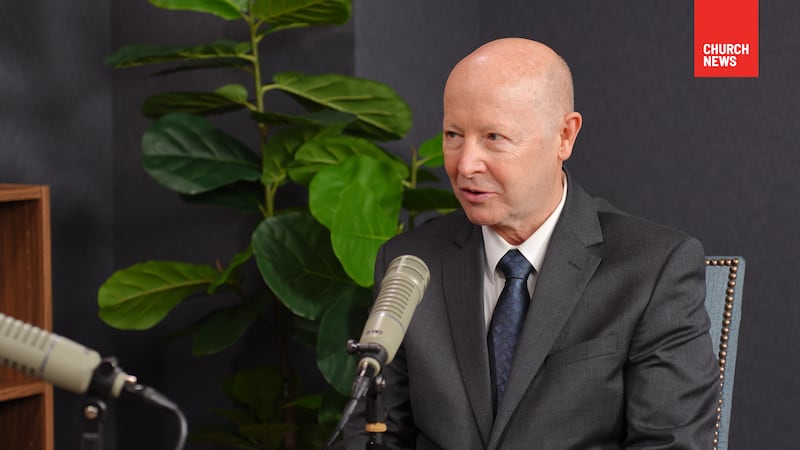
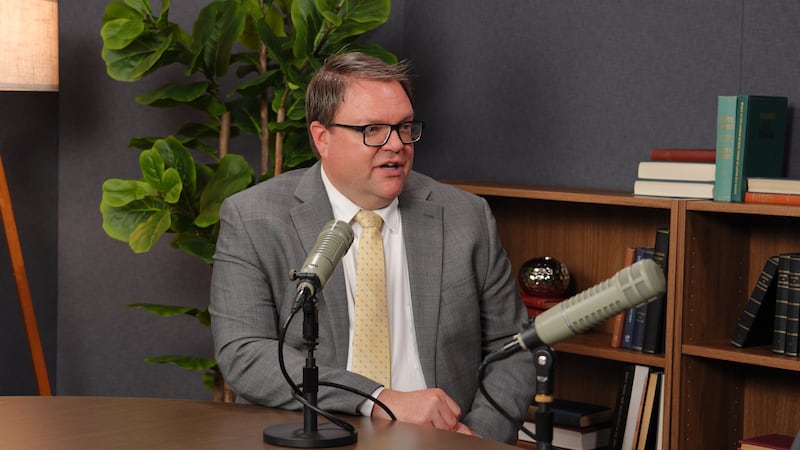
In this episode of the Church News podcast, Rick Turley speaks with Church News editor Jon Ryan Jensen about what he saw over the past year.
“He has talked about how all people in all places, at all ages, can serve and help bring about peace. So young people serving in their wards or in their neighborhoods can be peacemakers just as much as adults can be,” Turley says in the podcast.
Richard E. Turley Jr. is a former managing director of the Church History Department and the biographer of President Dallin H. Oaks. With that experience, Turley gives his perspective on how moments from President Oaks’ childhood, marriage, career and personal life of devotion to the Savior have contributed to the way he leads the Church today.
Listen to this episode of the Church News podcast on Apple Podcasts, Amazon, Spotify, bookshelf PLUS, YouTube or wherever you get podcasts.
Transcript:
Jon Ryan Jensen: This is Jon Ryan Jensen, editor of the Church News. Welcome to the Church News podcast. Today, we are taking you on a journey of connection as we discuss news and events of The Church of Jesus Christ of Latter-day Saints.
This past week marked the one-year anniversary of President Dallin H. Oaks, President of The Church of Jesus Christ of Latter-day Saints, being set apart as the Prophet and President of the Church.
And today, on this episode of the Church News podcast, we are excited to have Rick Turley, former managing director of the Church History Department, to discuss some of his observations, both from the life of President Dallin H. Oaks as his biographer and his observations from this past year, what he has seen in the Church and through President Oaks’ leadership.
0:47
I’m Ryan Jensen. Thank you for joining us on this episode of the Church News podcast. Rick Turley, thank you for being here as well.
Richard E. Turley Jr.: Thank you for the invitation.
0:56
Jon Ryan Jensen: I know that you have studied the life not only of President Oaks but of all of the prophets of this dispensation.
And so I want to start out by asking you, first of all, if you’ve been surprised by anything that has happened in this first year of President Oaks being President of the Church.
Richard E. Turley Jr.: I have not been surprised. I have known President Oaks well for the last 40-plus years. And what I have seen during his presidency is very consistent with his entire life.
1:27
Jon Ryan Jensen: He, this year, has had the opportunity to minister in Brazil, where he also dedicated a temple. Brazil became the country outside of the United States with the most members of the Church this year.
Did you hear anything from his remarks when he went to Brazil, in particular, that stand out to you as it relates to how he hopes members will draw closer to the Savior?
1:54
Richard E. Turley Jr.: His message from the beginning of the last year, when he became the President of the Church, has been one of drawing people closer to the Savior. He began his ministry by saying that he is one who is a witness of the name of Jesus Christ throughout the world.
And he has invited all people to come to Christ. He has made it clear that while he is the President of the Church, he is a servant of the Lord Jesus Christ, who is the Head of the Church. And he has invited all of us to come unto Christ and to live lives that will draw us closer to Him, because through drawing closer to Him, any problem we have in our life can improve.
2:34
Jon Ryan Jensen: I love the way you talk about that, because some individuals will look at events or specific announcements that happen during a prophet’s time at the head of the Church, and they will say, “That President of the Church did this thing.”
But can you give a little more context to how some bigger announcements or more recognizable announcements of the Church come about and why maybe that shouldn’t be how we approach it?
3:01
Richard E. Turley Jr.: So, the Church is a church of continuing revelation. So, since the Church was established in this dispensation, we’ve had continuing revelation. And we have a council system. So we have a First Presidency and a Quorum of the Twelve Apostles and other councils that operate at the head of the Church to cause it to fulfill the Lord’s purposes.
And so, things often start at one period of time during one presidency, and they may conclude in another presidency. And in order to see them with the right historical perspective, we have to recognize that longitudinal view and not look at it as just a sudden event.

3:39
Jon Ryan Jensen: I find that really interesting, too, because the councils that the Church has — first off, the First Presidency is referred to as a council, the Quorum of the Twelve Apostles is referred to as a council — but then executive councils that have responsibility for the work of missionaries around the world, temple, family history work. The members of the Quorum of the Twelve will rotate through responsibilities in those councils and may get exposed to a number of different news or events that could be forthcoming.
Do you feel that that kind of rotation through the councils helps them be better prepared and understanding of what members are facing before those kinds of announcements come?
4:23
Richard E. Turley Jr.: Yes, rotation through the various councils, as well as rotations on assignments that may include traveling to or being resident in various parts of the world. So, President Oaks’ two years spent in the Philippines as an area president I think helped give him —
Jon Ryan Jensen: While an Apostle.
Richard E. Turley Jr.: While an Apostle, I think helped give him a global view of the Church.
4:45
Jon Ryan Jensen: Yeah, something that was unique for him, because he had not served as a mission leader.
Richard E. Turley Jr.: He had not. And yet, as a member of the Quorum of the Twelve, he has traveled extensively throughout the earth. So far more than the average Church member, he has seen and visited. And even on the Wasatch Front, he has, for many years, had the habit of dropping in unannounced at various Church sacrament meetings and other meetings.
I was resident downtown here for five years, and while I was here, I was at our local meetinghouse, and the door opened, and in he walked. And he had come to attend sacrament meeting. I let him know that that meeting wouldn’t start for another hour and a half and that we were about to go into ward council. So he joined us in our ward council meeting. And then he joined us in our sacrament meeting.
And his purpose of coming unannounced is because he wants to see the Church unvarnished. He knows that when people expect important guests, they will often do things different from the way they would do them normally. He wants to see the Church running at its normal pace and not in a way that’s been changed because somebody is coming.
5:50
Jon Ryan Jensen: I was going to say, no pressure, then, when you’re sitting in that ward council.
Did it make you look at how the ward council was operating differently? Was there something that maybe sprung to mind of, “We should do this differently”?
Richard E. Turley Jr.: Because President Oaks is the servant of the Lord Jesus Christ, I think that when you are in any meeting like that with him, you should ask yourself, “What would I do if the Savior were here?” And if that causes a change in our behavior, so be it.
6:18
Jon Ryan Jensen: I like that. That’s a great thought. We recently had the Young Women general presidency here on the Church News podcast as well. And President Emily Belle Freeman talked about what you just mentioned, that President Oaks had stopped in and visited some of the youth classes, the Aaronic Priesthood quorums and Young Women classes. And he was making observations as well to talk about, “What’s working well, and what things can we do better to help the youth of the Church become better disciples?”
When you consider the way that he has done that, what do you think that that modeling does for others who are in his immediate quorum in the First Presidency, and for the Apostles who are watching his leadership through that way?
Richard E. Turley Jr.: When the Savior was on the earth, He was the servant of all. He didn’t just spend His time in meetings, and He didn’t just spend His time with His apostles. He interacted with the masses, listened to their needs and did what He could to fulfill those needs.
7:18
Jon Ryan Jensen: At the beginning of our interview, you said you weren’t surprised by anything that he had done.
When you look at what he has done, what are the things that you’ve looked at and said, “Yes, that”?
7:31
Richard E. Turley Jr.: So, from the beginning of the presidency, what I’ve noticed is a continuation of a characteristic I have observed over the last 40 years that I’ve known him well, and that is a spirit of humility and meekness.
In the Old Testament, Numbers chapter 12, Moses is referred to as the meekest of all men (see verse 3). And those of us who grew up watching Cecil B. DeMille’s “Ten Commandments,” with a very sort of prominent man acting as Moses, may have a hard time picturing in our mind how Moses could be meek or how any prophet could be meek.
But meekness and manliness aren’t mutually exclusive. And President Oaks is a man who grew up playing football as a youth. He loved outdoor recreation. He worked hard in his garden. Strong athletic kind of man. And yet he has been, throughout the time I’ve known him, extremely meek in that he listens carefully to others. I have never seen him assert himself for the purpose of honor. He just doesn’t care about bringing honor to himself. He’s more concerned about deflecting that to other people.
So at the beginning of his presidency, if you look at it carefully, as I might as a historian, you witnessed that President Russell M. Nelson passed away on Sept. 27, in 2025. And there were enough days remaining between October general conference on the 4th and 5th that he might have reorganized the First Presidency during that time period. But he did not. And to me, that helps to reflect his meekness.
He waited until after the funeral of President Nelson before the First Presidency was reorganized. And some people sat back, I heard people commenting, “Why isn’t this moving faster?” And I thought: “They don’t know President Oaks. They don’t know his humility, his meekness and his desire to not interrupt the mourning that people were experiencing for his predecessor and longtime friend and the council member with whom he sat for decades.”
9:42
Jon Ryan Jensen: That deference and respect that he had for President Nelson, and the time it allowed his own quorum members at the time to also mourn and not feel rushed into the next step of that process.
Richard E. Turley Jr.: And that, again, is very consistent with his attitude and his behavior. He’s very humble. He prays and seeks inspiration about what to do. And he’s not hurried.
I’ve attended meetings with him for more than four decades. And in those meetings, you don’t feel the sort of hyperactive hurriedness that you feel with some important people. When you’re with him, you feel like you have his complete attention, that he’s focused on you, that he is listening carefully to what you have to say. He’s the embodiment of the idea that it is better to understand than to be understood. He truly seeks to understand people in meetings, to listen to their feelings and to replace his own feelings and opinions with others if they’re better than his.
10:46
Jon Ryan Jensen: I found it interesting this summer, I had the opportunity to go to a family reunion of his in central Utah and to hear members of his extended family, 600 of them all gathered together, to hear them talk about him. And every one of them felt as though they had a personal relationship with him and that he knew the things that were most important to them. And I think that is a reflection of what you’re saying. In his family, they see the same thing that you talk about within quorums, that he listened to them and that he cared about them as individuals.

11:24
Richard E. Turley Jr.: Family has always been important to him. And the way he treats his family members is the way he treats virtually everybody. During the course of his presidency, he has reemphasized something that was a message of his period in the Quorum of the Twelve, and that is the idea of being peacemakers, of being able to get along with people even if we disagree with them or have different standards than others might. That idea of peacemaking, again, is a Christlike characteristic that he has modeled and then advocated that we all follow.
We live in an age in which, because of social media and perhaps the politics in the various locales, we see people becoming increasingly animated and sometimes becoming increasingly, in their attitudes toward each other, rather hostile. And he is one who has long encouraged that we bring down the temperature on all of that, that we learn to listen to others and understand their feelings and opinions, and that we learn to love them regardless of how that squares with what we ourselves feel.
So, civility in the midst of animosity, he has encouraged that we love even our enemies, whereas sometimes people feel like in today’s world that they need to destroy their enemies. President Oaks reflects the message of the Savior, who said to love our enemies (see Matthew 5:43–44).
12:48
Jon Ryan Jensen: And he talks about it not just in a way of “them over there” or “they who have very apparent disagreements with you,” but he talks about it at a level of: “In your own home, don’t let that animosity fester. Resolve it quickly at the most, or the closest relationships you have as well.”
Richard E. Turley Jr.: He has talked about how all people in all places at all ages can serve and help bring about peace. So young people serving in their wards or in their neighborhoods can be peacemakers just as much as adults can be.
13:22
Jon Ryan Jensen: Those who practice law sometimes get a reputation for doing the opposite of what you just described.
How do you feel that he used the gospel of Jesus Christ to reconcile skills that he used in a profession with his beliefs in Jesus Christ’s gospel?
Richard E. Turley Jr.: As I was preparing his biography, I was touched deeply by a conclusion he reached early after his call as a member of the Quorum of the Twelve. He asked himself whether he would be known in the future as a lawyer who happened to be an Apostle, or as an Apostle who once happened to be a lawyer. And he chose the latter, more difficult path of being first and foremost a servant of the Lord Jesus Christ, whose ministry would be informed by that prior experience but not dominated by it.
So, we see in him certain knowledge that he brought with that profession, but it’s coupled with the love and the compassion of someone who is a disciple of Jesus Christ. His experience as a law clerk to the chief justice of the U.S. Supreme Court and his own experience as a justice on the Utah Supreme Court, I think, have provided characteristics that are more Christlike than the adversarial notion of a lawyer. So, for example, he seeks to listen to all sides and to come to a judgment that is just and right. He listens to others.
He gave a talk once that moved me deeply, in which he talked about not judging others. The Savior said that we were not to judge. And he pointed out in this talk that we should follow that direction from the Savior, that there are certain people who, because of their callings, might be required to judge, such as bishops or stake presidents, but that the rest of us should withhold judgment, learn to love others and see them the way the Savior sees them.
15:21
Jon Ryan Jensen: Recently, we published an article on TheChurchNews.com in which his counselors and each member of the Quorum of the Twelve Apostles had been invited to share a Christlike leadership characteristic that they observed in President Oaks. None of them talked about those legal skills. They all talked about those Christlike characteristics, the humility, the listening, the mercy that he extends.
If you were to choose one characteristic of the Savior that you feel he exemplifies the most, is there one that comes to mind?
Richard E. Turley Jr.: I think it’s humility. And in the Book of Acts chapter 10, Jesus is described as someone “who went about doing good” (verse 38). I was moved in our last general conference when President Timothy Farnes talked about his experience 20 years ago of being a rather harried father of five, bishop of his ward, recently called into a stake presidency, who had meetings from 8 o’clock in the morning until ward temple night that night and had gone to a training meeting where the visiting authority had somewhat dismissed a question that he asked.
He felt that: “You know, I don’t feel like going to the temple. I feel like maybe going out to dinner with my wife.” And she said, “No, we ought to go to the temple.” And when he got to the temple and he went into the dressing room, he happened to run into then-Elder Dallin H. Oaks. And it surprised him. And Elder Oaks looked at him and sincerely asked, “How are you doing?” And not wanting to basically air his dirty laundry, he simply said, “I’m doing fine.”
And he was surprised when he changed and came out that President Oaks, then Elder Oaks, was still standing there and asked him, “Now tell me how you really feel.” President Oaks is very close to the Spirit. He seeks to follow promptings. Clearly, he had a prompting under those circumstances. He listened to Brother Farnes. He listened with real desire to understand him. He even answered the question that he had asked that had been dismissed earlier.
And it created a life-changing feeling in Brother Farnes. And then he describes how 20 years later, he was in President Oaks’ office and wanted to discuss this event. President Oaks could not remember it at all but did say the following: “It’s what we do.”
And that’s my experience interacting with President Oaks. He’s all about serving other people, regardless of what sacrifice might be required on his part. And so that is what he does. He goes about doing good in humility.
17:48
Jon Ryan Jensen: That’s an example of how he does it on a very individual level.
At the other end of the spectrum, he recently spoke at the Washington National Cathedral in Washington, D.C., and there he’s speaking to — in a church that is not part of The Church of Jesus Christ of Latter-day Saints, by invitation — to thousands of individuals and together with leaders of other churches.
Again, help us understand the contrast of how he handles “the one,” like he did with President Farnes, and how he is in his messaging to large gatherings like he was there in Washington, D.C.

18:27
Richard E. Turley Jr.: In his Washington, D.C., address, he again called for peacemaking. He pointed out that in an era of animosity in which we live, that we can all learn to get together in love. No matter how much we may differ in our political views or in our religious or other views, we can learn how to develop win-win circumstances. He did give an example of the Utah Compromise as one way that something like that could be done.
He was trying to point out that the Constitution compels — and he used that word advisedly — how it compels us to learn to get along together. And I think He combined in that setting his role as a Prophet and an ambassador of the Lord Jesus Christ with his experience as a lawyer, judge and legal scholar. And the combination, I thought, was breathtaking. I encourage everyone who hasn’t heard it or read it to do so.
19:22
Jon Ryan Jensen: It was a beautiful message. And I will say that watching him, even on the biggest stages, he was still taking time to minister to the one. He talked with everyone. He listened to everyone who was near him and who he felt that they needed that moment of attention. And it was very impressive to watch.
Richard E. Turley Jr.: And that is not a show. That’s really who he is.
19:49
Jon Ryan Jensen: When his presidency started, there were some temples whose dedications had already been announced. And he said that President Nelson had allowed President Eyring and himself to choose temples that they perhaps wanted to dedicate. And one for him was Burley, Idaho. Not an exotic location, which he and Sister Oaks both agreed, perhaps not the vacation destination. But Idaho was important to him. And his upbringing is important to him.
At that first dedication, is there anything from those remarks, his first at a temple, that stood out to you?
20:30
Richard E. Turley Jr.: You know, his decision to go to Burley may relate to his youth in Twin Falls, Idaho. As you know, his father passed away. And those years in Twin Falls were times in his early memory in which he can remember his association with his father, his father’s good example, an example of love and compassion that he sought to emulate himself since that time.
So I think that the recalling of his childhood and the experiences of growing up in an area that, as you said, might not be on everyone’s top 10 list of places to visit, reflects also his humility.
21:09
Jon Ryan Jensen: Salt Lake as well is a place that for some individuals is not a vacation destination, but he has welcomed right now leaders of faiths from around the world to the G20 Interfaith Summit being hosted in Salt Lake City.
For those who observe him as a Church leader while he’s hosting that organization, what do you think members should see? What should they look for when they see him bringing a gathering in like that?

21:38
Richard E. Turley Jr.: First of all, when someone comes in who may not be from this area, I think people should look to see how he treats them. I’ve been in settings where I’ve watched him greet visitors from other places, other countries, other locales, other backgrounds, other religions. And what I’ve noticed is a universal effort on his part to show love, respect, concern, to listen to them, to hear their feelings and their opinions and their views, and try to glean from that something that he himself can do or something that can be used to improve him or the work that he’s doing.
22:15
Jon Ryan Jensen: I love that, because no matter where members of the Church are in the world, inviting someone to a meetinghouse for the first time, you have an opportunity to listen as much as you do to show what our Church is about, but to listen to their concerns or questions that they may have.
Richard E. Turley Jr.: Yes, he’s repeatedly during the course of his presidency echoed the scriptural injunction to “invite all to come unto Christ” (Doctrine and Covenants 20:59). And I think that you do that not only by your words but by your example and your behavior. We often say that a picture is worth a thousand words and that example is the best teacher. And I think he’s a model of both of those things.
22:51
Jon Ryan Jensen: In his most recent general conference address, he talked about the gospel of Jesus Christ being for all, a reflection of what you just said. For me, one line there where he said that the Lord’s mercy is for everyone really hit me, perhaps in the way he said it, in that he does believe and he does teach at every opportunity that the gospel of Jesus Christ is not exclusive. It’s not a private club. It is an open door. The pattern is set. He wants everyone to come in and to know how to participate in the Atonement of Jesus Christ.
23:37
Richard E. Turley Jr.: He’s taught that all of us have challenges, all of us have weaknesses, all of us face difficulties, and that because of that, sometimes we’re hard on ourselves. And he said that in the process of being people who should display mercy, sometimes we have to display mercy to ourselves as well, to give ourselves a break, a chance to regroup and recommit ourselves to doing the things we’re supposed to do, not giving up, not throwing ourselves away, but recognizing our own value as children of God.

24:09
Jon Ryan Jensen: I don’t want to miss an opportunity to talk about him, as well, as a husband. When his first wife, June [Dixon Oaks], passed away, very tender time for him. He also took the opportunity to find a second love in his life. And his ability to navigate that and to encourage others to navigate those difficult personal challenges has been something that a lot of people have found strength in and courage for their own lives.
When you look at him as a husband and a father, again, what are the things that we should see and that we should observe in his actions?
24:51
Richard E. Turley Jr.: He’s kind. He’s considerate. He’s gentle. I had a chance to observe him as a husband with his first wife, June, and since then many times with his second wife, Kristen. And he’s a loving, kind, exemplary model husband and father. As I’ve spoken to his children, they’ve all reflected the love that he shared, the way that he taught them how to work. His motto was “Work first and play later.” And the kids in their interviews with me joked, they said, “We used to say it was work first and play never.” But he did teach them a good work ethic.
And in their adult years, they’ve all come to appreciate that. And as you experienced when you went to the family reunion, there is a tenderness between him and his family members that they all feel as though they’re all his favorite. He would not be partial. That’s just not his nature. But he can treat people in such a way that they feel that they’re, individually, they’ve been served.
25:55
Jon Ryan Jensen: And he has stories from each of them that he can recall, whether it’s from a phone call a month ago or a story from 70 years ago building a cabin. Those stories are there, and he’s quick to bring them out.
Richard E. Turley Jr.: And he has a remarkable memory. And he’s particularly partial to families because of his understanding that God is our Heavenly Father, a loving Heavenly Father, and that we are His children, that Jesus Christ is His Only Begotten Son in the flesh, who atoned for our sins, and that They have made it possible for us to return and live with Him as families. So family, he has said repeatedly, is integral to our understanding of the gospel of Jesus Christ.
26:40
Jon Ryan Jensen: Well, Rick, I want to carry on the tradition that we have in the Church News podcast of allowing our guests to have the final word and ask you what it is, having followed President Oaks throughout all these years, but especially in this last year, what is it that you know now?
26:56
Richard E. Turley Jr.: As I watch him, I’m not learning anything new, but I am seeing a consistency that you sometimes don’t see with people who are frequently in the public spotlight. Sometimes what we see is erratic behavior among celebrities. What you see and what you get when you are talking with or interacting with or watching President Dallin H. Oaks is a consistent obedience to the laws of the gospel of Jesus Christ and an effort to fulfill our Heavenly Father’s will.
