



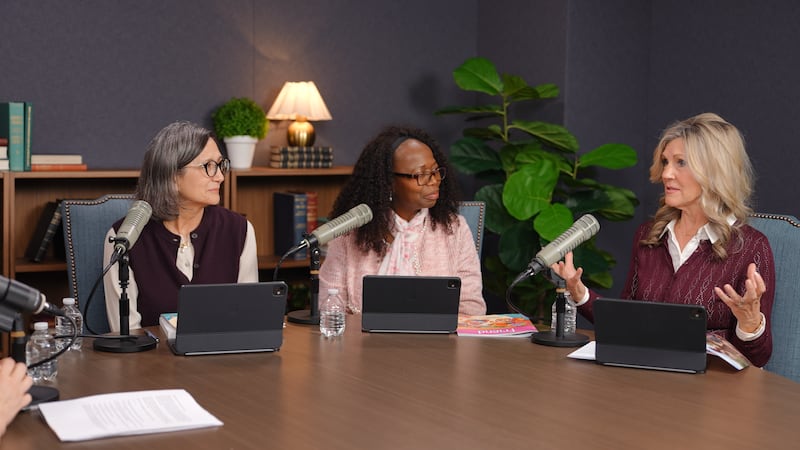


Beginning in January 2027, refinements to the Children and Youth program of The Church of Jesus Christ of Latter-day Saints will go into effect.
But the purpose remains the same, said Primary General President Rosemary K. Chibota.
“These refinements are going to make this program clearer and connect more with the child’s daily life,” she said.
On this episode, President Chibota and her counselors, Sister Nina M. Garfield and Sister Theresa A. Collins, join Church News reporter Mary Richards to outline what the refinements mean for Primary children, their parents and leaders.
Two other podcasts released today with the Young Women general presidency and Young Men general presidency outline what the refinements mean for those organizations.
Listen to this episode of the Church News podcast on Apple Podcasts, Amazon, Spotify, bookshelf PLUS, YouTube or wherever you get podcasts.
Transcript:
Mary Richards: I’m Mary Richards, a reporter at the Church News. Refinements to the Children and Youth program of The Church of Jesus Christ of Latter day Saints have now been announced. We have three podcasts for you today to help you understand more about what these refinements mean for each group.
Now, before we start today with the Primary general presidency, it might be helpful for you to go to the Gospel Library, to the Children’s tile or the children’s section online, and download the Parent and Leader guide, and that can be something you can follow along and see how simple this is, really, as we talk today.
Now, to help us understand specifically what these refinements mean for children, their parents and leaders, I’m joined today by the Primary general presidency.
0:40
We have today President Rosemary K. Chibota, welcome.
President Rosemary K. Chibota: Thank you.
Mary Richards: Thank you for being here. And we also have her counselors. We have Sister Nina M. Garfield, thank you for coming.
Sister Nina M. Garfield: Thank you.
Mary Richards: And Sister Theresa A. Collins.
Sister Theresa A. Collins: Thank you.
0:52
Mary Richards: It’s so good to have you here. This is your first time on the Church News podcast, so we want to welcome you. And the first time since you’ve begun serving Aug. 1. And I know that we’re jumping right into it now, aren’t we, with this exciting —
Sister Nina M. Garfield: Absolutely.
Mary Richards: Yes. You hit the ground running, didn’t you?
President Rosemary K. Chibota: We did, yeah.
Sister Theresa A. Collins: And we’re happy to do it.
1:13
Mary Richards: Good. Well, let’s begin, then, with this announcement. And, President Chibota, can you tell us mainly: What’s the main thing we should know about these refinements?
President Rosemary K. Chibota: The most important thing to know is that the purpose of the Primary children’s program has not changed. We are still helping children believe in Jesus Christ, belong to Him and His Church, and become more like Him. However, we have introduced some refinements to the Children and Youth program, and these refinements are going to make this program clearer and connect more with the child’s daily life.
They simplify the experience for the child and also strengthen the role of the home, particularly the parents, in the child’s development, spiritual development. And they focus attention on the child’s lifelong discipleship journey of becoming like the Savior.
So, we are going to share briefly on what these refinements are, and then we’ll go into details. Sister Garfield and Sister Collins will help me go more into details and the explanations afterwards.
2:25
The first refinement clarifies the purpose of the program’s three pillars. So, the first pillar is gospel learning, which is helping the children believe in Jesus Christ, developing the faith of a child. And the service pillar is service and activities. And these are designed to help the children belong to Jesus Christ and His Church. And finally, the third pillar is personal development, which is helping the children become more like Jesus Christ.
The next refinement that we’ve done has to do with the curriculum, which is the first-Sunday lessons, and Sister Garfield will go into greater details in a minute about that. There is also the refinement in the goal-setting process, and also the recognition in emblems through the celebration of growth. And finally, the resources.
3:26
Mary Richards: Let’s talk through this first, the fast-Sunday lessons. Where do we find those, and what’s that all about?
Sister Nina M. Garfield: The fast-Sunday lessons were announced earlier this year and relates to gospel learning at church. So, beginning in January of 2027, instead of participating in the Covenant Path lessons on fifth Sundays, Primary children will now participate in those discussions monthly on every fast Sunday. These fast Sunday — I know there’s been some questions about where can you find those fast-Sunday lessons, and they will be located in the back of the “Come, Follow Me” manual starting in 2027.
Mary Richards: So you’ve got the manual here.
Sister Nina M. Garfield: I do.
Mary Richards: But anybody who has the Gospel Library app —
Sister Nina M. Garfield: Absolutely, yes.
Mary Richards: I logged right in and saw “Come, Follow Me: New Testament 2027” and then the Primary fast-Sunday lessons.
Sister Nina M. Garfield: Yes. So that’s another place that they’ll be available. That’ll give children more opportunities to connect what they learn about Jesus Christ and how they can follow Him every day.
4:28
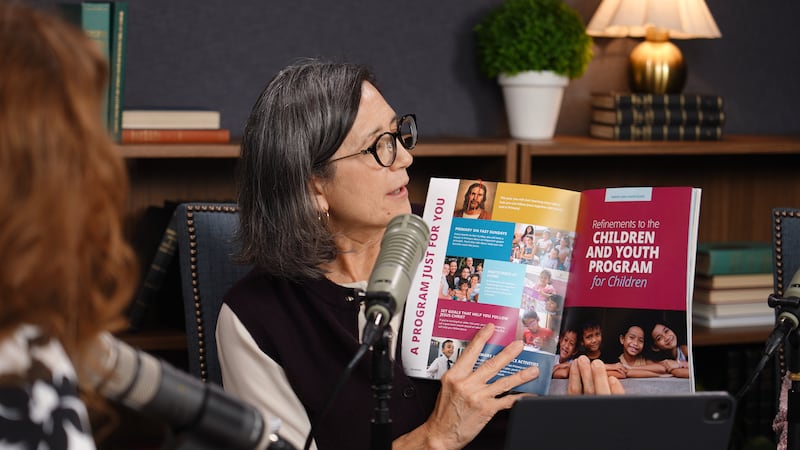
We’re so looking forward to the January Friend magazine, because it will show several things. First of all, it has a parent and teacher guide about the refinements of the children and youth program. So that’ll be really helpful for families to have so that they can refer to that; also the teachers. And then it also lists for us all of the fast-Sunday lessons the whole year. It gives you the month. So for the first four months, it talks about topics that will support “believe in Jesus Christ.”
It also gives suggestions for topics that you can talk about in families, so that parents and children can discuss what they’re learning in these fast-Sunday lessons. And it will also eventually help them with setting some goals, which is another part of the refinement. And then it also lists “following Jesus together” and is just some more activities that go along with the fast-Sunday lessons.
5:42
Mary Richards: Those are all kind of tied together.
Sister Nina M. Garfield: Yes, they are. It’s really great. I think The Friend is going to be such a wonderful resource for us in these fast-Sunday lessons. So, yes, everything we need is right here.
Mary Richards: And we can take that section out of the January Friend.
Sister Nina M. Garfield: Absolutely. It will pop out. It’s made to pop out, and so you can keep that if you want to and refer to it as often as you want and need to.
6:06
Mary Richards: Wonderful. And you’d mentioned goals, so let’s talk about that. This goal-setting model that we’ve had in its current form is being refined a little bit, I guess, is what we can say today, right, Sister Collins?
Sister Theresa A. Collins: That is absolutely right. Goal-setting remains an important part of the program. It’s really, it’s — but it’s simpler, and it connects more closely to the gospel learning. So we’re trying to transition from gospel learning and what they learn about Christ into their everyday life. It connects Church and home a lot better too.
So, previously, the goals were organized according to the four areas of growth in Luke 2:52. And you’re going to see those materials go away. But beginning in January of 2027, the children are setting goals based on what they’re learning about Jesus Christ each month on those fast-Sunday lessons that Sister Garfield talked about. So in the year that they turn 8, children are invited to prayerfully begin making goals.
Now, what that can look like is, she pointed out here that we could see a year in advance of these lessons. So we’re having 12 of them now, and this becomes the focus for the month. Next to that, we have an opportunity to ask a question related to those lessons, and those in turn can reflect or lead to a goal-setting opportunity. So, for example, one of them is, “Jesus Christ can strengthen my family.” And the prompt for that would be: “How can I help my family? How can I strengthen my family?” Another is, “I can show love for others by serving them.” And the prompt would be, “How can I serve others every day?”
7:49
So we’re trying to connect what it is — Jesus did these things, you know, Jesus did service, and He prayed, and He strengthened, right? So can I. And a natural outflow of that question is: “How could I do that every day? So, can I set a goal this month that would help me to be more like Jesus in that way?” And they could be anything from learning someone’s name that they don’t know every day for that month, or maybe sitting by someone that they don’t know, or doing something anonymous for someone every day.
What’s beautiful about this program is the whole family is making goals, and they’re now — everyone’s got a first-Sunday lesson that they’re working on things, so your discussions at home can be just vibrant as you connect those things that you’re learning with what you’re trying to accomplish and become. And when everyone’s on the same page, they know and they know that these things are happening — I’m thinking of a leader like yourself who is saying: “All right, so I know they’re making goals. This is the topic for the month. This is what we’re going to be focusing on. I could be planning activities that incorporate the goals I know my children are working on.” And if I know that one particular person is trying to reach out and do something nice for someone every day, you — part of goal-setting is to come back and share what are you learning, process what’s happening and to articulate that. It’s beautiful.
9:18
So you could say: “How is that going? In what way has it been hard? In what way have you overcome that? Have you been frightened? Have you — in what ways have you — what has it felt like when you’ve done those things and helped other people?” And they can have a chance to share those things.
What’s beautiful is that they get an opportunity to express it. And you’re encouraging that connection between, “This is what Jesus did, and I’m doing it too.” When things are hard, you can be a reminder, a constant reminder, that: “I know it’s hard to share or to be obedient or to be honest, whatever your goal might be. But you can always access your Father in Heaven and ask for His help, because He’s stronger than you are. He’s stronger than I am. But He will help me do those things that are difficult to do. Even though I want to do them, they can be tricky and hard.” And so this is just such a wonderful way to celebrate that.
10:14
I will mention about recording. Formerly we had a booklet where we were tracking these things. Instead, we can have an opportunity to use the children’s Friend; every month we’ll have an issue that will focus on that month. Or we can have individual notebooks. And I’m thinking of a teacher that would say, “Hey, children, why don’t you bring your notebooks to an activity or to Sunday, and we’ll talk about some of the goals that you are setting and what your experiences are.” So they can be tracked there. But we’re not really managing a goal program as much as we’re trying to connect activities and behavior to the Savior.
10:50
Mary Richards: Oh, I love that. I’m already thinking of so many things for my own Primary because I do serve in my Primary presidency. But these — I feel like there’s going to be hopefully this better kind of flow of communication between parents, their teachers on Sunday, the Valiant activity leaders, which were formerly called activity day leaders, but we want to make sure people — it’s in the handbook now as Valiant activity leaders — and these ways. Also, like you said, it’s right there in The Friend each month too.
Sister Theresa A. Collins: Everyone can reference it. So a Valiant leader or a parent or a child will all be able, or a teacher or even the Primary leaders, will all be on the same page and focused because they can reference it quickly and see, as Sister Garfield said, a year in advance. We know what’s coming, and plan activities around that.
11:32
President Rosemary K. Chibota: And I think, Mary, I think one thing we need to clarify is that parents play a very central role in this whole process. So their role is to encourage, discuss and support the child as they set those goals. And so a lot of the learning is happening at home. So they are living what they are learning every day, you know, like, Sister Collins was kind of demonstrating with those examples that she gave.
Mary Richards: Yes. These conversations can happen at home in many ways. It can be during your “Come, Follow Me” reading, maybe a family council, or I’m doing my daughter’s hair on Sunday morning, and “Let’s talk through some of these things.” I would hope that families could start to think of these things.
President Rosemary K. Chibota: Yeah. Just ask them, like, maybe the child comes home from school, “So, how are you doing with your goal?” Maybe the goal was to be kind to everyone. “Were you kind to everyone today? You know, how did that go?” Just so it becomes normal and natural.
Mary Richards: Yeah, it’s a part of your life, because you are becoming like Jesus Christ.
President Rosemary K. Chibota: You are becoming.
12:35
Mary Richards: I love that.
Well, and also now — because there might be some questions — let’s go through the activities and meetings, then, if President Chibota, you can tell me about some of the meetings each year.
President Rosemary K. Chibota: Yeah, so the annual meetings will continue to provide those milestones in the child’s gospel journey. Some of the meetings will remain the same, like, we will have the Baptism and Confirmation preparation meeting that will still continue, as well as the Temple and Priesthood Preparation meetings. Those are held annually. Those will still continue to happen.
But also going forward, we are inviting leaders to hold a Celebration of Growth event. So this is so important for children to be recognized for the work that they’ve done throughout the year. So this will give children opportunity to just demonstrate or showcase what they’ve been working on and how they’ve done, and also recognize the work that the parents have done to help the child get to that point. So parents and leaders are invited to that Celebration of Growth event, and that’s going to be held once a year. And these meetings will allow wards and branches to strengthen the families and also the children during this significant moment in their lives.
13:51
Mary Richards: Yeah. I love that thought of celebration, because we’ve talked so much about our hopes that the children know they belong to this Church, they belong to Jesus Christ. When they’re being recognized, it’s that kind of very same thing, isn’t it?
President Rosemary K. Chibota: Yeah, I think the more you invest in something, the more you will take ownership of it. So the children are recognized for the work that they’ve done, you know, then they have that sense of belonging, that they are recognizing that they’re being seen by, the parents and leaders, that their efforts are being seen and acknowledged, that, “Oh, you did a great job, you know, you’ve worked hard throughout the year on this.” And we are showing them that we really are encouraging them and cheering them on in their discipleship journey.
Mary Richards: And maybe we should also — maybe there’s a brand-new leader listening, or a parent — and let’s quickly clarify the ages for each of these meetings. The Temple and Priesthood Preparation meeting, which usually seems to happen around November, December, that’s that very last class, the oldest class in Primary, preparing them to join Young Men and Young Women?
President Rosemary K. Chibota: Correct.
Mary Richards: And go to the temple.
President Rosemary K. Chibota: Correct, yes.
Mary Richards: And then in January, is that usually when we get the Baptism and Confirmation meeting?
President Rosemary K. Chibota: Yes. That happens early in the year.
Mary Richards: And that’s for those who are turning 8?
Sister Theresa A. Collins: Turning 8 that year.
Mary Richards: Then the Celebration of Growth. When would you think that happens, and who — what age is that?
President Rosemary K. Chibota: So, we would recommend that that happens towards the end of the year. And that would be for the children that have been participating, so the Valiant-age children that have been participating in this goal-setting.
Mary RIchards: Everything we’ve been talking about.
President Rosemary K. Chibota: Yeah, everything we’ve been talking about.
Sister Theresa A. Collins: Eight to 11, so for those olders. There’s nothing wrong with a child younger than 8 making a goal. But that celebration will be focused on those Valiant children.
15:42
Mary Richards: Perfect. I love clarifying. Well, you know you’re going to get questions about this, so you are prepared and ready to answer those. It’s exciting as we grow together and learn about these things too.
And we’re talking today, of course, about all these refinements and things. And tell me about, then, also some new, exciting things with the emblems for our children.
Sister Nina M. Garfield: Absolutely. We’re very excited about that. They continue to be a meaningful reminder of a child’s spiritual growth. So, beginning in January of 2027, instead of receiving a picture of the temple that was in their temple district, children will receive an image of Jesus Christ with children and also a copy of the Book of Mormon. And they will receive these emblems when they are baptized or during the month that they turn 8 years old. These emblems are intended to focus attention on the Savior and His gospel.
The temple ring will also continue to be used, but it will be received at a different milestone. Rather than being given automatically at age 8, children will receive it after learning or memorizing the Articles of Faith and sharing what they have learned with either a parent, a teacher or a member of the Primary presidency.
16:57
Mary Richards: We have some amazing children in our Primary who have just been memorizing these. They’re so excited.
Sister Nina M. Garfield: We’re so happy to hear that.
Mary Richards: They come right up, “Sister Richards, I’ve got No. 10 done.” And I have a little thing, and I mark it off.
Sister Nina M. Garfield: That’s so great.
Mary Richards: So that’s then their chance, then, when they’ve got all that?
Sister Nina M. Garfield: That is correct. Yes.
President Rosemary K. Chibota: Those emblems are then connected to that meaningful experience of learning and understanding and sharing faith.
17:20
Mary Richards: Oh, beautiful. Oh, that’s wonderful.
Now, we also probably need to go through the Primary activities, service activities, those things to help our leaders and parents kind of understand all of those. Maybe you would like to talk about those, Sister Collins?
Sister Theresa A. Collins: Yes, absolutely. There are no new activities, which is beautiful. We are continuing with all of those activities because they are the way in which we connect, again, what we learn about Jesus Christ and put it into the practical, everyday life of a child.
So, the Primary activities will continue according to the needs in your area and in your ward. Depending on how many children you have, you can continue to keep meeting all together. Or if you’re able to, we’ll continue with those Valiant 8 to 11 children separately, maybe twice a month. And we’ll still continue with the Valiant Super Activity, which used to be called Day Camp, as well as the annual — we really want to put emphasis on the annual service activity. It’s such a wonderful way, again, for them to connect what they’re learning about Christ and His attributes.
Maybe a good guide for those service activities, or any activity, really, would be to take those characteristics in “Preach My Gospel” in Chapter 6 that we find and say, “What do we want; how do we want to become like Him during this activity?” and then let the children — I think a real integral part is to let the children be a part of the planning. We’re trying to grow leaders who can go into Young Women and teach and so on. And a great way to do that is let the kids become part of the planning of any of these activities, and help them, guide them, to implement and to carry them out. Then it becomes theirs, and it becomes more personal.
19:06
Mary Richards: They can plan. They can invite.
Sister Theresa A. Collins: Oh, yes. They are such good inviters.
Mary Richards: Yes. Who can say no to a child?
Sister Theresa A. Collins: Oh, none.
Mary Richards: “Come to this activity. It’s going to be — we’re going to serve together.” “Oh, OK. I’ll be there.” So yes, that’s exciting to think about that, those things. And like you said, local wards and units will discuss kind of — with the children planning — the timing and what those look like.
Sister Theresa A. Collins: The guidance of a leader, obviously, but we’re just helping to support this growing learning opportunity to serve in the future.
President Rosemary K. Chibota: And always keeping in mind that question, like, “How does this activity help children come unto Christ and become more like Him?” So I think that as leaders have that question in mind as they are planning or helping the children plan these activities, that is how we help them, you know, become like the Savior.
19:58
Mary Richards: Oh, I love that. Well, we do want to help people know, again, when we’ve talked about where to find these things, but maybe we also explain it a little more, President Chibota, where people can find the guide, what if they need more copies. Where do they go to all these resources?
President Rosemary K. Chibota: Yes, Mary, thank you for asking that question. It is important for parents to know that the guide, the Parent Leader Guide, is available in that same January issue of The Friend. That’s what that is right there. And it is also available in the Gospel Library. So this [the print magazine] will come out later. So if you want to access this right away, you can go to Gospel Library and be able to pull this up.
And these resources, they are so helpful — they are designed to help the parents and the Primary leaders and teachers understand this program and how they can best support the children in their spiritual growth or spiritual journey.
And if they, like you, ask the question, what if they wanted printed copies, extra ones, they can do that digitally. They can download them digitally and print however many they feel they need.
Mary Richards: And I think, too, the Primary leaders will be able to, like you said, print or make copies in their building, maybe, or there’s different ways to be able to get this to the hands of those who need it.
President Rosemary K. Chibota: Yes.
21:19
Mary Richards: OK. Wonderful. Is there anything else, any words of encouragement you have for our parents and leaders as we’ve been talking about this today?
Sister Theresa A. Collins: I just want, I would want them to know just literally how simple it is. It feels like a lot of changes because they’re coming simultaneously with other auxiliary — other programs. But in Primary, it’s really as simple as just maybe five little refinements, five little adjustments. And we’re just refining the purpose of the pillars, the fast-Sunday lessons, the goal-setting aspect, and the recognition that includes that Celebration of Growth, and then where the resources are found.
So, otherwise, it’s the same program. And it’s just more centered, I think, connecting the child that what they’re learning about Jesus Christ to what they’re doing in their everyday life.
22:09
President Rosemary K. Chibota: And I think one thing that I would add to what Sister Collins just said is that we do acknowledge that there are some children out there that may not get parental support at home. And so this program is designed in such a way that the Primary teachers and leaders can support the child through their discipleship journey. So no child should ever feel like they are alone in this. Everybody is going to come together and make sure that each child gets the support that they need from an adult. If it’s not in the home, then in the congregation.
Mary Richards: Primary is probably the best place to be because the teachers are so loving.
Sister Theresa A. Collins: Definitely.
President Rosemary K. Chibota: They are so loving.
Mary Richards: You see every child in your class, and you just want the best for them, and you want them to succeed. Yes. Wonderful. Good. It’s not too scary, right, Sister Garfield?
Sister Nina M. Garfield: No, it really is not. No.
Mary Richards: It’s fairly simple when we’re talking through this today and that, believing in Jesus Christ, belonging with Him and then becoming more like Him. Really, those three things.
23:13
Well, I’ve so appreciated our conversation today and our chance to talk through the — your love for the children of the Church and these different refinements and moving forward. I’ve been so grateful to learn also for my own calling and as a mom of a Primary child.
But I think, then, this really, I guess, brings me to my last question on the Church News podcast. And we always ask our guests, “What do you know now?” And we let them have the last word. So perhaps we’ll start with Sister Collins and then Sister Garfield and then President Chibota. What do you know now, after all that we’ve talked about today?
23:49
Sister Theresa A. Collins: Such a great question. I think the thing that came most immediately to my mind was how anxious our Father in Heaven is to let us know He loves us. And for a child to be able to access that at an early age is foundational. What came to my mind was a conversation that I had with two of my grandchildren when we were tending them overnight. And it was prompted, after learning that some family member, a loved one, had decided to opt out.
And as I came out of the room that morning and saw my two littles sitting on the couch outside my room, I just had the Spirit prompt me to ask a question. And I said to them — one being in Primary and one just barely having left and started Young Women — I said, “How do you know Heavenly Father sees you?”
And they pondered very carefully for a moment. And then out came a flood of answers. “I know He saw me at” — this older one answered first — “at girls camp during that faith hike, and I heard my dad’s voice, and I realized that was like listening to the Spirit. And I felt something inside, and I knew that my Father in Heaven knew me. And then when someone else, I had a private prayer and someone else just met that need that only Heavenly Father knew, that’s when I knew.” And then just one after the other, she just started this flood, if you will, of examples that were coming to her mind of how she was seen by her Father in Heaven.
And I said to them — and then the younger one, seeing the example of the older and realizing how simple those examples were, she said, “I think I’m starting to connect that He’s been trying to tell me that for a long time, and I’m just now realizing how simply He speaks to me.” And so I just asked that follow-up question, like, “How will these things that you’ve just described stay with you?”
And the older said, “Oh, they’ll stay with me forever because they’re mine.” “But what if someone tells you those things didn’t really happen, or it helps to explain them away? What will you do then?” And she says: “They can’t. Those experiences were mine, and they can’t be taken away from me.”
And I think as I pondered this program that we have, that we’re offering the children, it’s so — it’s really based on: Can we take the love that our Father in Heaven has for us through these lessons and through — yes, we’re running a program, but it’s more than a program. It’s a connection of Jesus Christ and Heavenly Father to the child so that they can take that into the rest of their lives. And if through experiences and if through activities and if through lessons they can have experiences that will propel them for the rest of their life that can’t be taken away, it has to be theirs. It gets to be theirs, if they want to continue as lifelong disciples of Christ.
27:01
Sister Nina M. Garfield: I think one thing that has become very clear as we have talked about the program and the refinements that have come to the program is how inspired it is. I think that oftentimes when there’s change, it really throws people off, and it takes them a while sometimes to adjust. But I think more than anything, I want people to know that this is an inspired program, the refinements, and people will be just fine, and it will bless their lives and the lives of their children and of families.
Another thing that’s become clear is how much love Heavenly Father has for all of His children, but particularly Primary-age children, the little ones. They are His youngest disciples, and we’ve been given the awesome responsibility to nurture and to teach and to help them feel the Spirit of the Holy Ghost and what that feels like. And we feel that these are important tools that they can carry with them throughout their lives. These children, their hearts are open. Their minds are open to everything that we teach them. And so it’s up to us to take this very small window of time and do everything we can to strengthen them as little people, but also strengthen them as disciples of our Savior, Jesus Christ.
So that is what I’ve taken from my new calling, and also from this time that we’ve had together, and as we have learned about the program with the new refinements.
28:49
President Rosemary K. Chibota: What I have learned, Mary, is that what the prophets are teaching us is true. There is a continued restoration of all things. The gospel is continuing to be restored. And as we approach the Second Coming of our Savior, Jesus Christ, things have to be refined or changed so that the children are learning things that will help them to better prepare to receive the Savior when He comes again.
I have learned how much He loves them and how important they are to Him. You know, one of my favorite scriptures is in Matthew 18:10, where the Lord Himself tells us how the children — the angels that are assigned to take care of the children — behold the face of Heavenly Father daily. That is how important children are to Him. He loves them.
And people sometimes make the mistake of saying that Primary is easy. When somebody says that, they’re not doing Primary correctly, because it is hard to really become that pure conduit of the Spirit that the Lord uses to continue to deliver revelation on how to care for these little ones. They are His disciples, His littlest disciples. He loves them, and He has assigned the parents to be steward over these children, but they really are the children of God. Parents have that sacred role to nurture the children and as they sing, “Lead me, guide me, walk beside me, help me find the way. Teach me all that I must do to live with Him someday,” as the children sing that, I hope the parents know this is their opportunity to lead, to guide.
And it’s not much that they are asked to do. As we are taught in Alma 37, “by small and simple things are great things brought to pass” (verse 6). These are small and simple things that the parents can teach their children, or help support their children in their quest to accomplish these goals to become more like Jesus by small and simple ways. And if those parents can do that in the right way, they can really help to build the kingdom of God, one child at a time. That’s all we’re asking the parents, to be involved in this lifelong journey of the child’s discipleship.
I have learned that children are so eager to learn. They are not too young to learn great things. They are ready for this next step that the Lord has said He wants them to go. They are so ready. You can see it when they bear their testimonies. You can feel the power of this testimony, the Spirit bearing witness that what that child has said is true. Or when they sing to us, we can feel the Spirit. They are so ready.
So let us as adults, as the leaders, as the parents, let’s help them become like their Savior, Jesus Christ, by just holding their hands as they take these tiny little steps towards becoming more like Him each day. Those are the things that I have learned. I know that Jesus Christ lives and that He is very much involved in all these programs that the Church has for these children.
And I say that in the name of Jesus Christ, amen.
