



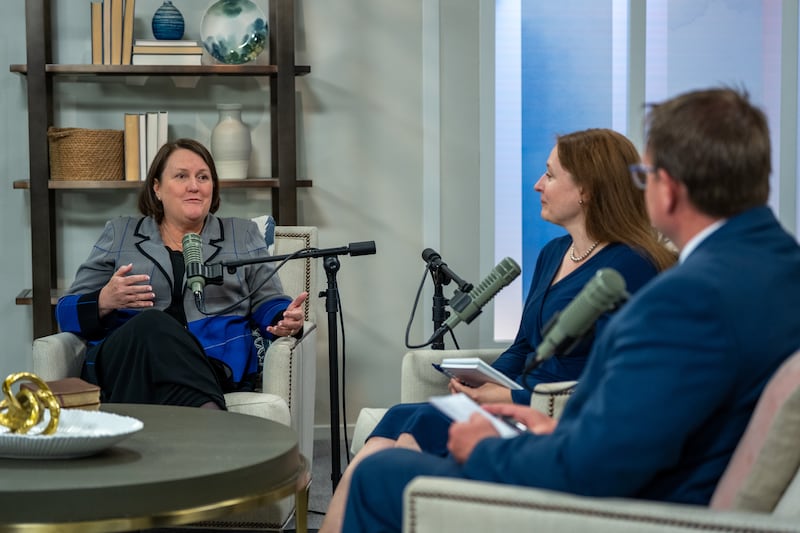


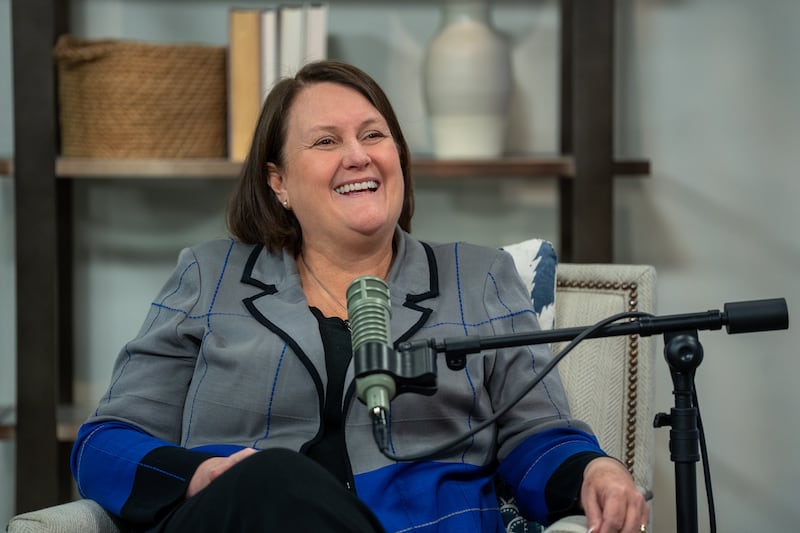
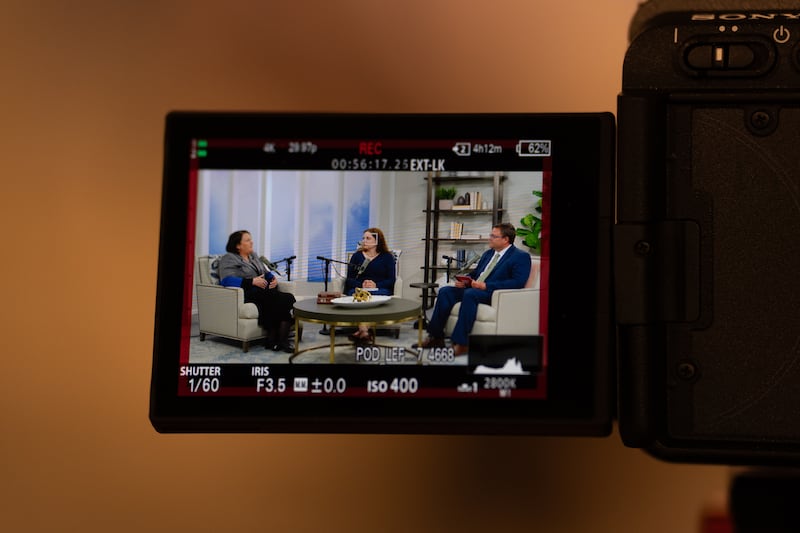
In commemoration of the 300th episode of the Church News podcast, three of the hosts come together to reflect on this milestone. Sarah Jane Weaver, former editor of the Church News and current editor of the Deseret News; Church News editor Ryan Jensen and Church News reporter Mary Richards talk about the beginning of the podcast in 2020 to where it is now.
They share experiences interviewing guests and covering the ongoing Restoration of The Church of Jesus Christ of Latter-day Saints, including what they have seen and felt over the years and answering the question, “What do I know now?”
Listen to this episode of the Church News podcast on Apple Podcasts, Amazon, Spotify, bookshelf PLUS, YouTube or wherever you get podcasts.
Transcript:
Jon Ryan Jensen: I’m Ryan Jensen, editor of the Church News. Welcome to the Church News podcast.
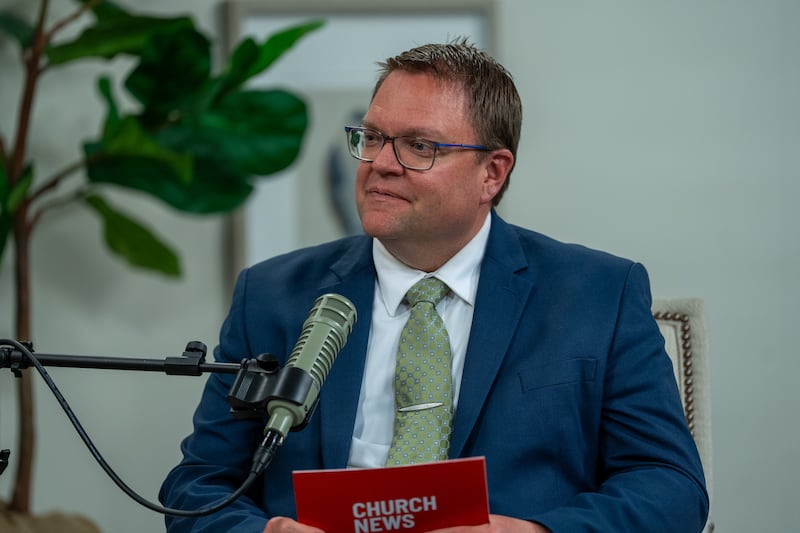
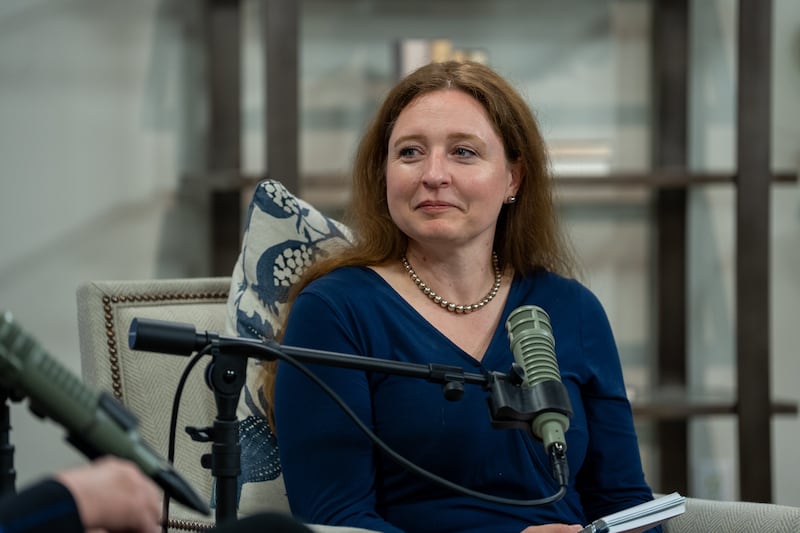
Today, we are excited to come to you in commemoration of the 300th episode of the Church News podcast. And as part of this special episode, we have three of the hosts of the Church News podcast — in Sarah Jane Weaver, former editor of the Church News and current editor of the Deseret News, as well as Church News reporter Mary Richards and myself.
And we have had experiences over the past few years with this podcast and with covering the Restoration of The Church of Jesus Christ of Latter-day Saints. And I’m excited to have the two of you here and let the audience know some of what we’ve experienced and seen and hope that they’ve felt over the years. So thanks for being here.
Sarah Jane Weaver: Thank you so much for having us.
Mary Richards: Yes, thanks, Ryan.
0:45
Jon Ryan Jensen: Sarah, I want to start with you, because I think that for those who weren’t around for the first few episodes of the Church News podcast, it might be helpful for them to know why we do what we do.
What was the beginning of the Church News podcast?
0:58
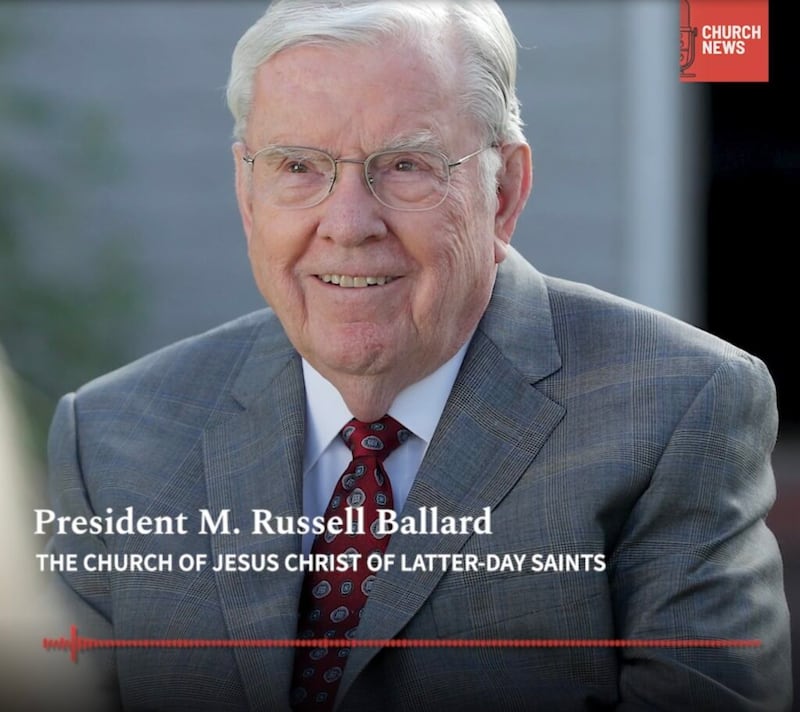
Sarah Jane Weaver: Well, the Church News podcast was started in October of 2020. And so we’re several months into the pandemic. And at the very beginning of the pandemic, as things were sort of accelerating around the world, the Church News had gone to President M. Russell Ballard — who was then president of the Quorum of the Twelve Apostles — and asked him to do an interview with us about the pandemic. And people were scared and isolated, and nobody really knew what the pandemic would look like or how long it would take.
And I remember President Ballard was so comforting and so calm. And he said: “It is going to be OK. We don’t need to get all anxious about this. We just need to know that the world will win the war on this pandemic.” And after that interview, so many people felt so good. We got all kinds of mail and feedback from people who said, “That was amazing.” And we thought, “Well, maybe this is the time, now that the general leaders of the Church are not speaking regularly at devotionals or other large gatherings, maybe the rest of them will do interviews with us.”
And so over the next several months, from when the pandemic truly shut things down in the United States in March of 2020 through that summer, we interviewed every single member of the Quorum of the Twelve Apostles and the First Presidency about the pandemic.
And in the process of doing that, we thought: “Wow, we wish everyone could hear every second of these interviews. These are so good, so healing, so comforting, so insightful. Wouldn’t it be great if we could share these more widely and not have to edit them down to a single quote, or have people hear the words of the Apostles in the voice of the Apostles?” In those ponderings, the concept of the Church News podcast was born.
Now, what I love most about the Church News podcast is President Ballard himself said: “You know what? I think this is a good idea. And I actually have so much confidence in the Church News, in the messages that need to be shared through The Church of Jesus Christ of Latter-day Saints, that I will be your first guest.” And he joined, and he talked about his years as an Apostle of Jesus Christ.
3:31
Jon Ryan Jensen: I love hearing that. And it’s reflective, I think, of something that we’ve seen as we’ve interviewed Church leaders, that they are anxiously engaged not just in sharing about the cause of the Restoration of the gospel of Jesus Christ, but in using any of the channels that are available to them. We’ve been with them in person, but we’ve also seen them adjust to doing things like Instagram Live or Zoom devotionals, and podcast is just another one of those methods that they use to meet with people.
3:59
Sarah Jane Weaver: And I was a print reporter. I mean, at least Mary has a broadcast background. But — Ryan, you do too — but I was a print reporter. And the other thing that was so sweet to me about that experience is President Ballard didn’t say, “You’re bad at this.” He didn’t even say, “You’re going to get better at this,” which I hope I did. What he did was just express very sweet confidence that we had good intentions, that we were trying to do something that would amplify the voices of leaders of the Church and that would help members. And he was willing to put his name and reputation behind that too.
4:38
Mary Richards: And he came on again as a guest.
Sarah Jane Weaver: And again.
Mary Richards: Which I loved being in his office with you, and he said, “Hey, kid, let’s do it again.”
Sarah Jane Weaver: He was always so willing. If we had a good idea and we could articulate to him what we were trying to accomplish, he was willing to try and be part of that.
5:00
Jon Ryan Jensen: And so, hearing their voices was one really important part of the beginning of the Church News podcast. But the other thing that I think all three of us have enjoyed is being able to share the voices of members as they have gone through challenging times and times of triumph.
But specifically, the two of you have both been on location when — or spoken with individuals who are going through times after disasters have struck and other hard times.
5:25
Sarah Jane Weaver: Yeah. Actually, the third episode of the Church News podcast was taking the president of the Medford Oregon Stake that had just lost so many homes to fires and having him speak on the podcast to the president of the Chico California Stake, which was included in Paradise, California, where a year before, 18,000 structures had burned.
And it was very healing for me to hear those stake presidents talk to each other. But it was interesting to have one who was right in the heat of the moment and one who was a year removed from the moment and had a little bit more perspective.
Mary Richards: Yeah.
6:02
Jon Ryan Jensen: And Mary, you had that in California and Hawaii as well, right?
Mary Richards: Yes. That podcast struck me so much, and that experience that you had had that when I was in Maui after the fires that happened there on that island, I sat down with the two stake Relief Society presidents who serve in Maui, and they were nervous. They thought, “You’re going to put a microphone on me, and I need to talk?” And I said, “I just want to hear your stories.”
Jon Ryan Jensen: “And members want to hear your stories.”
Mary Richards: Yes. And I think it was healing for them, too, to be able to put into words their experiences and work through that and talk through that with hopefully a friendly person who just wanted to learn from them.
6:40
Jon Ryan Jensen: Yeah. And those stories we get a lot of feedback on, because everyone’s going through something, everyone’s going through their thing. And so that opportunity to share stories of individuals is a big deal.
Sarah Jane Weaver: Well, and I think we always see from tragedy, especially for members of The Church of Jesus Christ of Latter-day Saints, it’s like the rising phoenix, that hope rises from ashes because of the way the Savior sustains people through their trials and because the Church is organized in a way that we can build and strengthen one another.
7:13
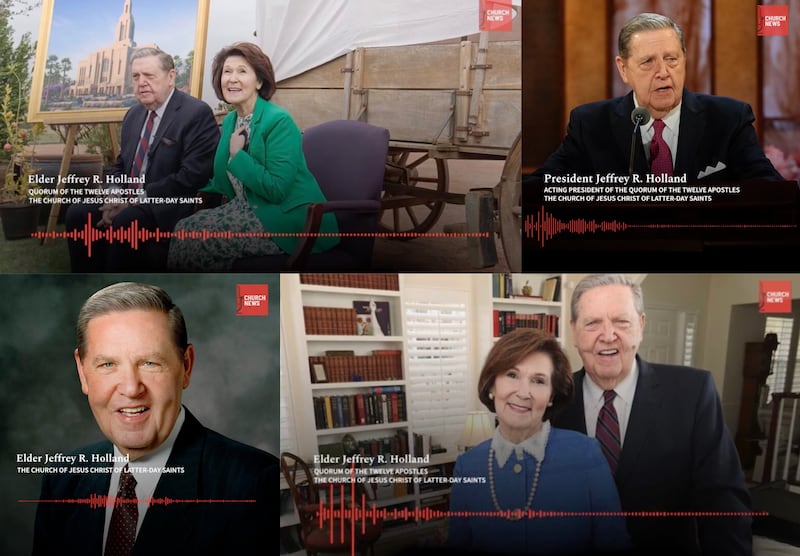
Jon Ryan Jensen: I love that you brought up finding hope and meaning, because one other Church leader who did that through the Church News podcast was President Jeffrey R. Holland. In speaking about the experiences that he had through illness and through the passing of his wife as well, Sister Patricia Holland, such tender moments that he was willing to share.
7:32
Sarah Jane Weaver: Interviewing President Holland were some of the greatest experiences of my life. And one that stands out to me is one where I didn’t do the interview, but I got to observe. Sister Sheri Dew — a former member of the Relief Society general presidency and the executive vice president of Deseret Management Corp. — interviewed Elder and Sister Holland in their home. And they had undergone health challenges the year before.
And we arrived at their home to film this interview. Word had not quite gotten to Sister Holland yet the exact time that we were coming, and she opened the door, and clearly she wasn’t expecting us, clearly she wasn’t ready for us, and yet her first words were: “Come in. Come in. You are welcome in my home.” And I’ll never forget that from her, that welcome, that love, that embrace that so many people through so many generations of time had felt from the Hollands was extended to us as we were there to record a Church News podcast.
8:38
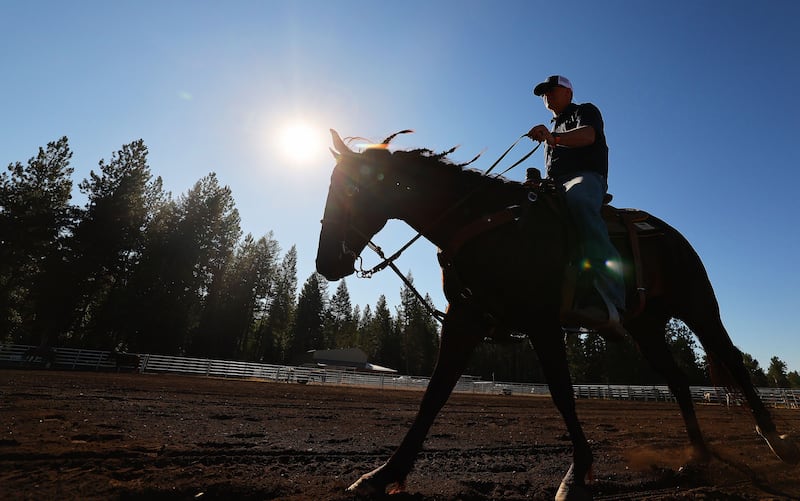
Mary Richards: There’s such a power in place. And I think we found that when we can be with somebody in a place that’s special to them, we learn so much more from them. I think about a few examples. You mentioned Sister Dew, and you were with her riding horses with Bronco Mendenhall for a podcast episode. That could not — I don’t think that would have been the same if you’d been sitting here where we are. It still would have been a great interview.
Jon Ryan Jensen: And surprising because for him as a football coach, it wasn’t on the football field; it was in the place he felt most comfortable.
Mary Richards: That’s right, yes.
9:08
Sarah Jane Weaver: Yes, so Bronco had been the coach of the BYU football team. He had then lived in Virginia and coached football there for several years and had finished that stint as a coach and was living in Montana.
And we flew up to Montana, and he was explaining some of the things that he’s learned. And part of his explanation was there are things that horses can teach you. And he talked about when he recruits football players, he puts them on a horse, and he can determine if they can follow directions and if they can be calm.
And in the process of that, he put me on a horse. He also put Sister Dew on a horse. But I will tell you I was very anxious, and the horse probably felt that. But there was some teaching and some learning and, “This is how you lead a horse.” And I can’t say that I ever felt like, “Oh, I belong on a horse.”
But what a fascinating way to observe how people teach, whether it’s football or gospel principles or family members. I think there’s power in observing how other people share their testimonies of Jesus Christ.
10:27
Jon Ryan Jensen: Mary, I’m glad you brought that up, because it brings up what President Dieter F. Uchtdorf has talked about so much — president of the Quorum of the Twelve Apostles — has encouraged members of the Church to share the gospel in normal and natural ways.
And so with that power of place, I remember being at the Las Vegas baseball stadium and interviewing two members of the Banana Ball league and letting them share their testimonies while dressed like baseball players. They’re there and so excited to share their testimonies. And I remember, before we even started that interview, them saying: “Oh, we hope that young men will watch this. We hope that they’ll be excited to go to the temple and to serve missions.” And yet we’re at a baseball field, but it’s the place where they felt at home, and they were perfectly comfortable in their home environment sharing the gospel, with us on the podcast and with others who we interacted with at that time as well.
11:14
Mary Richards: And the same thing for Parker Van Dyke, who’s a young professional basketball player. We met in his chapel where he grew up. Well, his Church building, I should say. We were in the gym. And at first, I thought when we got there and set up that we would talk about his basketball career and all that he’d learned shooting hoops with his father in that gym. But he said the most important thing being back in that building was where he had started to gain his testimony, because that was his Waters of Mormon moment, his Young Men leaders, his bishop, his family, those loving teachers in his home ward. So the power of place for him was very powerful.
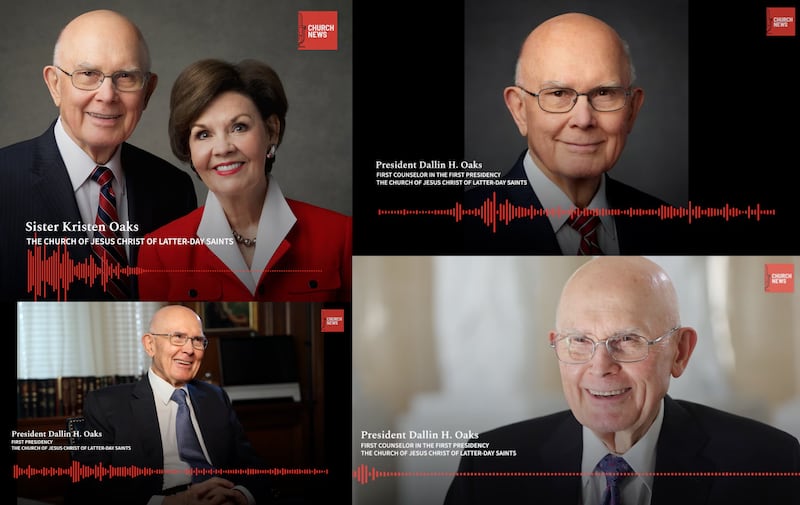
And I also think, too, of — we’ve filmed podcasts in a Primary room, where we talked about the power of Primary music and being able to say, “Here is a room where Primary children learn the gospel first through singing.” That was really cool. But I’m also thinking, too, of when you were in the Philippines with President Dallin H. Oaks. The Philippines is so special to him, and you were able to interview him and talk about that place.
12:12
Sarah Jane Weaver: Well, and President and Sister Oaks had lived in the Philippines. They had received an assignment there that was part of his assignment as a member of the Quorum of the Twelve Apostles. He was assigned to go and be area president over the Philippines area for two years in the early 2000s. And it was the same time that the Hollands were in Chile.
In that time, they learned to love the Philippines. They learned to love the people. And in that interview, as they talked about this place and this people that were so dear to their heart, you could sense it. You could feel it. It was almost tangible. You could feel the love that the Oakses had for the Philippines.
Now, what was most amazing to me is that President Oaks came to his call in the Quorum of the Twelve Apostles a nontraditional route. I don’t know if there is a traditional route to the Quorum of the Twelve Apostles, but he had never served as a bishop. He had never served as an elders quorum president. He had never served as a stake president. And he had never served as a mission president or even as a full-time missionary.
And he had had a very, very impressive legal career. And he had served as president of Brigham Young University and on the Utah Supreme Court. But he had not had some of those traditional leadership experiences within the Church. And on that podcast, he explained how his time in the Philippines helped fill in some of those gaps of learning that took place, because he got to experience the Church on a very local level.
13:53
Jon Ryan Jensen: You talked about the love that they expressed for the Filipino people. And I think that as we’ve interviewed other Church leaders, we felt the love that they have for those they serve as well, whether that’s a Sunday School presidency, Young Women general presidency, Young Men general presidency and even leaders of departments within the Church, like Elder Homer, who you recently interviewed.
14:12
Mary Richards: Oh, yeah. Elder David P. Homer is the executive director of the Priesthood and Family Department and a General Authority Seventy. And I was so grateful for that opportunity to sit with him and talk about the upcoming Sunday class meeting schedule changes. Because what an opportunity this podcast is to kind of expand, to talk more in depth about a topic and to give any listener the chance to listen to a Church leader, general officer, department manager, all of those people, to talk more through it. Like you mentioned from the beginning, not just a quote or two that we can squeeze into an online or print article, but just this longer opportunity to really understand something.
14:53
Jon Ryan Jensen: Some of these podcasts are going up to an hour long, and a general conference message typically 10 to 15 minutes.
Mary Richards: Yeah. So, somebody said in the comments to my podcast with Elder Homer, “Way to take 45 minutes to talk about how we’re going to have 25-minute classes.” That’s a good point. I could have been a little more succinct.
15:10
Sarah Jane Weaver: But you know what? I was so grateful to hear that podcast because we all want to know, “How is this going to work?” And suddenly it felt like: “OK, it’s going to be OK. We will figure it out.”
I recently also did a podcast with the Young Women general presidency about the new Young Women names, and people had the same question: “How is this going to work? These are names that are unfamiliar to us. How will we start using them? How will we feel comfortable with them?” And they explained how the decision was made to come to those names and actually why those names matter in the big picture.
15:48
Jon Ryan Jensen: On top of that, we’ve had opportunities to speak not just with the leaders of those organizations but sometimes the participants, and then we’ve talked with The Tabernacle Choir at Temple Square leadership, including President Mike Leavitt. We’ve also spoken with musicians from the youth albums each year as well and got to hear their testimonies.
16:09
Mary Richards: Yes. And it’s more approachable. You think of some of these folks who are doing such amazing things, and then just to hear their testimonies I think is one of the most valuable things that this podcast offers, is that everybody can come on and share their witness, their testimony of this work, of living prophets, of the gospel, of a Savior. And I think that’s why there’s so much to look forward to as well, as we not only commemorate how far we’ve come since 2020 but what is still to come.
16:45
Sarah Jane Weaver: Well, and I’m glad you mentioned Mike Leavitt, former Utah Gov. Mike Leavitt, who is now president of the Tabernacle Choir. He’d also been the secretary of Health and Human Services for the U.S. government. And yet, when he came in, he admitted he is not used to talking about his faith, because he’d always been in positions where he’s talking about government or policy or politics. And so the Church News podcast does give people a unique opportunity to bear testimony of the things that are nearest and dearest to their heart.
17:21
Jon Ryan Jensen: And that extends also to artists who we have spoken with. Recently, we talked with Michael Hall, who sculpted some of the art that is on location at Temple Square in the newly opened sections of Temple Square.
But we’ve also talked with artists who have participated in the Church’s competitions as well. And it is interesting to listen to them, because so often their testimony is reflected in something that they have sculpted or put on canvas. But then to let them put into words what their testimony means to them and to listen to them really pull out of their hearts and put into words why the gospel matters to them, what they hope people see in the work that they create, because everyone at heart is trying to share their testimony with whatever gifts and talents Heavenly Father has given them.
18:09
Sarah Jane Weaver: One of my favorite podcast episodes was with Kenneth Rooks, who is a steeplechaser. He had just won the NCAA championships, and he had won it in a most unique way because he fell very early in this race and got up and kept going. And there was so much power in him talking about that experience and then comparing that to the spiritual journeys that we all face.
18:37
Mary Richards: Yeah, that resiliency to get up, to keep going, to trust in the Lord. That was a great episode. I remember we were all so happy for him and so excited for him.
We’ve all had these opportunities to meet the coolest people. Sometimes do you ever just kind of pinch yourself, like: “That was a really neat interview. I’m so happy I had that opportunity, even if it was just for me.” I think sometimes, too, I bring up my children a lot as a host.
Jon Ryan Jensen: That happens with me all the time.
Mary Richards: Yes. And I love that we do. And we’ll be talking to a guest and be like, “Well, you know, I’ve been thinking about with my own children,” and then I just kind of want to get their advice one-on-one. But hopefully that then expands to all Church membership, things that they can learn from what this guest is saying.
19:15
Jon Ryan Jensen: Counsel we take as parents, counsel we take in our callings that we have, counsel that can apply to different aspects of our lives.
One of those moments came recently when Sister Dew, who we mentioned earlier, was interviewing Matt Grow, Church historian, as he is preparing to finish up the biography of President Jeffrey R. Holland. And listening to him talk about how his testimony grew by doing research into the papers, the endless boxes of papers that most people will never see. But to see what President Holland wrote about how his testimony grew, it’s really interesting to me to watch how the gospel can help our testimonies grow through the different ways that we serve and have opportunities like he did to do that biography.

Mary Richards: Yeah. Yeah.
20:05
Jon Ryan Jensen: Other Church leaders who have come on have shared their testimonies. And I would love to know if there’s anything in particular that the two of you have felt your testimonies be strengthened by as you’ve listened.
Is there maybe a part of someone — is there an interview that someone said something that stands out to you still as “Wow, I hadn’t thought about it that way” or “I’m so glad that I got to hear your perspective on this”?
20:29
Sarah Jane Weaver: Well, I’m happy to go. I remember when the Church updated the “For the Strength of Youth” handbook, and we had Young Women leaders come on. And I had a moment — you talk about doing these interviews as parents; well, I like rules. I like knowing exactly what you can and can’t tell your kids to wear, and, “This is how long your skirt needs to be.” And now there’s this new handbook that is elevating it to saying not “This is what you should or shouldn’t do” but “This is how you can be more like the Savior.”
And they were asking us to have harder conversations. And I remember thinking: “I don’t want to do this. I like rules. I like the old way better.” And in that podcast interview, a feeling came over me that this is what the Lord wants us to do. This is about becoming. This isn’t about setting a rule or a black-and-white instruction. This is not telling someone what they should do. This is about helping them become somebody that wants to represent the Savior in their actions and in their deeds.
21:42
Mary Richards: I love that. I find myself at the end, after we let the guest have the last word, and so I’m trying to be still and be quiet and listen. And sometimes that’s when I really do feel the Spirit very strongly.
For example, Elder Mark A. Bragg, who is a General Authority Seventy and with the [Family] History Department of the Church, he works in family history with the Church, and he was bearing his testimony of family history work. And I’ve always felt a little bit guilty that I haven’t been that good at it. My mom, fantastic. My mother-in-law, amazing. And I’ve always thought: “Well, they’re taking care of it, and I’ll get there. Different seasons. I’m a young mom.”
But then when talking, as he was talking to me about: “Just begin. Just add what you know. Just jump in.” And I felt this big whooshy kind of feeling come over me, like: “He’s speaking the truth. And I will help you.” I felt like the Lord was telling me: “I am proud of you. You are doing so well. And as you take on this new thing, I will help you.” And it was such a testimony builder for me.
I’ve also felt that kind of whooshy feeling when my eyes start to prick up with tears and I’m trying to keep it away from the camera — “Don’t cry. This isn’t about you, Mary. This is about the guest” — when I’ve interviewed other moms. Rosalynde Welch from BYU talking about themes in the Doctrine and Covenants, and she was talking about how that has affected her mothering. And Callie Jo Smith, a professional pickleball player, also talked about being a mom, and Noelle Pikus Pace, and their journeys and their testimonies of the gospel and how they try to teach that to their children. I mean, those moments just made me really tear up and feel more of that Spirit of the Lord saying, “You’re doing so well” and share that with others, that joy.
23:30
Jon Ryan Jensen: I think it’s fair that we should recognize we have a great production team with us as well, because sometimes they make the podcast in the end be a little bit smoother than the interview actually goes.
And I was thinking about one of the experiences that helped my testimony grow was a podcast that we didn’t ever end up airing. And that was an interview done with Elder Ulisses Soares of the Quorum of the Twelve Apostles when he had just finished a ministry trip in Europe. And for different reasons, not everything that we cover always gets seen on the website. Not everything gets put in the podcast. But there are moments that we all have personally, whether it’s in a stake conference or in a monthly testimony meeting, there’s always that something that can help us, if we’re there listening for the Holy Ghost, that will touch our hearts and help our testimony to grow.
24:21
Sarah Jane Weaver: And I think that’s the most interesting part about the podcast. We have the privilege of taking something almost — we almost get to help the leaders of the Church go into the homes of the members, where someone can be sitting in their home and listening to somebody, and that’s a great responsibility, a great blessing.
It also feels really heavy. I think all of us have felt moments where we’re like: “I have major imposter syndrome. How did I end up here in this chair talking to this person?” And you really have to do what Mary said and say: “This isn’t about me. This isn’t anything I did or didn’t do. This is because of the job I have. And because of the job I have, I have to step up and do this.” And somehow you find the confidence. But it’s very, very intimidating.
25:15
Jon Ryan Jensen: I think that ties into one of the last topics that I want to talk about, and that is: We have had multiple opportunities to talk on this podcast with those involved in the renovation of the Salt Lake Temple and the work that those original pioneers put in to build a structure that would last as long as it has.
And now for us to be just across the road and watch what has gone on there for the last six years, and to interview those involved with that process, what an amazing experience and what testimony-building experiences we’ve had by listening to them share their testimonies.
25:51
Sarah Jane Weaver: Yeah, we’ve done multiple Church News podcasts with Brent Roberts and Andy Kirby, who have talked about everything that’s gone into renovating this very, very iconic and yet sacred building that took 40 years to build, that actually is literally stone cut away from the mountain and hauled to the very heart of Salt Lake City and put stone upon stone without major machinery that we have today.

Jon Ryan Jensen: And sometimes those stones are not really secured to each other, just set in place for a couple hundred years.
Mary Richards: They’re taking care of that now.
26:30
Sarah Jane Weaver: And I love when they explained the base isolation system, where you actually are putting the temple on rollers, and those four towers of the temple were bound together by huge I-beams. And so, should there ever be an earthquake, the temple would stay intact, and the ground would move underneath it. And I love that idea, that even in the most tumultuous times, the temple moves less when the ground moves more. And that seems to be like a symbol of everything we do in the Church. We need to find something that’s stable, that’s secure.
President Russell M. Nelson said many times that they were going to build a temple that would stand through the Millennium. Think about what is happening with this open house coming up. This is a temple that a prophet has promised us will stand for years and years to come, through whatever trials and tribulations come.
27:34
Mary Richards: Yeah. This makes me think of a podcast interview with Elder David A. Bednar, where he also talked about temples. And the safest place, the safest place we can be, is within our temple covenants with Heavenly Father and Jesus Christ, no matter what the world is doing around us. So that physical reminder that we have of the Salt Lake Temple and any temple.
I was just in San Diego for the open house beginning of the San Diego California Temple, and it’s had some renovations and things. And you just think about how, no matter which building, the covenants are the same, and the beauty and the blessings and the promises of the things that happen inside are the same around the world. As we’ve traveled around the world to cover these temple dedications and see members around the world, it’s all the same.
28:21
Jon Ryan Jensen: Well, I think that’s a good place to bring us to what we know now. And so, as we do with all of the rest of our guests, we’ll give ourselves a chance to share what we know now after 300 episodes of the Church News podcast. Mary, I’ll let you go first; and I’ll follow; and Sarah, we’ll let you conclude.
28:38
Mary Richards: Well, I was thinking about what I know now is that anyone can and should answer that question, because they can think about what they’ve learned and what they know through the power of the Holy Ghost. Because we’ve been promised that the Holy Ghost is there — one of His roles is to help us remember. And we’re also invited and commanded to record and to remember.
And so, as we ponder that, all of us can answer that question: “What do I know now? What do I know now about my life, about this Church, about our Savior?” And hopefully putting that into words as we talk through it then strengthens that testimony inside us. And so I think that’s what I know now, is that hopefully anybody should and can find the words to answer that, that through the power of the Holy Ghost, they can know that this is the true and living Church on the earth, and we have a living Prophet and Apostles, and we have a Savior who will return again.
29:34
Jon Ryan Jensen: As I’ve thought about these 300 episodes that we’ve had and thought about what I know now, I went through all the titles and looked at all the names. And I just think about the unique circumstances of all the people who we’ve spoken with, of those who have ministered to others and been ministered to.
And the thing that I know now is that each one of us has a role to play. Each one of us. It doesn’t matter if there’s a title in front of your name that says “President” or “Elder.” What matters is that Heavenly Father has put us in a place to bless the lives of the people around us. And I’m so grateful that some have been willing to come on here and share their testimonies with us, because by doing that, they have in turn blessed the lives of listeners.
But I know that I have been blessed by them and hope that I can take away from each of those guests a renewed vigor and energy to go and help bless somebody else’s life through the gifts that Heavenly Father has given me. But I know that Heavenly Father has prepared us for the things that He expects of us and that He will empower us to do what He asks of us, because He never asks of us something that we cannot do.
30:49
Sarah Jane Weaver: Well, and what I have learned is just what we have been talking about today, and that’s the power of testimony. I remember being in Finland and meeting an amazing Relief Society sister there. She had been asked to share her testimony at a countrywide meeting of the Church of Jesus Christ, and she stood and she did that. And then later we asked her to join the Church News podcast.
And one of the things I wanted to talk to her about on that podcast episode was her willingness to share her testimony. She lives in a country where people don’t often talk about their faith. And when I sent the email, I’ll never forget the response that came back. She said she had been teaching some seminary students just that day and asked them what they would do if they were asked to stand up and share their testimony of the Savior.
And then she gets this invitation in her own inbox, and she is willing to actually put her testimony right on the line and do what she was asking the students to do and talk about what she believes in, even in a place where that’s not common, even in a place where that might not be as accepted publicly as it is in some other countries. And yet she did it, and there was power in that.
And when members of The Church of Jesus Christ of Latter-day Saints join their testimonies together, there is strength. The Doctrine and Covenants teaches us that when one or two people are gathered in His name, He will be there also; the Savior will be there also (see Doctrine and Covenants 6:32).
Now, we hope that we never did an episode of the Church News podcast that didn’t have it where our guests had the opportunity to bear their testimonies of Jesus Christ, because that’s why we do this work, because this is His Church, and it was restored by Joseph Smith, and it’s led by prophets and apostles today for the benefit of every single one of us who are willing to gather in His name and bear testimony of Him.
33:10
Jon Ryan Jensen: On that note, we wrap up this 300th episode of the Church News podcast and share those testimonies in the name of Jesus Christ, amen.
