MANAGUA, Nicaragua — On April 9, 1990, near a volcanic crater southeast of Managua, two Apostles and 26 local members of The Church of Jesus Christ of Latter-day Saints gathered for a prayer that looked toward the Church’s future in Nicaragua.
Speaking in Spanish, Elder Richard G. Scott, accompanied by then-Elder Russell M. Nelson, both of the Quorum of the Twelve Apostles, offered a prayer upon Nicaragua, petitioning the Lord for the establishment of Zion, “so that the saving ordinances are available to the righteous of this country.”
He also prayed that “at the appropriate time, all of the promises that have been declared by thy holy prophets through the ages by thy Son’s command may be realized in this nation,” the Church News reported.

More than 36 years later, the dedication of Nicaragua’s first house of the Lord will mark a fulfillment of that prayer, bringing temple ordinances to the Central American country.
Elder Ronald A. Rasband of the Quorum of the Twelve Apostles will dedicate the Managua Nicaragua Temple on Sunday, Oct. 18. The dedicatory session will be broadcast to all units in the temple district.
A temple in Nicaragua
For decades, Nicaraguan Latter-day Saints traveled to Honduras, Guatemala, Mexico and even the United States to attend a temple — journeys marked by faith, sacrifice and deep devotion.
Now they will have a temple of their own.
As the Managua Nicaragua Temple — the country’s first — opened its doors to news media on Sept. 7, Elder Patricio M. Giuffra, a General Authority Seventy and president of the Church’s Central America Area, described the significance of this milestone, reported the Church’s Spanish-language Newsroom.
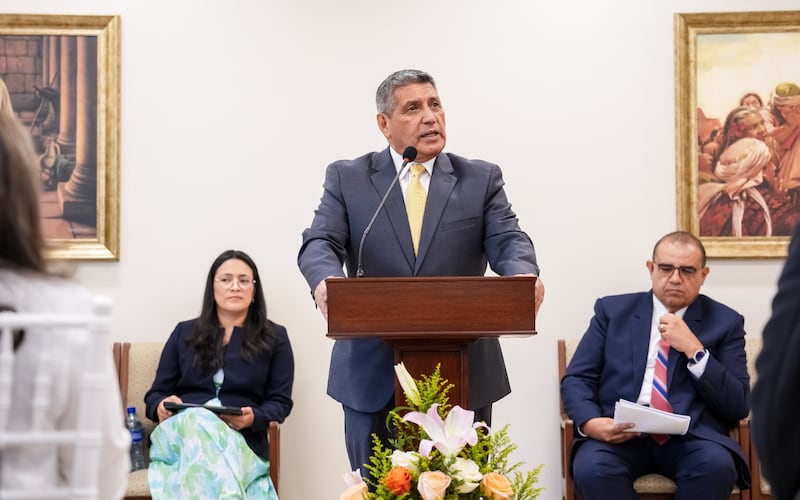
“For thousands of Nicaraguan members of The Church of Jesus Christ of Latter-day Saints, the completion of this temple represents much more than a historic event,” Elder Giuffra said. “It means having a house of the Lord in their own country — a sacred place where they can strengthen their faith and participate more frequently in the blessings received in the temple.”
Elder Taylor G. Godoy, also a General Authority Seventy and an assistant executive director of the Temple Department, said temples help people draw closer to the Savior and strengthen their faith as well as find peace and hope. One of the most significant blessings is the promise that families can be united for eternity.
“Temples are the most sacred places on earth,” Elder Godoy said. “They are literally the house of the Lord Jesus Christ, where we can make covenants to be closer to God and Jesus Christ.”
María Isabel Jirón, a Latter-day Saint in Nicaragua, said the temple has been a constant source of inspiration in her life — guiding decisions about her family, her profession and her faith in Jesus Christ.
The construction of the Managua temple, she told journalists, represents a great blessing for all of Nicaragua, bringing families closer to a place of peace, hope and eternal purpose.
‘Very close to my heart’
Sister Reyna I. Aburto, who served as second counselor in the Relief Society general presidency from April 2017 to August 2022, was born in Managua in 1963.
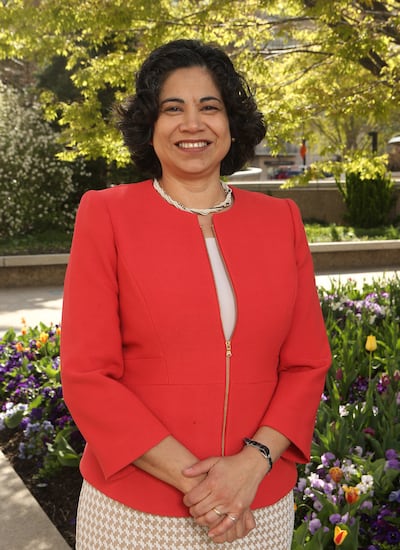
She was 9 years old when a devastating earthquake struck Managua on Dec. 22, 1972, collapsing her family’s adobe home as they slept. She was trapped in her bed, saved only by a roof beam that lodged against a piece of heavy furniture and formed a pocket of space around her. Her parents and infant sister survived, but her 10-year-old brother was killed.
As political and civil violence escalated in Nicaragua, Sister Aburto moved to the United States at age 21, where she later joined the Church and raised a family. She now serves as an institute instructor and a Spanish coordinator at the Utah Valley Institute of Religion in Orem, Utah.
“As you may imagine, this is very close to my heart,” she said of the temple being dedicated in Nicaragua. “In the temple, we can feel closer to our Heavenly Father and to the Savior, and we can feel their peace there, and receive strength — the strength that helps us in our everyday lives. … The more we try to be closer to our Heavenly Father and our Savior, the more They can bless our lives by giving us Their peace, light and guidance.”
Sister Aburto said she believes temple worship makes people better spouses, parents, children, siblings and neighbors.
“We can receive that strength from God and be able to relate to others in a more Christlike way,” she said.

“Members of the Church in Nicaragua have been so faithful in their membership and in trying to be the best disciples of Christ that they can be. For me, this is a beautiful thing — to know that they will have access to these blessings and that more people in Nicaragua will have access to a temple right there in their midst — can be a great help for them as they navigate life.”
‘When are we coming back?’
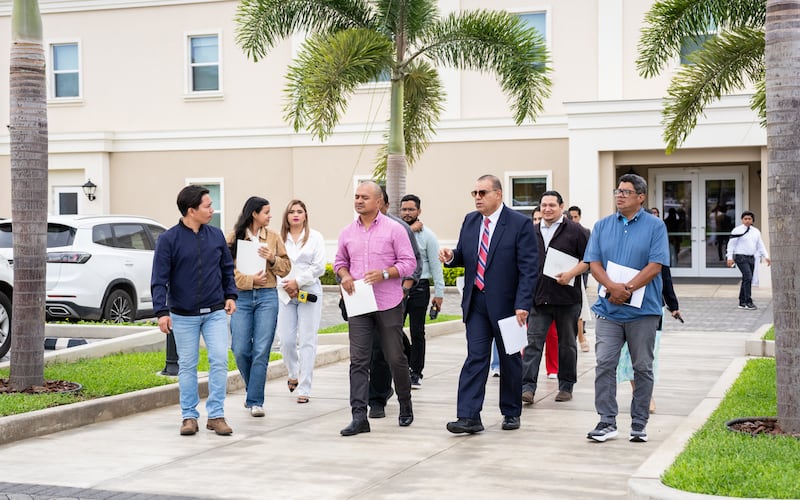
At 10 p.m. on Tuesday, Sept. 15, missionaries and 20 members of the Nueva Guinea Branch in Nueva Guinea, Nicaragua, boarded a bus for the six-hour journey to Managua to tour the new temple. It was one of many buses that brought hundreds of Church members and friends long distances to attend the temple’s open house, held Sept. 10-26.
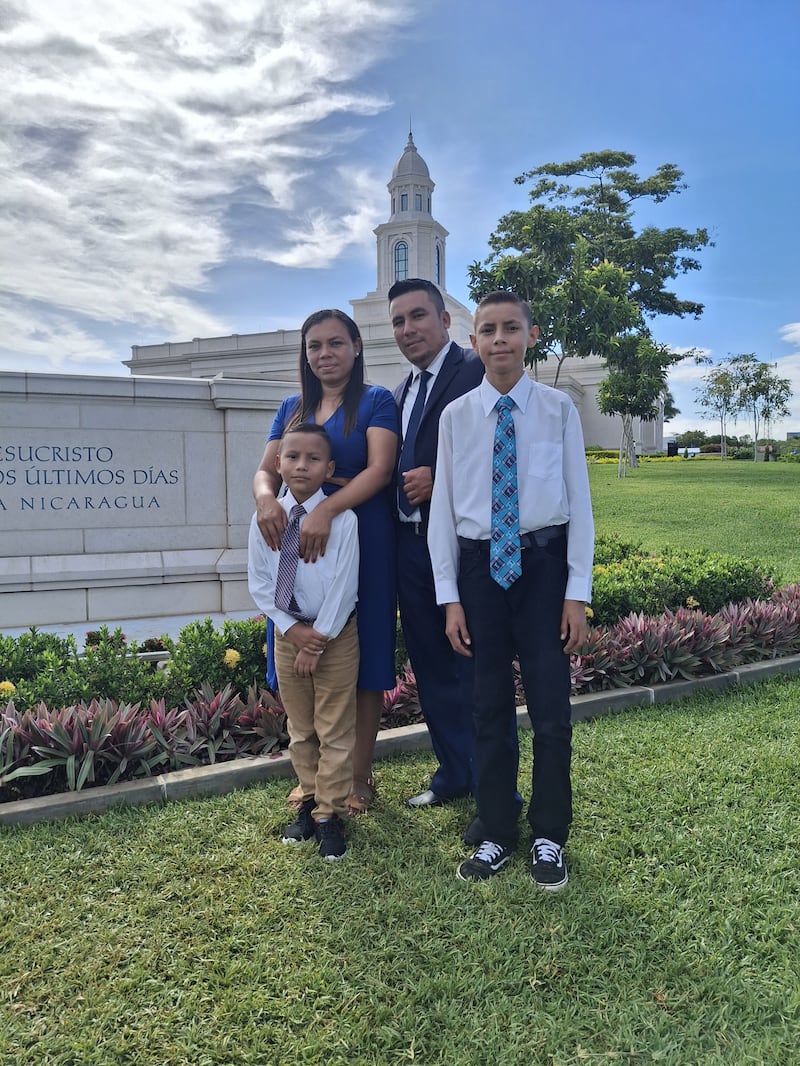
Leading the group was branch president Jose Rivas, who joined the Church eight years ago and had been serving in his calling for just a few months. He was accompanied by his wife and their children.
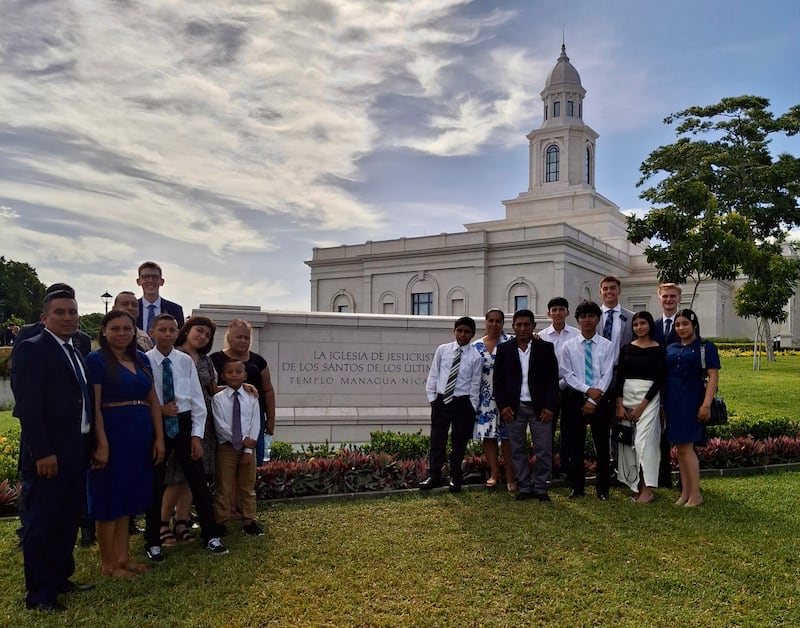
Among the members were three elderly women. Before the branch was organized, one of the women had traveled three hours by bus each Sunday to attend worship services. The other two had previously traveled more than 350 miles (570 kilometers) — an 8-10-hour bus ride — to receive their endowments in the Tegucigalpa Honduras Temple.
The rest were new converts.
Before the trip, the missionaries held an activity to help members prepare for the open house. Together, they viewed photos of temple rooms and discussed the ordinances performed there. The missionaries also explained the purpose of family history work and helped members fill out pedigree charts.
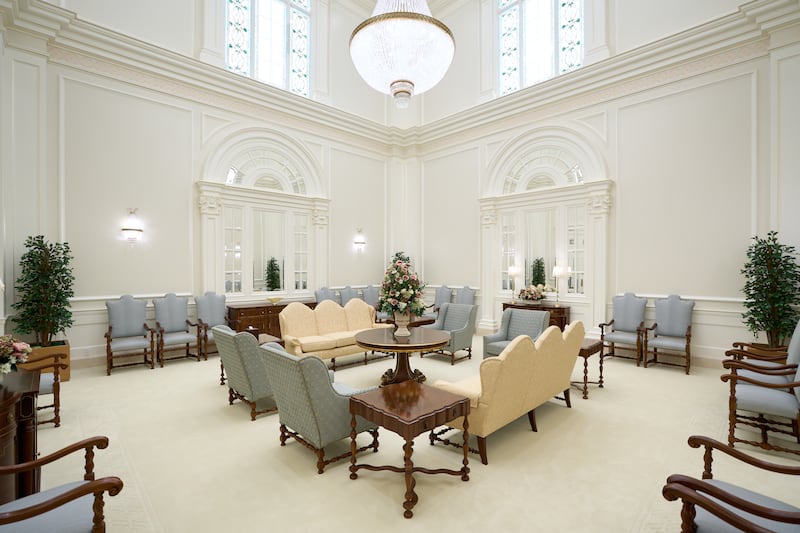
The bus arrived in Managua around 4 a.m. A few hours later, after the tour, members spoke of the temple’s overall beauty and peace they felt in the celestial room. The question was repeatedly asked, “When are we coming back?” Two young women in the group already dream of being married there.
President Rivas described the experience as “very moving.” Personally, he can’t wait to return with his family to be sealed.
“Visiting the temple helped me realize how much our Heavenly Father loves us. I felt the peace that is found in holy places. It strengthened my faith in Jesus Christ and His gospel,” he said. “I know I can be sealed to my family for eternity and that future generations will be able to enjoy the blessings of the temple and make covenants with our Heavenly Father.”
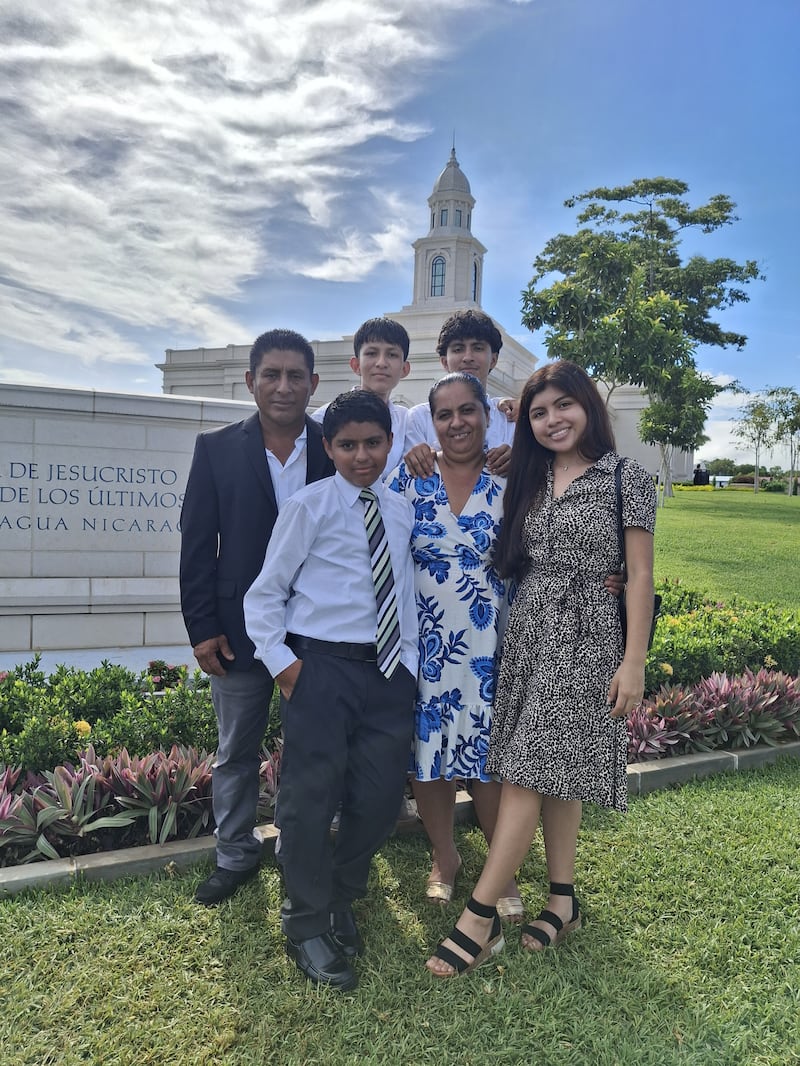
For 22-year-old Dariana Martinez, visiting the Managua temple brought a personal understanding of the peace missionaries had described while teaching her the gospel. Seeing the temple illuminated in the early morning darkness, she felt “an indescribable joy, as if I were arriving at a place where I had always wanted to be.”
That spiritual feeling deepened in the celestial room. “For me, it was like receiving a hug from Heavenly Father and feeling close to Him,” she said.
Touring the temple and learning about temple ordinances strengthened her faith in Jesus Christ and her hope for an eternal family. “I also came to understand that, thanks to Jesus Christ, we have the hope that death is not the end and that our families can be together for eternity,” she said.
The temple visit renewed the enthusiasm of her younger brother, 13-year-old Alonzo Martinez, who had joined the Church just three months earlier. The next Sunday, he spoke in sacrament meeting about the peace he felt in the temple — a peace he said he couldn’t find anywhere else in the world.
Church history in Nicaragua
According to Global Histories on ChurchofJesusChrist.org, Elders Manuel Arias and Archie R. Mortensen became the first missionaries to enter Nicaragua in 1953, a year after the Central America Mission was organized in Guatemala City.
On April 11, 1954, José D. Guzmán and his daughter, Nora Esperanza Guzmán Muñoz, became the first Nicaraguans baptized. More conversions followed, and the first branch was organized that year.
In September 1956, Roger Zelaya Aragon was ordained an elder and sustained as the Managua Branch’s first Nicaraguan president. The next year, Josefa Correa began 15 years of service as branch Relief Society president.
The Nicaraguan District was organized in 1959. In January 1961, President Joseph Fielding Smith of the Quorum of the Twelve Apostles presided at a district conference in Managua.

Nicaragua’s first Church-built meetinghouse was dedicated in September 1967. The Church received legal status in April 1970.
Natural disasters and civil war disrupted Church growth. A major earthquake in 1972 severely damaged meetinghouses in Managua, and political conflict interrupted missionary work in September 1978. Full-time missionaries were withdrawn in May 1980, but local missionaries continued sharing the gospel until full-time missionary work resumed in the late 1980s.
The Managua Nicaragua Stake was organized on March 22, 1981, discontinued in October 1989 and reestablished on June 21, 1998.
In the summer of 1987, 146 members of the Managua stake received government permission and traveled by bus to attend the Guatemala City Guatemala Temple.
When the Nicaragua Managua Mission was created in October 1989, Church membership in the country was 3,453.
President Gordon B. Hinckley spoke to 2,400 members in Nicaragua on Jan. 21, 1997 — the first visit by a Church president since President David O. McKay in 1954, the Church News reported.
“The Lord loves you and looks down upon you with great love,” President Hinckley said on that occasion.
By the end of 2005, Church membership exceeded 50,000.
President Russell M. Nelson announced a temple for Managua, Nicaragua, in general conference on April 1, 2018. A groundbreaking ceremony for the temple was held Nov. 26, 2022.
Around 109,000 Latter-day Saints now live in Nicaragua, attending more than 100 wards and branches.

Temples across Central America
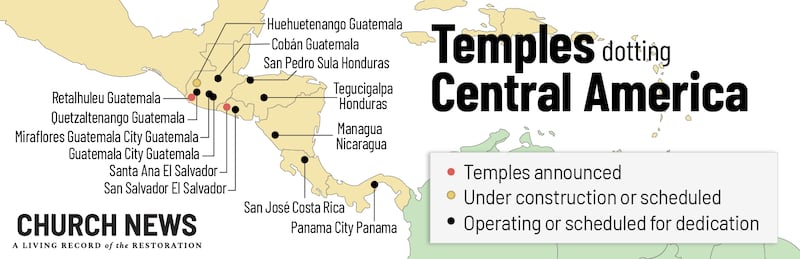
The Managua Nicaragua Temple is one of 13 Latter-day Saint temples dedicated, under construction or announced across Central America as of October 2026.
Nine are in operation: Guatemala City Guatemala (dedicated in 1984), San José Costa Rica (2000), Panama City Panama (2008), San Salvador El Salvador (August 2011), Quetzaltenango Guatemala (December 2011), Tegucigalpa Honduras (2013), Cobán Guatemala (June 2024), San Pedro Sula Honduras (October 2024) and Miraflores Guatemala City Guatemala, which was dedicated on Oct. 11 by Elder Gerrit W. Gong of the Quorum of the Twelve Apostles.
Under construction: Ground was broken for the Huehuetenango Guatemala Temple in March 2026.
Two more temples are in the planning stages: Retalhuleu Guatemala (announced in April 2023) and Santa Ana El Salvador (October 2024).