





BACOLOD CITY, Philippines — Sheryl Omolon was 8 years old in 1985 when her family traveled to Manila, Philippines, from Bacolod to be sealed in the Manila Philippines Temple. The house of the Lord had been dedicated the year before.
“It took us 24 hours — almost one day — to get there by boat,” she said of going to the only house of the Lord in the Philippines at the time. They stayed in a nearby meetinghouse as the patron housing wasn’t completed yet. Today, Omolon and her husband, Roger “Ogie” Omolon, of Bacolod, are preparing for a new, nearer temple as they serve on its open house committee over safety and security.
When the Bacolod Philippines Temple is dedicated on Sunday, May 31, by Elder Neil L. Andersen of the Quorum of the Twelve Apostles, it will take minutes for the Omolons and other members on Negros Island to get to the temple, not hours.

The Bacolod Philippines Temple is the sixth across the Philippine islands — and the third to be dedicated in the country this year. It’s the second in the Visayas region and the first on Negros Island, which is the country’s fourth largest. Bacolod City is the Negros Occidental province capitol and is known as the “City of Smiles.”
It will be the 217th temple of The Church of Jesus Christ of Latter-day Saints.
2026 also marks the 65th anniversary of when then-Elder Gordon B. Hinckley, an assistant to the Quorum of the Twelve Apostles who would later be Church President, blessed the Philippines on the grounds of the American War Memorial Cemetery in Manila. It was then, in 1961, when missionary work began in earnest.
‘Deeply grateful to be closer to the house of the Lord’
The Cebu City Philippines Temple was dedicated in 2010. While it is closer than Manila, traveling to that house of the Lord for many meant either driving several hours across Negros Island, taking a ferry to Cebu Island to the eastern side of the island, or flying to Cebu City.
“Before, we used to travel more than 24 hours by boat just to visit the Manila temple and, later, eight to 10 hours to visit Cebu temple with a good amount of resources having to spend just to visit these temples,” Bacolod Philippines North Stake President Joaquin Tayo Montero wrote in an email to the Church News.

And now many, including youth, will have more time in the temple.
The youth “will have more time to the house of the Lord, they will be performing baptisms for the dead more often, and they will not have to endure traveling long hours by boat and bus,” President Montero said.
Cadiz Philippines Stake President Dennis Ceniza said he’s grateful the temple is closer.
“The Bacolod Philippines Temple is now very accessible to members within the temple district,” he wrote to the Church News. “We are deeply grateful to be closer to the house of the Lord and to have more opportunities to participate in temple work.”
He said the culture of the Philippines is rooted in families.
“Filipino culture is deeply rooted in strong family ties, respect, faith and unity within the community. Similarly, the Church teaches that through the sealing power of the priesthood and sacred ordinances performed in the temple, families can be together forever as they remain faithful and keep the covenants they make, strengthening the Filipino belief that family relationships endure beyond this life.”
Chona Rosales, of Bacolod, is on the open house and dedication committee and said with the temple geographically closer, she has been preparing names for the temple.
“Everything is possible now because of the temple,” said Rosales, who will also be volunteering as a temple worker.

Pioneers in Bacolod
The first members of The Church of Jesus Christ of Latter-day Saints from Bacolod were two couples baptized in the Metro Manila area in 1964, explained a report on the Church’s Philippines Newsroom.
Rosario Barredo and her husband, Carlos Flores Barredo Sr. were in the Santa Mesa district in Manila when missionaries began meeting with the family the Barredos were staying with as he recovered from an illness. The Barredos had to convince the missionaries they were interested in continuing the lessons. They were baptized in August
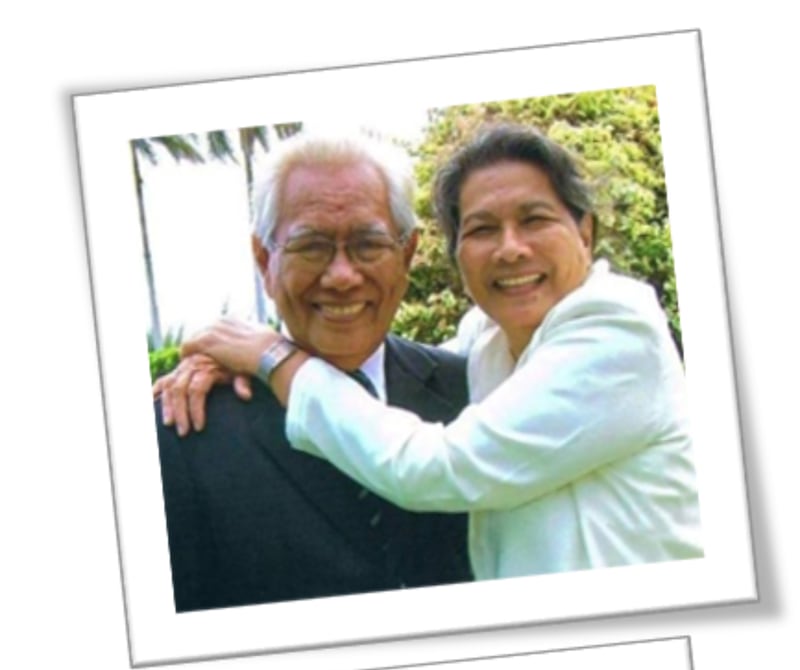
In Makati, also in Metro Manila, missionaries knocked on the door of Rufino Alvarez Villanueva Jr. and his pregnant wife, Josefina Piedad Sacro. The couple were baptized in October 1964 and eventually moved back to Bacolod to help with Rufino Villanueva’s fish farm.
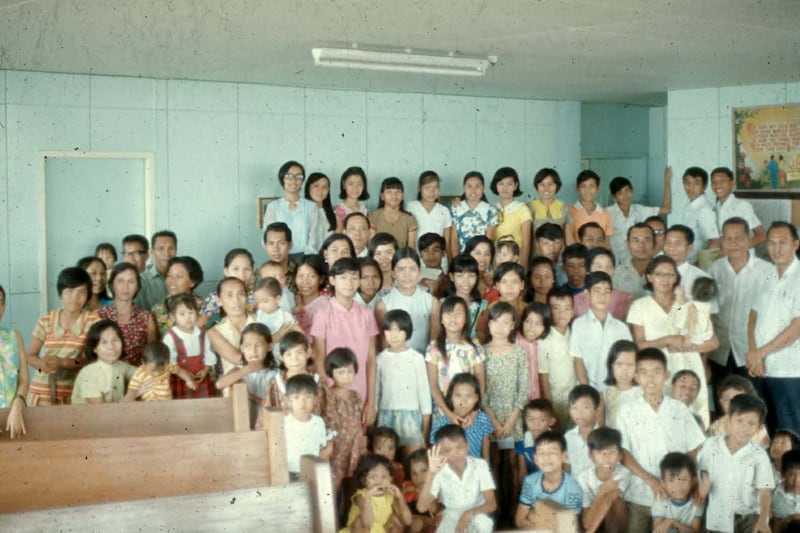
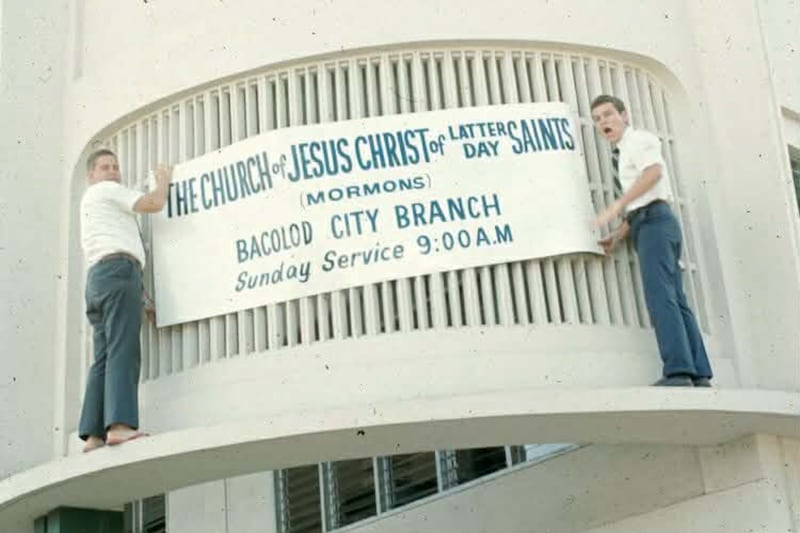
When missionaries were sent to Bacolod in April 1967, their first priority was to find the Barredos and the Villanuevas. The missionaries began teaching, too, with the first baptisms in June. The first branch was organized in 1968 with Rufino Villanueva as the branch president.
The number of Church members grew and more branches were established in districts across the Visayas Islands that were divided.
Remus G. Villarete served as the president of Bacolod Philippines District for two years, until it became a stake. He was sustained as the stake president in July 1981.
“In less than a year, we were able to divide the stake in two,” said Villarete, adding that the Church kept growing in the area. He also served as the Philippines Cagayan de Oro Mission president, an Area Seventy and as a counselor in the Church’s Philippines Area presidency, meeting with and learning from several Church leaders.
Villarete and his wife, Yvonne Villarete, were baptized in The Church of Jesus Christ of Latter-day Saints in 1975 on the island and are now in their 70s. They’ve made countless trips to the Manila Philippines Temple, which was dedicated in 1984 when they had to plan for days of travel, and to the Cebu City Philippines Temple, on the island to the east of Bacolod.
“We are grateful for this,” Yvonne Villarete said of the house of the Lord now 30-45 minutes from her home. “Isn’t it wonderful?”
Both are planning to be temple workers after the dedication.
“I am happy to serve the Lord,” Remus G. Villarete said.
By 1990, the Philippines Bacolod Mission was created from the Philippines Cebu Mission.
Charlie Revillo served in Bacolod, including helping to set up the mission office. He was one of the first missionaries, along with his older brother, Elder Carlos G. Revillo Jr., who is now a General Authority Seventy and serves as the Church’s Philippines Area president.
Charlie Revillo recalled that people “were very receptive” to the gospel and “the members were really helping with referrals with working us.”
Revillo, who moved to Herriman, Utah, 10 years ago, went back to Bacolod for the recent temple open house. He visited the mission offices — still in the same spot — and reconnected with people he helped teach. Revillo served as the Philippines Butuan Mission president and also met several of the young missionaries he served with.
“It will be a big spiritual blessing for the members there. When they make covenants, they become better people,” Revillo said of the temple.

Alma Vida Villanueva Tan, a daughter of pioneer Latter-day Saints in Bacolod, said during the April 13 temple open house media day that her parents flew to Salt Lake City in 1974 to be sealed in the Salt Lake Temple, reported the Church’s Philippines Newsroom.
“Finally, after 50 years of being a member of the Church, I can attend a temple in my own hometown,” she said. “For me, the temple is a step closer to home, the house of the Lord, a place where we can be still, feel His love and learn of Christ as we prepare ourselves and our families to return to Heavenly Father.”
Temples in the Philippines
Fourteen houses of the Lord are dedicated, under construction or announced in the Philippines, which has more than 905,000 Church members — the fourth-largest number of members in the worldwide Church.

Five of them are in operation: the Manila (dedicated in 1984), Cebu City (2010), Urdaneta (2024), Alabang (January 2026) and Davao (May 3, 2026) temples.
Two more temples are under construction: in Cagayan de Oro, since August 2024, and in Tacloban City, since January 2025.
Six houses of the Lord are in planning stages: in Naga (announced 2022), Santiago (2022), Tuguegarao City (2023), Iloilo (2023), Laoag (2023) and San Jose del Monte (2025).
Outside of the United States, there are two other countries where three or more temples were dedicated in a calendar year. Three temples in Canada were dedicated in 1999, and eight houses of the Lord in Mexico in 2000.
In the U.S., there were five temples dedicated or rededicated in Utah in 2024.
